Cabin Luggage: Size, Weight Limits & Airline Policies

If you’ve ever stood at an airport gate with a bag that’s “too big” for the overhead bin, you know how crucial it is to understand cabin luggage rules. Also called carry-on or hand luggage, cabin bags are your in-flight essentials companion – but every airline has strict limits on their size, weight, and quantity.
This guide breaks down the Cabin Luggage basics, global standards, airline-specific policies, and packing tips.
to Bangkok
to Manila
to Shanghai
to Tokyo
to Seoul
See all flights


What Is Cabin Luggage?
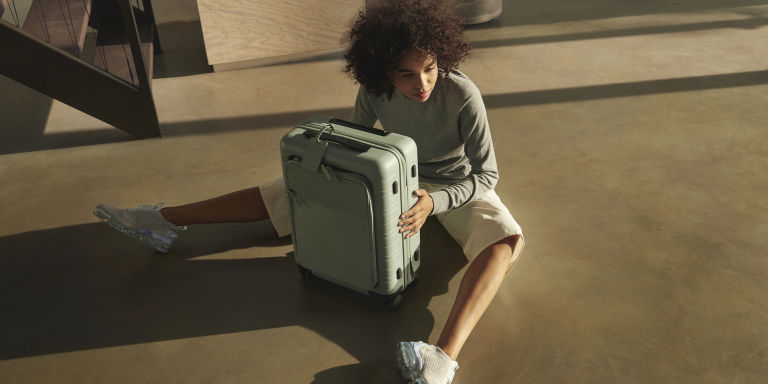
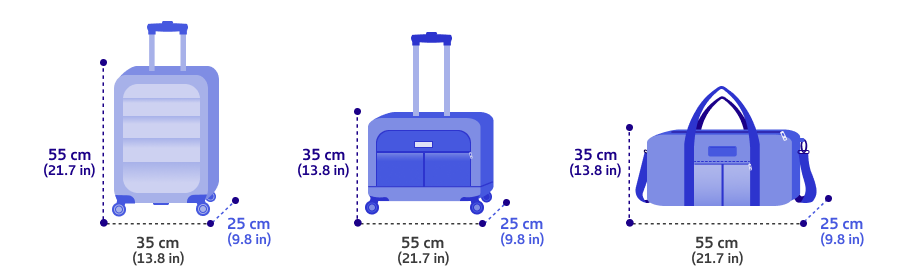
Cabin Luggage Size Guide | Horizn Studios
Cabin luggage (often called carry-on in North America or hand luggage in Europe/Asia) is the bag you bring directly into the aircraft’s passenger cabin, instead of checking it into the hold. Unlike checked baggage, it stays with you for the entire flight, making it ideal for:
- Keeping valuables (passports, laptops, cash) and medications within easy reach
- Storing in-flight essentials (snacks, neck pillows, chargers)
- Avoiding lost luggage risks (a common pain point for travelers, per 2024 airport data)
- Skipping checked baggage fees (critical for budget travelers on low-cost carriers)
The key difference between cabin luggage and a “personal item” (e.g., a handbag or laptop sleeve) is size: cabin bags go in overhead bins, while personal items fit under the seat in front of you. Most airlines allow both (with limits), but low-cost carriers (LCCs) may restrict personal items to cut costs.
Note: All airline baggage policies are subject to change at any time. Please always verify the latest size, weight and quantity rules directly on your airline’s official website before departure.
Standard Cabin Luggage Size (Global Rules)
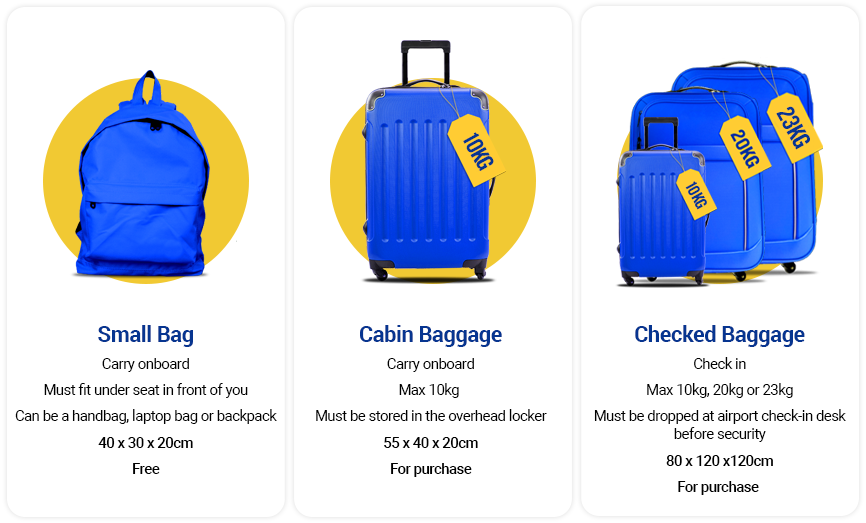
Bag Rules – Ryanair Help Centre
There’s no universal “one-size-fits-all” for cabin bags. The International Air Transport Association (IATA) references multiple size guidelines for the industry: a widely cited general industry benchmark is 56cm × 45cm × 25cm (22in × 18in × 10in), while the IATA Cabin OK initiative recommends 55cm × 35cm × 20cm. 55cm × 40cm × 20cm is a common standard adopted by many individual airlines, but it is not an official IATA-mandated universal size.
However, individual airlines often tweak dimensions (so always check your carrier’s rules before flying):
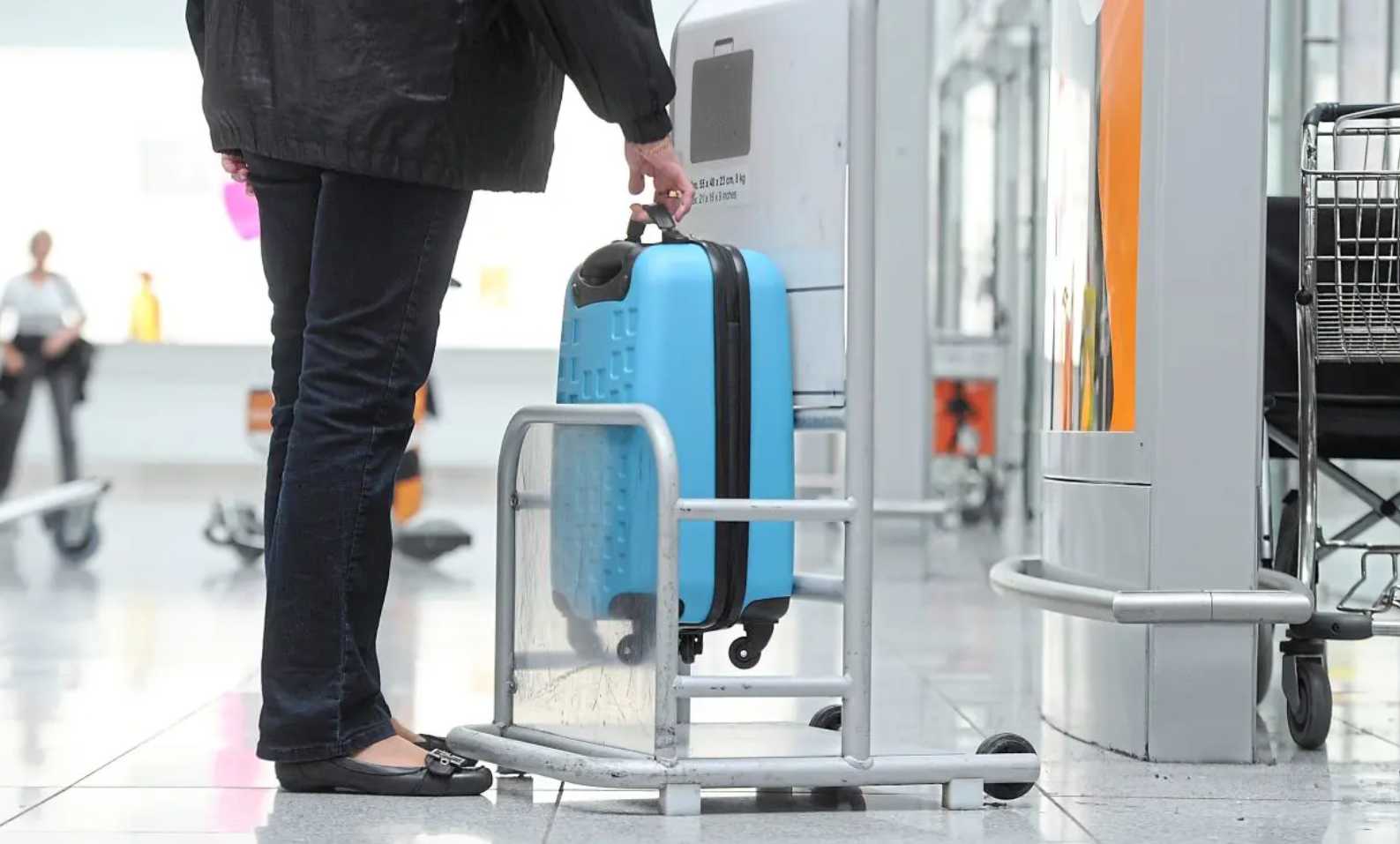
Key Note: Dimensions include all protrusions (wheels, handles, side pockets) – airport staff use metal sizing frames to check, so a bag that’s 1cm over may be rejected
For reference, a 20-inch hard-shell suitcase typically fits most standard cabin limits, while a 22-inch bag may be too big for strict airlines (like Ryanair or AirAsia).
Cabin Luggage Weight Limits (Full-Service vs. Low-Cost Carriers)
Compared with size restrictions, weight regulations vary more significantly and are more strictly enforced on budget airlines (usually extra charges are imposed for overweight luggage in the cabin). The following is the specific situation:
- Full-Service Airlines (e.g., Singapore Airlines, American Airlines, British Airways)
- Most allow 7–10kg (15–22lbs) per cabin bag, with no weight limit on personal items (as long as they fit under the seat)
- Premium cabins (business/first class) may increase limits to 15kg (33lbs) for extra comfort
- Low-Cost Carriers (LCCs) (e.g., AirAsia, Ryanair, Spirit Airlines)
- Basic fares often cap cabin bags at 7kg (15lbs) – some even restrict weight to 5kg (11lbs) for budget tiers
- Overweight fees are steep (e.g., $50–$100 at the gate for a 2kg overage) and non-negotiable
- Regional Exceptions
- Asian carriers (e.g., Philippine Airlines, Cathay Pacific) almost universally enforce 7kg limits for economy class cabin bags
- U.S. carriers (e.g., Delta, United) generally do not publish official cabin bag weight limits and focus primarily on size compliance; weighing is rare in practice
Cabin Luggage Quantity Limits (How Many Bags Can You Bring?)
Quantity rules depend on your ticket type and airline, but the industry standard is:
- Basic Economy (Full-Service & LCCs): 1 cabin bag + 1 small personal item (e.g., laptop bag, crossbody) – some LCCs (e.g., Spirit Airlines) charge for the cabin bag on basic fares, only allowing a free personal item
- Standard Economy (Full-Service): 1 cabin bag + 1 personal item (no extra fees)
- Premium Cabins (Business/First Class): 2 cabin bags + 1 personal item (to accommodate work gear or luxury essentials)
Critical Tip: LCCs often redefine “personal items” to smaller sizes (e.g., 40cm × 30cm × 10cm for AirAsia) – a large tote bag may be counted as a second cabin bag, incurring fees.
Comparing Luggage Types: Cabin, Personal Item, Checked & More
In Cm Cabin Suitcase Size Inches Carry On Large Suitcase Size In ...
| Luggage Type | Core Definition | Typical Size Limit | Weight Limit | Storage Location | Best For | Key Rules |
|---|---|---|---|---|---|---|
| Cabin Luggage (Carry-On) | Main bag brought into the cabin | Common industry standard: 55×40×20cm; IATA general reference 56×45×25cm; airline-specific tweaks (e.g., AirAsia 56×36×23cm) | 7–10kg (economy); higher limits for premium cabins | Overhead bin | In-flight essentials, valuables, short trips (1–3 days) | Dimensions include wheels and handles; size is strictly enforced; LCCs may charge for basic fares |
| Personal Item | Small secondary bag | 40×30×15cm (full-service standard); 40×30×10cm (LCCs like AirAsia) | No official limit (full-service); 3–5kg reference for some LCCs | Under seat in front of you | Laptops, passports, medications, in-flight snacks | Most airlines allow 1 free personal item (even on basic fares) |
| Checked Baggage | Bag stored in the aircraft hold | 62in (158cm) total (L+W+H) (global standard) | 20–32kg (depends on airline/ticket class) | Cargo hold | Long trips (4+ days), bulky items (shoes, toiletries), non-essentials | Included in most full-service tickets; LCCs charge $20–$50 per bag on average |
| Gate-Checked Baggage | Cabin bag that's too big/heavy for overhead bins | Same as cabin luggage size | Same as cabin luggage weight | Cargo hold (loaded at gate) | Oversized cabin bags, strollers, mobility aids, small musical instruments | Free for mobility aids (strollers/wheelchairs); LCCs may charge for standard bags |
| Specialty Baggage (Sports Equipment) | Golf clubs, skis, surfboards, etc. | Varies by sport (e.g., skis ≤200cm, golf bags ≤158cm) | 20–32kg (airline-specific) | Cargo hold (special compartments for some items) | Athletes, outdoor travelers | Often counts as 1 checked bag; many airlines charge extra fees (e.g., $50+ for skis) |
See all attractions
 2116 booked






Regional Airline Cabin Luggage Policies
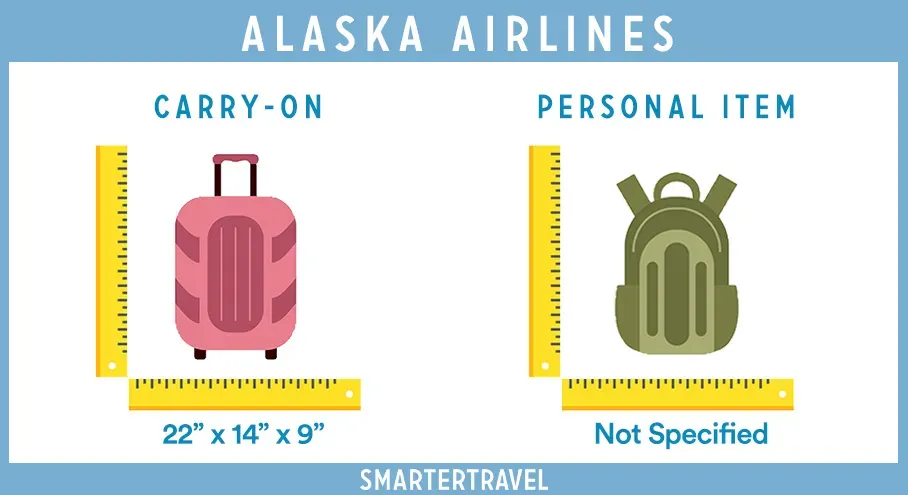
Carry-On and Personal Item Size Limits for 32 Major Airlines
The following are the most popular airlines on each continent, along with their exact size, weight and quantity rules (data from the airlines' official websites and may change).
Continent | Airline | Cabin Luggage Size (L×W×H) | Weight Limit | Personal Item Rule |
|---|---|---|---|---|
North America | 56cm×36cm×23cm (22×14×9in) | No official published weight limit (size-focused policy) | 1 free (fits under seat, no weight cap) | |
North America | 56cm×35cm×23cm (22×14×9in) | No official published weight limit (rarely enforced in practice) | 1 free (laptop bag/purse) | |
North America | 56cm×35cm×23cm (22×14×9in) | No official limit (size-only) | 1 free (personal item) | |
North America | 56cm×36cm×23cm (22×14×9in) | 10kg (22lbs) | 1 free (laptop/handbag) | |
Europe | 56cm×45cm×25cm (22×18×10in) | 23kg (51lbs) (economy); 32kg (70lbs) (premium) | 1 free (small bag, 40cm×30cm×15cm) | |
Europe | 40cm×30cm×20cm (free small bag); 55cm×40cm×20cm (paid priority bag) | 10kg (15lbs) for priority cabin bag | Free small bag only (basic fares); paid for extra | |
Europe | 55cm×40cm×23cm (22×16×9in) | 8kg (17lbs) | 1 free (laptop/handbag, 40cm×30cm×15cm) | |
Europe | 55cm×35cm×25cm (21.7×13.8×9.9in) | 12kg (26lbs) total for cabin bag + personal item combined | 1 free (laptop/handbag) | |
Asia | 56cm×36cm×23cm (22×14×9in) | 7kg (15lbs) | 1 free (small bag, 40cm×30cm×10cm) | |
Asia | 56cm×36cm×23cm (fits within 115cm total linear dimensions) | 7kg (15lbs) per piece for all classes; 2 pieces allowed in premium cabins | 1 free (laptop bag, no size/weight cap) | |
Asia | 56cm×36cm×23cm (22×14×9in) | 7kg (15lbs) | 1 free (laptop bag) | |
Asia | 56cm×36cm×23cm (22×14×9in) | 7kg (15lbs) | 1 free (laptop bag) | |
Asia | 56cm×36cm×23cm (22×14×9in) | 10kg (22lbs) | 1 free (laptop bag) |
✈️Most North American airlines focus on size compliance with limited weight enforcement, while European and Asian airlines often enforce strict weight limits. Low-cost airlines (Ryanair, EasyJet, Lion Air) usually have stricter rules and charge for larger or heavier cabin luggage.
Packing Tips for Cabin Luggage (Maximize Space & Avoid Fees)
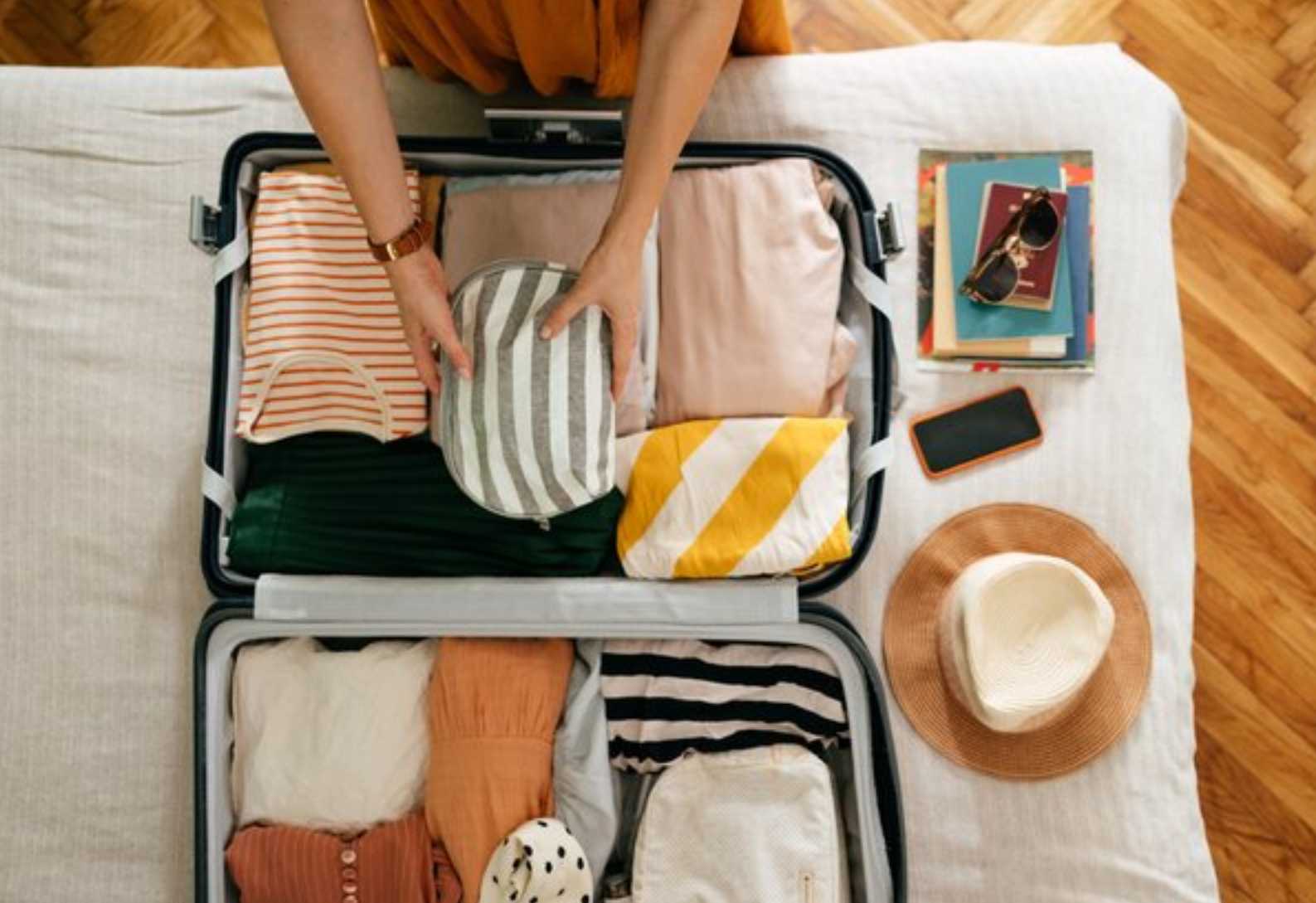
Packing your cabin luggage can help you save on boarding fees and ensure that you have all the necessities on hand. Here are some of the most practical tips:
Prioritize Must-Haves
- Put valuable items (passports, credit cards, jewelry) and medicines in your personal item (do not put them in checked luggage).
- Put in-flight necessities (chargers, noise-cancelling headphones, snacks) in the front pocket for easy access
Maximize Space Without Overpacking
- Use compression bags: They can shrink clothes by a significant amount (a basic set can help you avoid needing a larger bag)
- Roll up your clothes instead of folding them: reduce wrinkles and make room for small items
- Use travel-sized toiletries (100 ml or less per container) to comply with liquid regulations (US Airport 3-1-1 regulations).
Avoid Common Pitfalls
- Don't stuff the bag too full: A bulging bag may not pass the size check (even if it's within the stated size range).
- Weigh your luggage at home (a portable scale costs $15) : Avoid paying for overweight luggage at the last minute
- Check the restricted items stipulated by the airline: power banks (>100Wh need airline approval), sharp objects (scissors with blades >6cm are banned), and liquids (100ml limit per container)
Use Personal Item Space Wisely
- Place heavier items (laptops, tablets) in your personal belongings (under your seat) to reduce the weight of your main cabin bag
- Use a laptop bag with multiple pockets to hold the charger, cables and files (avoid rummaging through your main bag during the flight)
Car Rentals
Car Rental Promo Code - 8% Off
New User Enjoy up to 8% Off
TRIPCAR8
[Discount] Global Hotel Recommendations (Also with Flexible Booking)
Best Global Hotels
See All Hotels







FAQs about Cabin Luggage
-
What is cabin luggage?
-
What’s the difference between cabin luggage and a personal item?
-
Is cabin baggage the same as carry-on?
-
Can I gate-check my cabin bag if it’s too big?
-
What is 7kg hand carry luggage?
Disclaimer: This article has been provided by an individual contributor or third party platform. If there is any discrepancy regarding the copyright, please contact us directly and we will delete the content immediately.
Trending Searches
-
Air Travel Guide
-
Latest Flight Deals
-
Popular Flight & Hotel Packages
-
Getting Around
-
eSIM/SIM card
- Medellin Vacation Packages
- Hong Kong Vacation Packages
- Tokyo Flight and Hotel
- Koh Samui Flight and Hotel
- Hong Kong Flight and Hotel
- Zacatecas Vacation Packages
- Guam Vacation Packages
- Havana Vacation Packages
- Coron Vacation Packages
- Istanbul Vacation Packages
- Sharm El Sheikh Flight and Hotel
- Kathmandu Vacation Packages
- Luxembourg Vacation Packages
- Labuan Bajo Vacation Packages
- Gorontalo Vacation Packages
- JR EAST PASS
- Hong Kong Airport
- Haneda Airport Limousine Bus
- Singapore Airport to City
- JR pass airport transfer
- KL MRT Map
- How to Use DiDi in China
- Macau Taxi
- Changsha Airport
- Guangzhou Airport to City
- Ho Chi Minh Airport
- Shanghai Airport Transfer
- Wuhan Airport
- JR Hokkaido Pass
- Macau to Hong Kong
- Narita Airport to Shinjuku
- Hong Kong Airport Express