Beijing Duck (2026): Best Peking Duck Restaurants in Beijing

by Robin
August 7, 2026
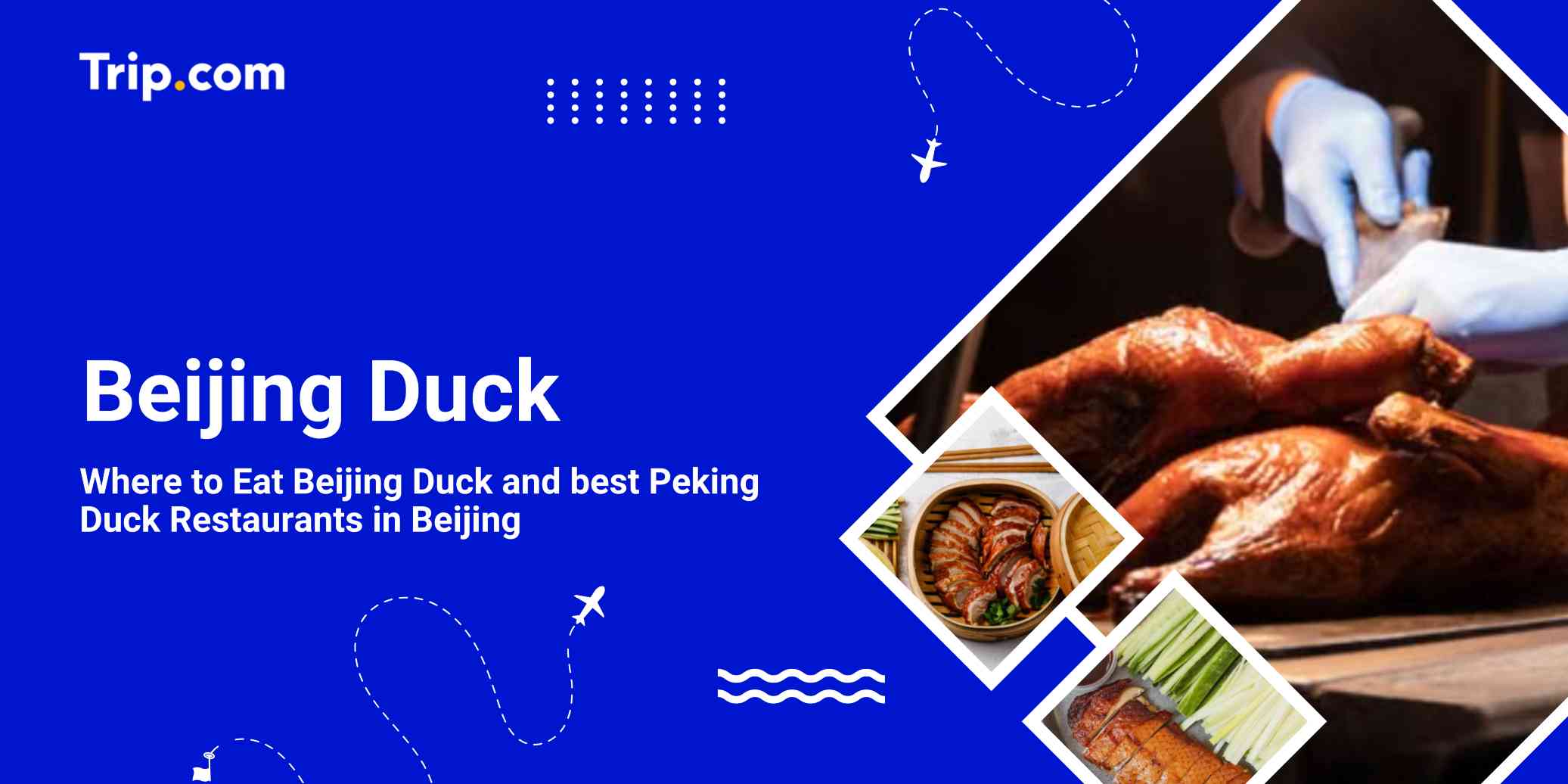
Beijing duck, also known as Peking duck, is one of the world's great culinary experiences and the dish most foreign visitors to Beijing want to try at least once. Roasted to a lacquered mahogany finish, served in thin slices with paper thin pancakes, sweet bean sauce, and slivered scallions, a proper Beijing duck meal is theater as much as it is a meal. This guide covers where to eat Beijing duck in the capital, how much it costs, how to eat it properly, and how to book at the most popular restaurants before you arrive.
See all flights


AI Summary
This summary is AI-generated by Trip.com. For the complete guide, please refer to the article below.
Beijing duck features roasted skin and meat served with pancakes, sauce, and scallions. Prices range from ¥238 to ¥698 per duck depending on the restaurant tier. Preparation involves air-pumping, glazing, and roasting for 45 to 60 minutes. Diners should reserve tables in advance for popular venues like Quanjude or Da Dong to ensure availability.
What Is Beijing Duck?
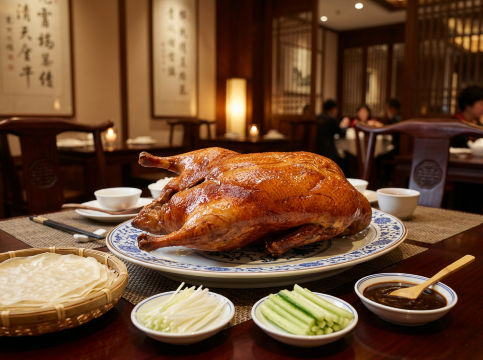
Beijing duck (北京烤鸭, běijīng kǎoyā) is a roast duck dish that originated in imperial China. Whole ducks are air pumped between the skin and flesh, glazed with a maltose sugar mixture, air dried for hours, and then roasted over fruit wood in a special oven until the skin becomes crackling and mahogany colored. Traditionally, the duck is presented whole at the table before being carved into thin slices, each with a piece of crisp skin attached.
The dish is eaten with three components:
- Paper thin pancakes (called 春饼 or 荷叶饼) made from wheat flour
- Sweet bean sauce (甜面酱, tián miàn jiàng) or hoisin style sauce
- Slivered scallions and cucumber batons
Diners assemble each bite themselves, layering sauce, duck, and vegetables into a rolled pancake. What arrives at the table is not just food but a complete ritual, and the theatrical carving of the duck by a chef in front of the table is part of the experience.
Beijing Duck vs Peking Duck: Are They the Same?
Yes. Beijing duck and Peking duck are the same dish. "Peking" is the older English romanization of 北京 (Beijing), used from the 17th century until Chinese pinyin romanization became standard in the 1970s and 1980s. Beijing duck is the more literal modern translation, while Peking duck is the classic English name that most Chinese restaurants outside China still use.
In China, the dish is called 北京烤鸭 (Beijing roast duck) regardless of English translation.
A Brief History of Beijing Duck
Roast duck as a dish in China dates back to the Ming Dynasty in the 14th century, but the version most closely associated with modern Beijing duck was formalized during the Qing Dynasty (1644 to 1912) in the imperial kitchens of the Forbidden City.
Two schools of roasting emerged, both still practiced today.
The closed oven method (焖炉, mèn lú) is the older technique, developed by Bianyifang restaurant in 1416. The duck is placed in a preheated brick oven, and heat retained in the walls slowly roasts the bird. This produces a more tender, delicate duck with softer skin.
The hung oven method (挂炉, guà lú) was developed later at Quanjude in 1864. The ducks are hung over an open fruit wood fire, which produces the crispier, more mahogany colored skin most foreign visitors associate with the dish.
Both methods produce excellent duck, and today most travelers try the hung oven style, which is more common in Beijing's famous restaurants.
How Is Beijing Duck Made?
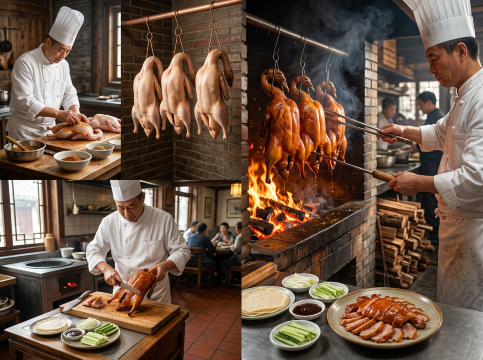
The full preparation of a Beijing duck typically takes 24 to 48 hours, though the final roasting is around 45 minutes.
- Selection. Traditional Beijing duck uses a specific breed, the Beijing Duck (also called Pekin duck), specially raised for the dish. Ducks are usually 3 to 4 months old at slaughter.
- Air pumping. Air is pumped between the skin and the meat to separate them. This is what creates the puffed, glossy skin.
- Glazing. The duck is coated with a maltose sugar mixture that caramelizes during roasting.
- Air drying. The duck is hung to air dry for 24 to 48 hours, which further separates the skin and produces the characteristic crisp texture.
- Roasting. Over fruit wood (typically apple or date wood), for around 45 to 60 minutes.
- Carving. The duck is carved tableside into 108 to 120 thin slices, each with a piece of skin attached.
This is why Beijing duck restaurants often require 45 minutes to an hour from ordering to serving, and why calling ahead to pre order is common.
How to Eat Beijing Duck: Traditional Serving Style
Eating Beijing duck properly is part of the experience, and most restaurants will show you the technique if you ask.
Step 1: Watch the Carving
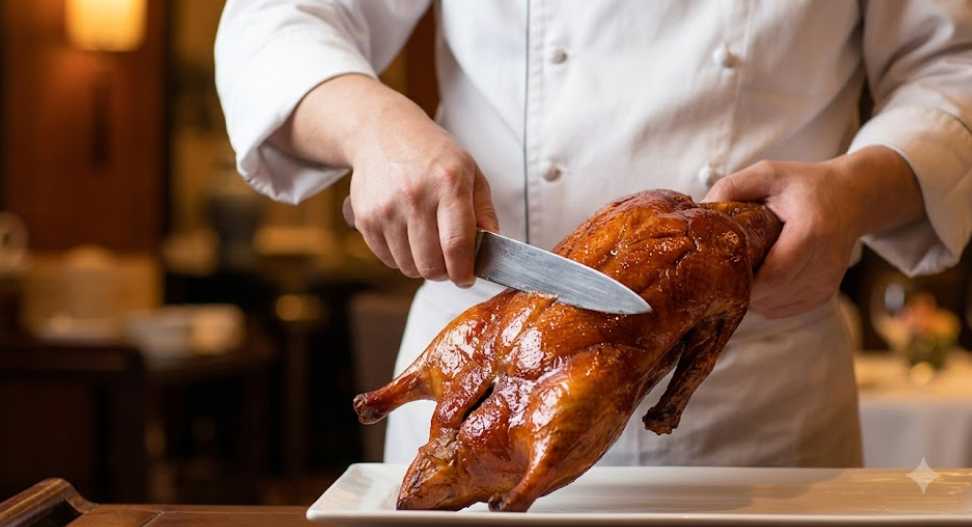
At most reputable restaurants, the duck is carved at your table. Watch closely, this is a skilled process. The carver typically starts with the crisp skin from the breast area, which is the most prized part of the duck.
Step 2: Assemble Your First Bite
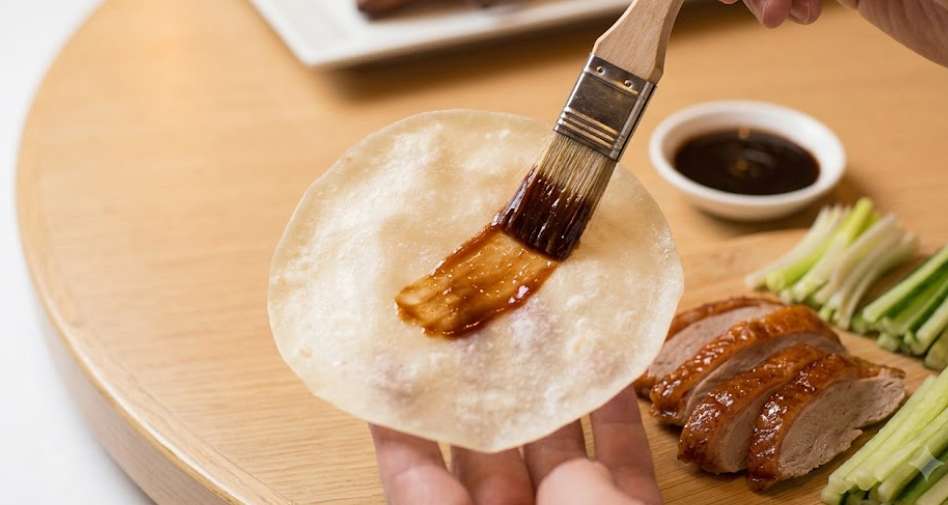
- Take a pancake with your chopsticks or hands
- Use the small brush provided to apply sweet bean sauce to the pancake
- Place two or three slices of duck (aim for one with skin, one with meat) on the pancake
- Add a few slivers of scallion and cucumber
- Fold the pancake around the filling and eat with your hands
Step 3: Try the Crispy Skin with Sugar
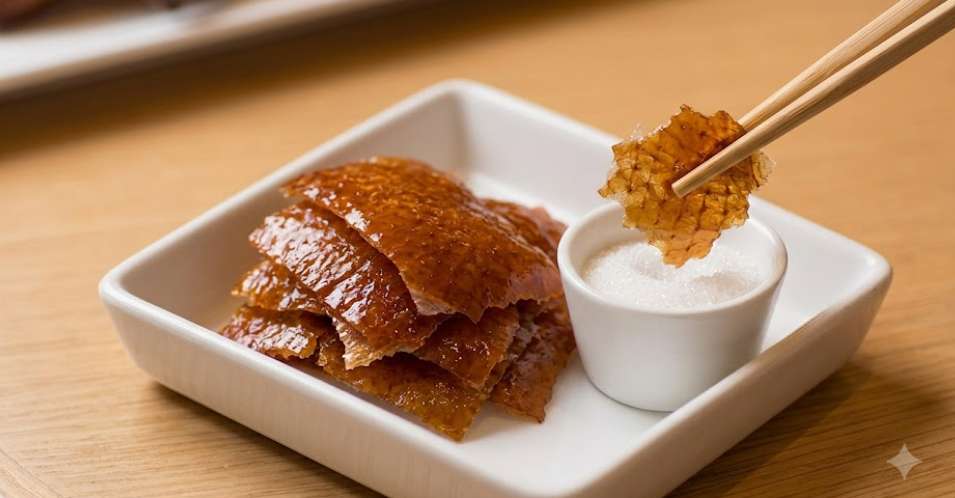
At Da Dong and some other modern Peking duck restaurants, the crispy skin is served separately with a small dish of sugar. Dip a piece of crispy skin in the sugar and eat it directly. The combination of caramelized fat and sugar is unique to Beijing duck and one of the great flavors in Chinese cuisine.
Step 4: Try the Duck Meat with Garlic
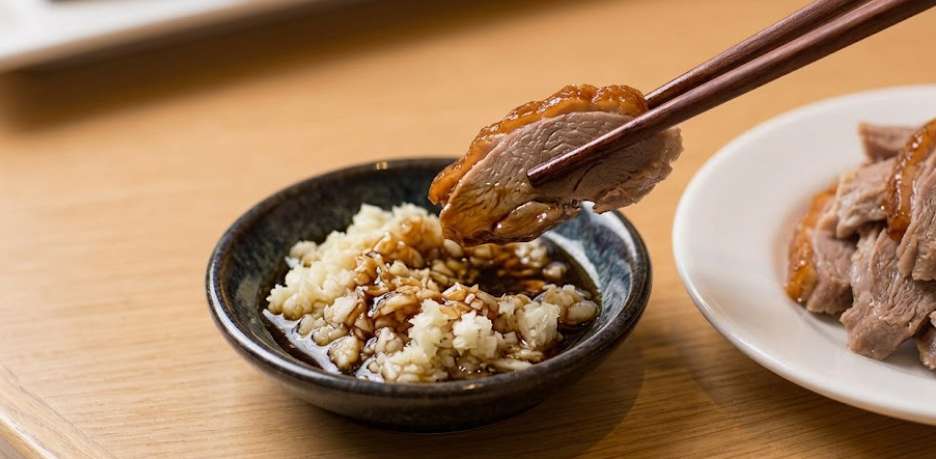
Some restaurants serve the remaining duck meat with pickled garlic and a savory sauce. This is a more traditional way to enjoy the leaner meat after the skin has been eaten.
Step 5: Finish with the Soup
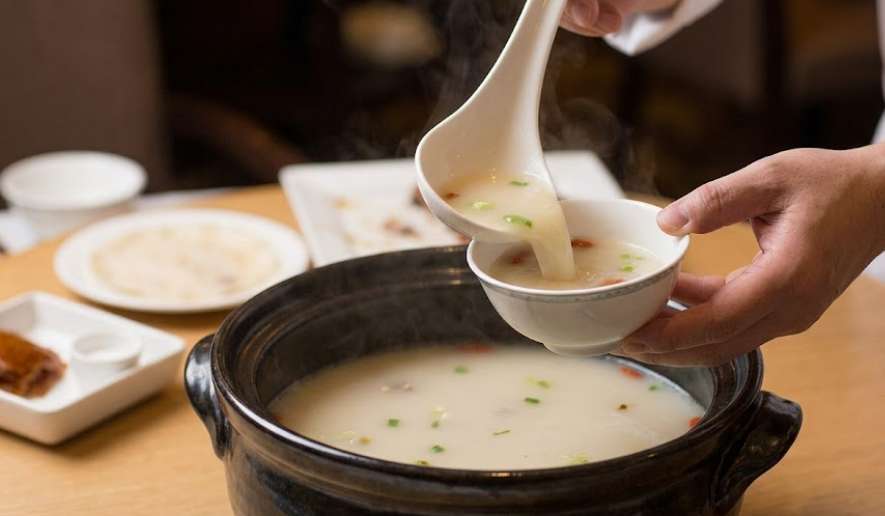
The duck carcass is typically returned to the kitchen to be simmered into a rich white soup, served at the end of the meal. This is a highlight of the traditional Peking duck experience that many international visitors miss.
[10% OFF] China Hotel Recommendations
Book 10% Off on Hotels for your next trip!
Search Top 10 China Hotels
See All Hotels
 NO.1
NO.1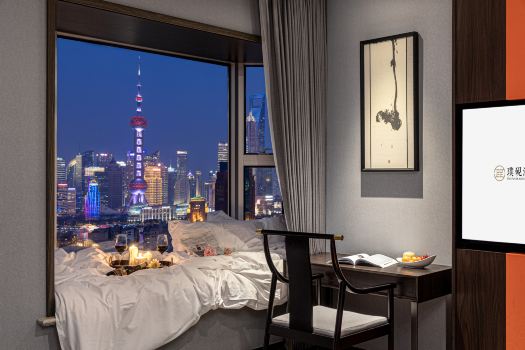



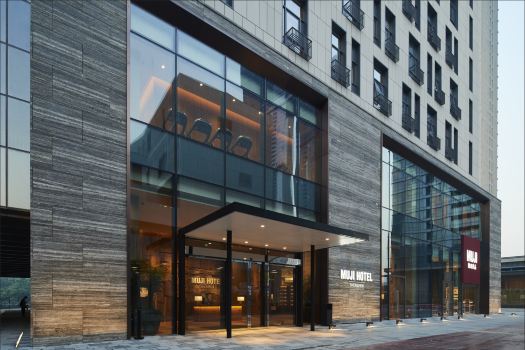
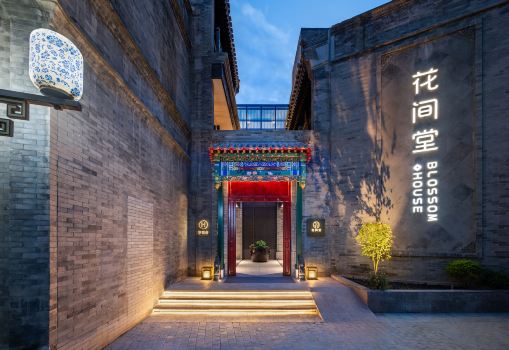
Best Peking Duck Restaurants in Beijing
Beijing has hundreds of duck restaurants, but a handful stand out for consistency, atmosphere, and reputation. Here are the six most notable, from historic institutions to modern reinventions.
Quanjude (全聚德)
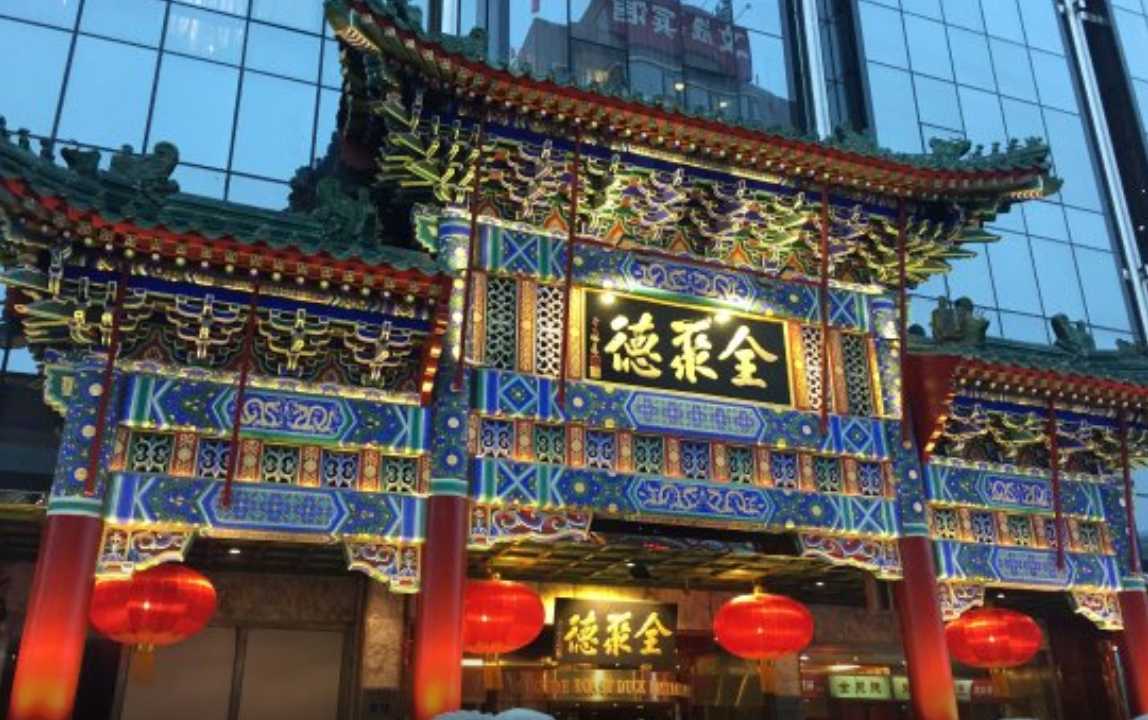
Founded in 1864, Quanjude is Beijing's oldest and most famous Peking duck restaurant, and the first place many international visitors go. The Qianmen location is the flagship, with a museum on the second floor documenting the restaurant's history. Some locals consider Quanjude too touristy, but the duck itself is consistently excellent, and the historical atmosphere is worth experiencing.
- Signature style: Hung oven method, crispy mahogany skin
- Price per duck: ¥328 to ¥398 (around $46 to $56)
- Best branch: Qianmen (前门店), the historic flagship
- Reservations: Recommended, especially for the Qianmen branch during peak hours
Da Dong (大董)
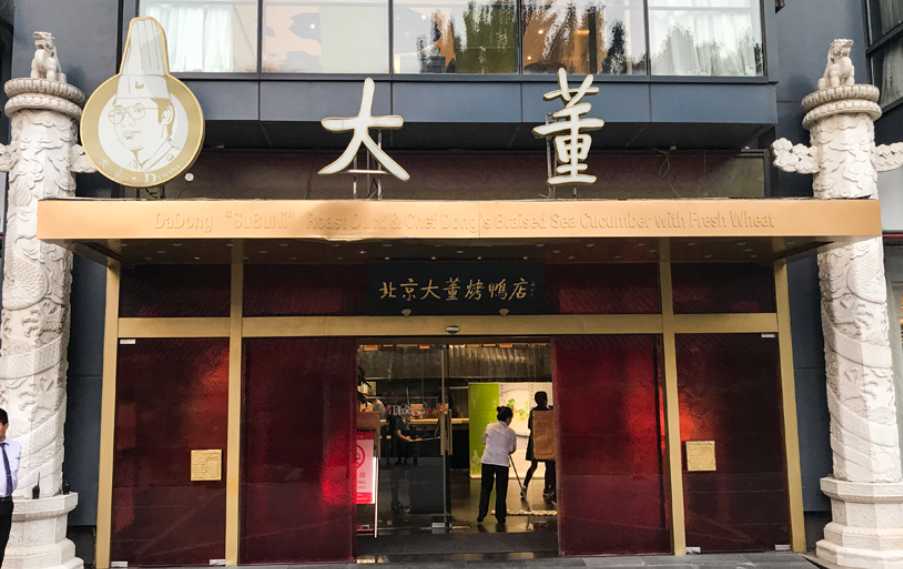
Source: Daniel Food Diary
Founded by chef Dong Zhenxiang, Da Dong pioneered a modern interpretation of Peking duck focused on "super lean" birds with less fat and crispier skin. The presentation is contemporary and the atmosphere upscale. Popular with foreign tourists and Chinese business diners.
- Signature style: Lean duck, extra crispy skin served with sugar for dipping
- Price per duck: ¥258 to ¥368 (around $36 to $51)
- Best branches: Jinbaohui (金宝汇), Nanxincang (南新仓), Wangfujing
- Reservations: Strongly recommended, often booked days in advance
Siji Minfu (四季民福)
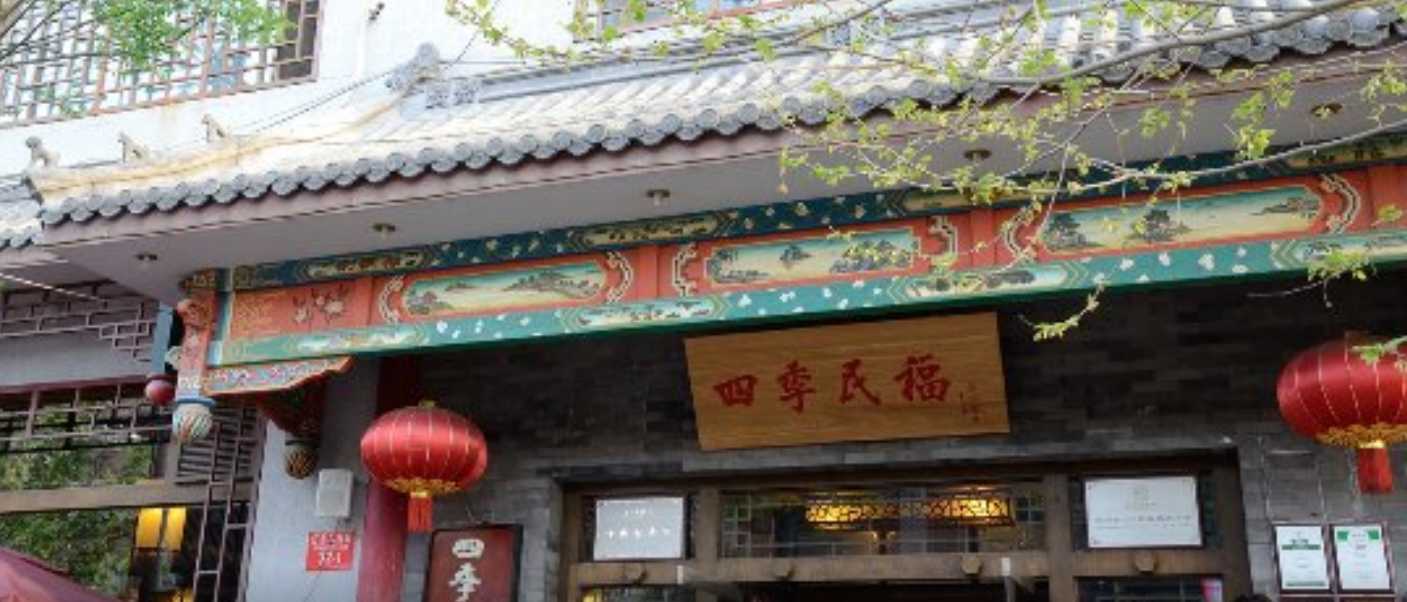
The best value pick for Peking duck in Beijing, and increasingly the local favorite. Siji Minfu offers restaurant quality duck at prices well below Quanjude and Da Dong. The Nanchang branch has views of the Forbidden City moat, making it one of the most scenic dining spots in the city.
- Signature style: Traditional hung oven method
- Price per duck: ¥238 to ¥268 (around $33 to $37)
- Best branches: Nanchang (南长街) for Forbidden City views, Dongsi (东四) for a quieter meal
- Reservations: Not accepted at some branches. Expect long lines, especially at the Nanchang location. Arrive at opening (11:00 AM lunch or 5:00 PM dinner) or expect to wait 1 to 2 hours.
Bianyifang (便宜坊)
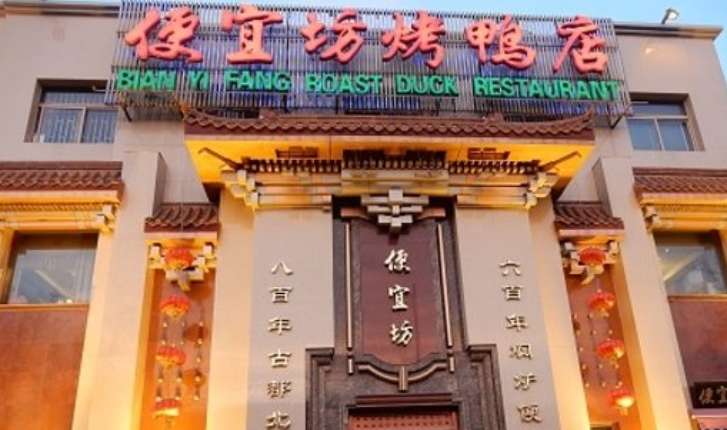
Older than Quanjude by 448 years, Bianyifang was founded in 1416 and pioneered the closed oven method still used today. The duck is more tender and less crispy than the hung oven versions, offering a different texture. A great choice for travelers curious about the older, more traditional style.
- Signature style: Closed oven method, more tender skin
- Price per duck: ¥258 to ¥328 (around $36 to $46)
- Best branch: Chongwen (崇文门) for the historical setting
- Reservations: Recommended
Duck de Chine (全鸭季)
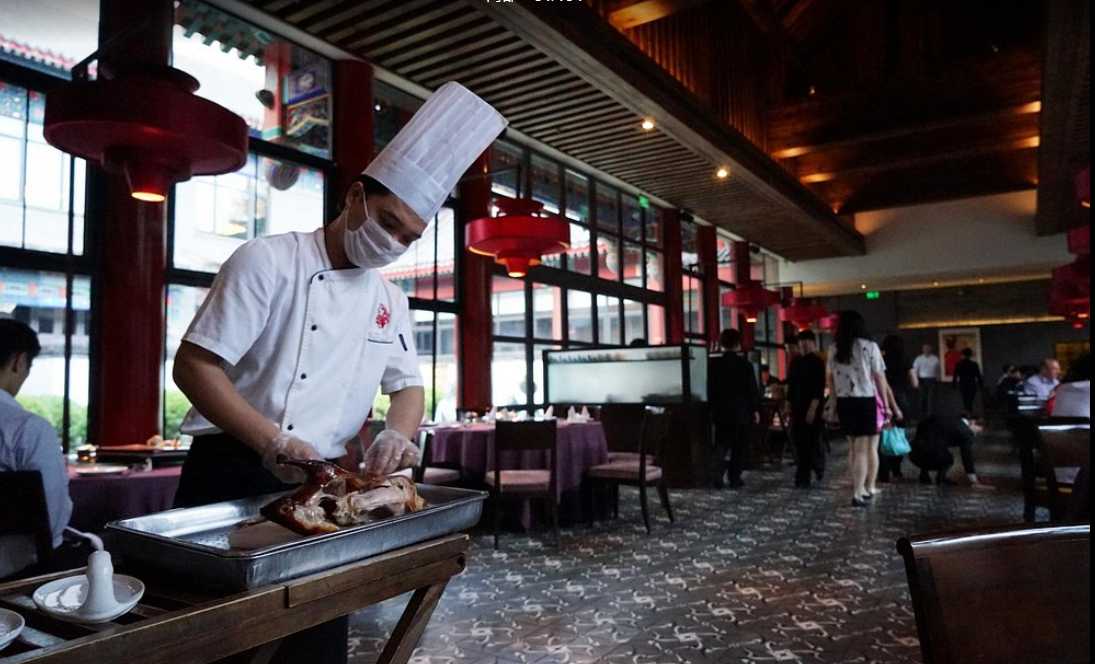
An upscale modern take on Peking duck with a Franco Chinese fusion approach. The signature dish combines traditional roasting with contemporary presentation. Popular with expats and travelers wanting a more polished restaurant experience.
- Signature style: Modern interpretation with a fusion twist
- Price per duck: ¥400 to ¥500 (around $56 to $70)
- Best branches: Sanlitun (三里屯), Qianmen
- Reservations: Recommended
Jing Yaa Tang (京雅堂)
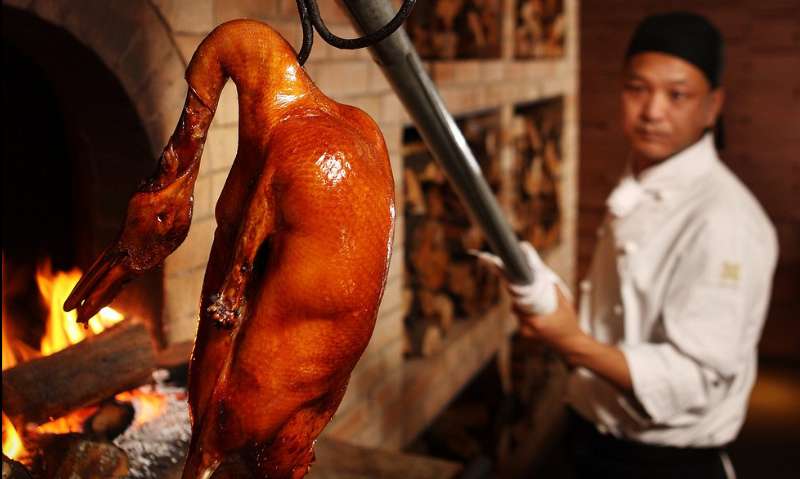
Ultra luxury Peking duck at The Opposite House hotel in Sanlitun. Created by chef Alan Yau (of Hakkasan and Yauatcha fame), Jing Yaa Tang serves what many consider the most refined version of Peking duck available. Prices reflect the level.
- Signature style: Luxury reinterpretation with premium ingredients
- Price per duck: ¥588 to ¥698 (around $82 to $98)
- Location: The Opposite House, Sanlitun
- Reservations: Essential
How Much Does Beijing Duck Cost?
Peking duck prices vary widely depending on the restaurant and the version.
Restaurant tier | Full duck price | USD approx. | Total meal for 2 (with sides) |
|---|---|---|---|
Budget/local (Siji Minfu style) | ¥238 to ¥268 | $33 to $37 | ¥400 to ¥600 total (around $56 to $84) |
Established institution (Quanjude, Da Dong) | ¥258 to ¥398 | $36 to $56 | ¥500 to ¥900 total (around $70 to $126) |
Upscale modern (Duck de Chine) | ¥400 to ¥500 | $56 to $70 | ¥800 to ¥1,200 total (around $112 to $168) |
Luxury (Jing Yaa Tang) | ¥588 to ¥698 | $82 to $98 | ¥1,500 to ¥2,500 total (around $210 to $350) |
Half duck is usually available. Most restaurants let you order half a duck for around 50 to 60 percent of the full duck price, which is a good option for a party of two who want to try other dishes.
Total meal budget for 2 people including a whole duck, one or two side dishes, and beverages typically runs ¥400 to ¥900 (around $56 to $126) at the mainstream restaurants.
When to Book a Peking Duck Restaurant
Beijing duck restaurants have three peak periods when advance booking is essential:
- Chinese public holidays (Chinese New Year, Golden Week in early October, National Day). All major duck restaurants fully book weeks ahead.
- Weekend dinners at popular restaurants. Reserve 3 to 7 days ahead for Da Dong, Duck de Chine, and Jing Yaa Tang.
- Peak dinner hours (6:00 PM to 8:00 PM). Even mid week, walk in seating at popular branches is difficult during dinner.
How to book:
- Trip.com offers online booking with English support for most major Peking duck restaurants
- Direct phone booking requires Chinese language skills; the restaurant will need your name and party size
- On site for restaurants that don't take reservations (Siji Minfu branches). Arrive at opening for the shortest wait.
- Hotel concierge at international hotels can often book Peking duck restaurants on your behalf
Get Your eSIM Instantly – Stay Connected in China
See all attractions






Beijing Duck Beyond Beijing
You can find Peking duck across China and internationally, but Beijing itself remains the definitive place to eat it.
- In China outside Beijing. Shanghai, Guangzhou, Chengdu, and Xi'an all have well regarded Peking duck restaurants, often branches of the Beijing institutions. Da Dong has locations in Shanghai and Chengdu. Quanjude operates branches across major Chinese cities.
- Hong Kong. Peking Garden and Spring Deer are well established options with proper hung oven duck.
- International. London (Hakkasan, Duddell's), New York (RedFarm, Han Dynasty), Los Angeles (Mr. Chow), Sydney (Silks at The Star), and Melbourne have credible Peking duck restaurants. Most use variations of the hung oven method.
However, the theatrical carving, the specific breed of duck raised locally, and the atmosphere of a Beijing duck house are hard to replicate outside the capital.
Tips for International Visitors
- Order the duck first. Because roasting takes 45 to 60 minutes, order your duck when you first arrive. Order other dishes to enjoy while waiting.
- Ask for the crispy skin service. At Da Dong and some modern restaurants, request the crispy skin with sugar. It's often included but can be missed on the menu.
- Don't skip the soup. The duck carcass soup served at the end of the meal is a highlight that many international visitors miss because they've already eaten enough.
- Split a duck between 2 to 4 people. A whole duck is a lot of food. Two people can comfortably share a whole duck with two side dishes. Four people can share with three or four side dishes.
- Bring cash or a Chinese payment app. Larger restaurants accept international credit cards, but some smaller branches only accept cash, Alipay, or WeChat Pay.
- Book restaurants near your hotel. Beijing is enormous. Choose a Peking duck restaurant near your hotel or a planned sightseeing area to avoid long transfers.
- Try both styles if you have time. Quanjude (hung oven, crispier) and Bianyifang (closed oven, more tender) offer genuinely different experiences.
- Vegetarians should order a full menu of sides. While the duck is the star, most restaurants have extensive vegetarian side options including sweet and sour eggplant, garlic morning glory, and vegetable pancakes.
Beijing Duck FAQ
-
Is Beijing duck the same as Peking duck?
-
How much does Peking duck cost in Beijing?
-
Do I need a reservation for Peking duck in Beijing?
-
Can two people finish a whole duck?
-
Why does Peking duck take so long to arrive after ordering?
Disclaimer: This article has been provided by an individual contributor or third party platform. If there is any discrepancy regarding the copyright, please contact us directly and we will delete the content immediately.
Trending Searches
-
Getting Around
-
Popular Attractions
-
eSIM/SIM card
- Chongqing Airport to City
- HARUKA Timetable
- Car Rental Insurance
- Narita Airport to Tokyo
- Guilin Airport
- Istanbul Airport Transfers
- Hotels near LAX with Shuttle
- Shenzhen Airport
- Incheon International Airport to Seoul
- Singapore MRT Map
- Narita Airport Limousine Bus
- Narita Airport Lounge
- Singapore Airport to City
- Foshan Metro
- Narita Airport to Shinjuku
- Macau to Hong Kong
- Xiamen Metro Map
- Forbidden City Tickets
- Zhangjiajie National Forest Park
- Shanghai Wild Animal Park
- Shanghai Tower Tickets
- Tianmen Mountain
- Shanghai Disneyland Tickets
- shanghai to wangxian valley
- Canton Tower Tickets
- Huangshan
- Book China Attraction Tickets with Passport
- Shanghai Disneyland Fast Pass
- Summer Palace Tickets
- Universal Studios Beijing Tickets
- Shanghai Disneyland Crowd Forecast
- Great Wall of China Tickets