
The Beijing Metro is one of the most extensive and busiest metro systems in the world, serving as the backbone of public transportation in China’s bustling capital. Whether you’re a first-time visitor or a seasoned resident, this guide will provide everything you need to know about navigating the Beijing Metro.
Overview of the Beijing Subway System
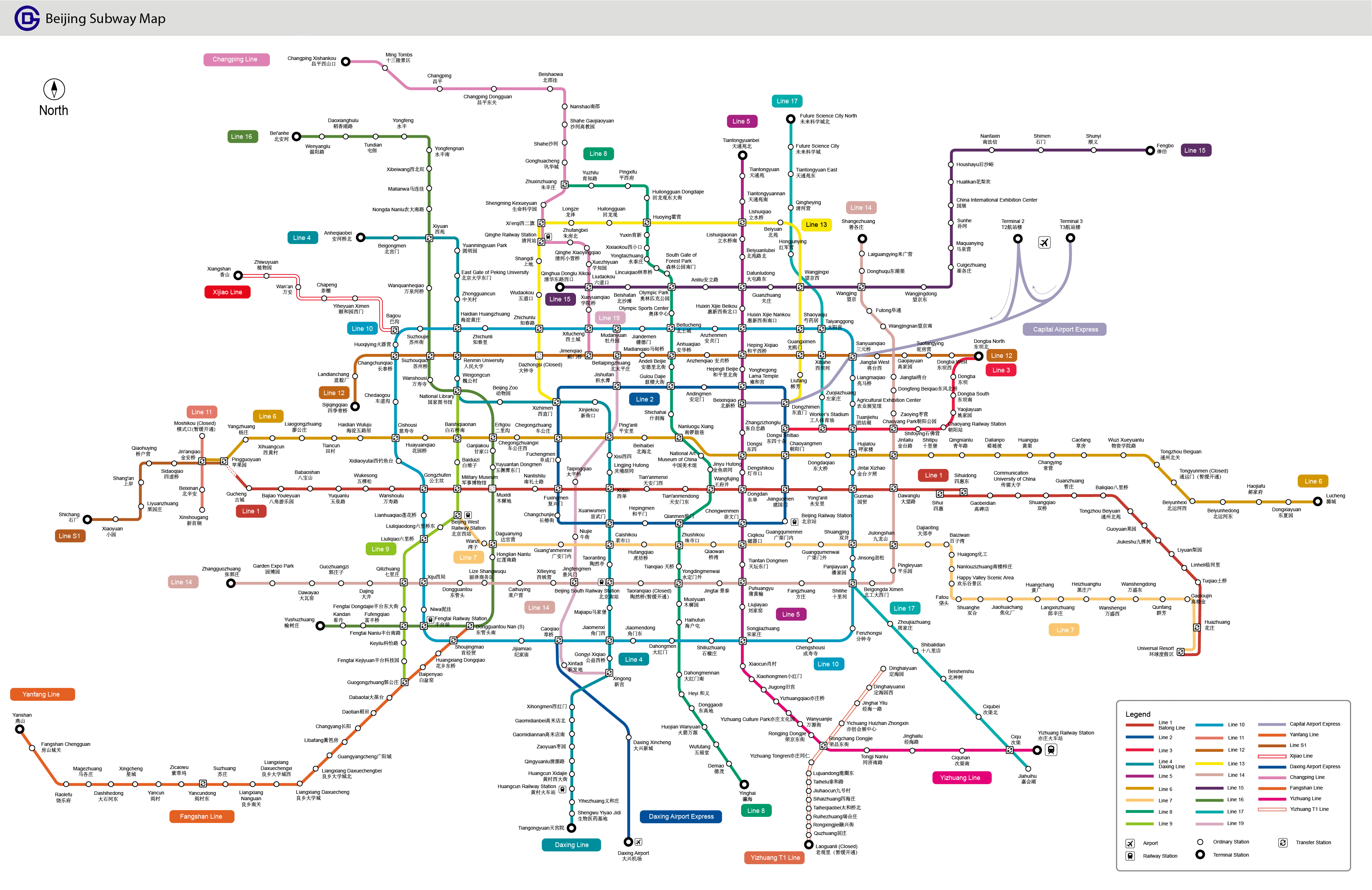
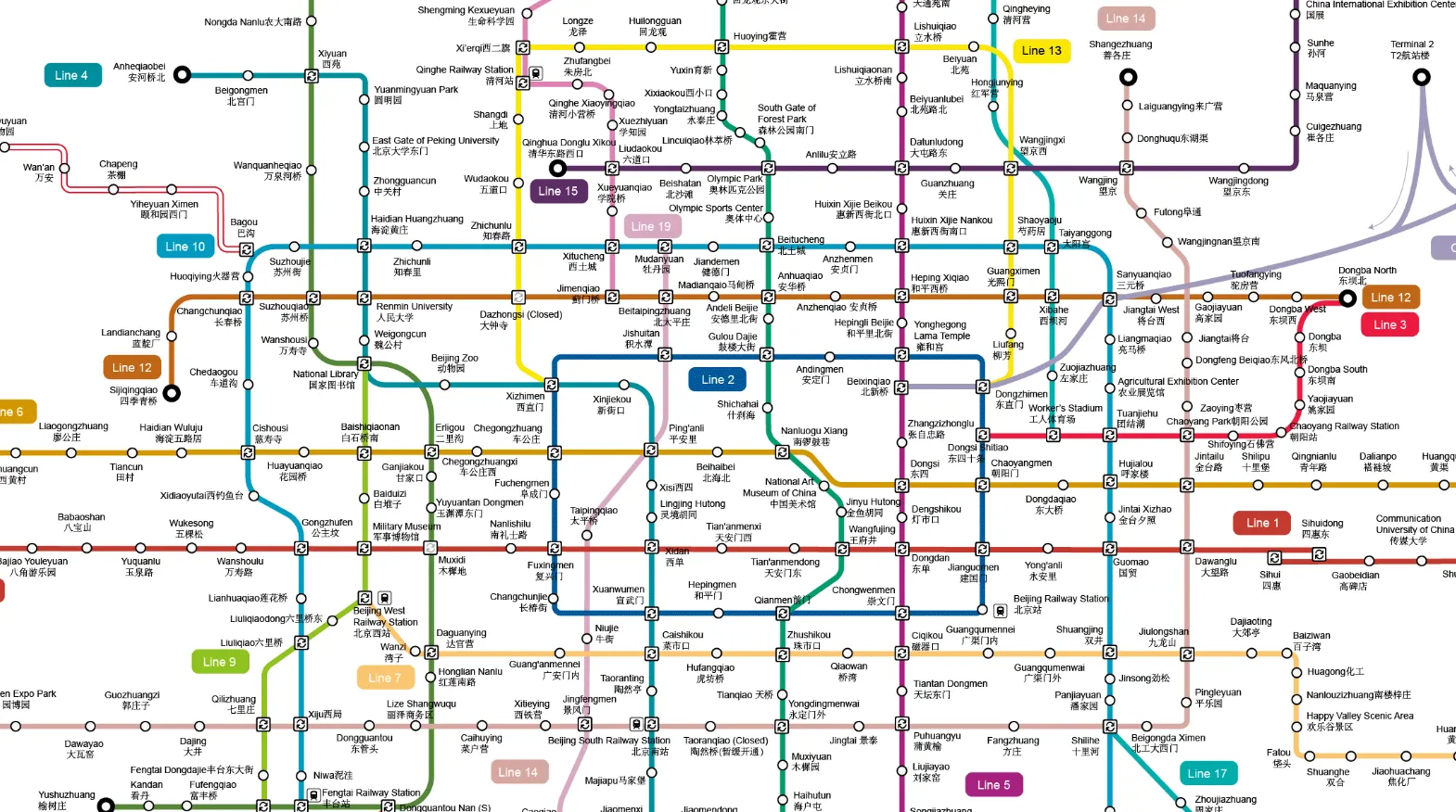
As of 2025, the Beijing Subway comprises 27 operational lines, including two airport express lines and two tram lines. It covers a total mileage of 807 kilometers (501 miles) and encompasses 475 stations, 81 of which are transfer stations. Here is the subway map of Beijing:
Beijing Metro is a common way to go around Beijing since traffic will be serious in central Beijing. As a visitor, it's best to avoid taking the subway during rush hours (7–10 AM and 5–8 PM on weekdays) to avoid the crowds.
Line 1 runs straight east-west beneath Chang'an Avenue, bisecting the city through Tian'anmen Square. It runs from Gucheng to Sihuidong with 31 km. It connects major commercial centers such as Xidan, Wangfujing, Dongdan, and the Beijing CBD.
Key Stations:
Gucheng: Western terminus, providing access to residential areas.
Tian'anmen West: Proximity to Tian'anmen Square and the Forbidden City.
Wangfujing: Famous shopping street with numerous retail outlets and eateries.
Line 2 is a rectangular loop line that traces the Ming-era inner city wall, with stops at 11 of the wall's former gates, now busy intersections on the 2nd Ring Road, as well as the Beijing Railway Station. The total length of Line 2 is 23.1 km.
Key Stations:
Beijing Railway Station: Major hub for national rail services.
Qianmen: Access to historic Qianmen Street and Dashilan shopping area.
Lama Temple (Yonghegong): Proximity to the renowned Lama Temple.
Line 3: New East-West Connector
Line 3 provides an additional east-west route through Beijing, improving access to key business and leisure areas. It runs from Dongsi Shitiao to Dongba North, with around 15 km long.
Key Stations:
Dongsi Shitiao: Transfer to Line 2, close to Sanlitun nightlife area.
Tuanjiehu: Near Sanlitun shopping and entertainment district.
Chaoyang Park: Provides access to Beijing’s largest city park.
Chaoyang: A key transportation hub in eastern Beijing.
Line 4: North-South Connector
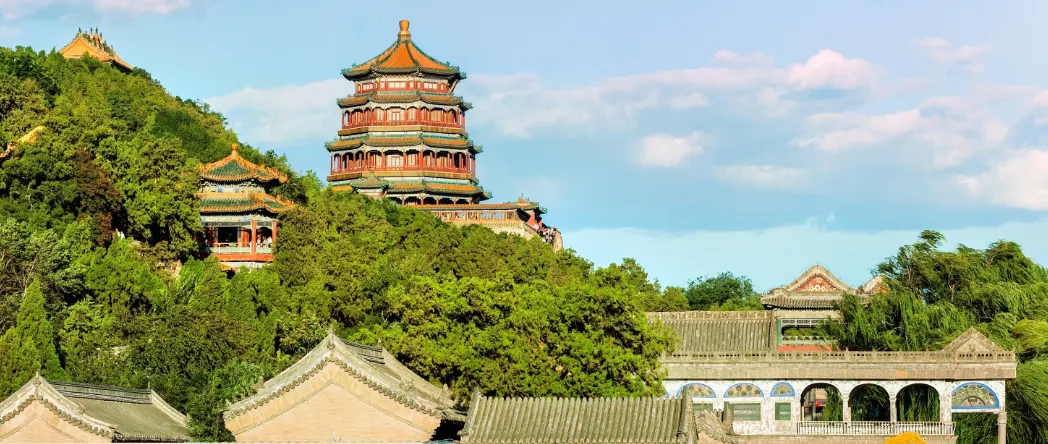
Line 4 is a mainly north–south line running to the west of the city center, with stops at the Summer Palace, Old Summer Palace, Peking and Renmin Universities, Zhongguancun, National Library, Beijing Zoo, Xidan, Taoranting, and Beijing South Railway Station.
Key Stations:
Beigongmen: Closest station to the Summer Palace.
Zhongguancun: Known as China's Silicon Valley, a hub for technology and electronics.
National Library: Access to the National Library of China.
Beijing South Railway Station: Major station for high-speed trains.
Line 5: Central Axis Route
Line 5 is a straight north–south line running to the east of the city center, passing the Temple of Earth, Yonghe Temple, and the Temple of Heaven. It runs from Tiantongyuanbei to Songjiazhuang with around 28km long.
Yonghegong (Lama Temple): Access to the Lama Temple and Confucius Temple.
Tiantan Dongmen: East gate of the Temple of Heaven Park.
Songjiazhuang: Southern terminus with transfer options.
Line 6: Northern Parallel
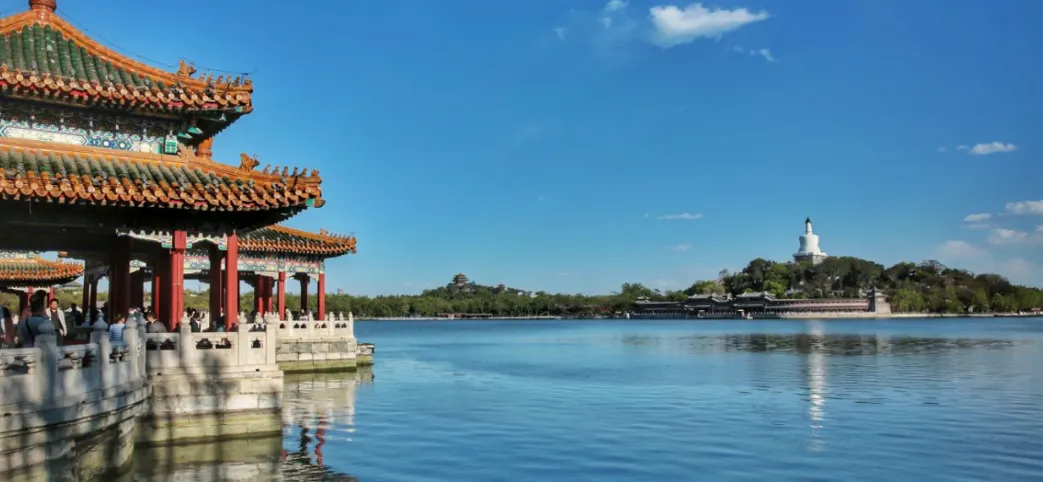
Line 6 is an east–west line running parallel and to the north of Line 1, passing through the city center north of Beihai Park. At 53.4 km, it is the second-longest Beijing Subway line after Line 10, running from Shijingshan District in the west to the Beijing City Sub-Center in Tongzhou District, terminating at Lucheng just beyond the eastern 6th Ring Road.
Key Stations:
Ping'anli: Transfer point with Line 4.
Nanluoguxiang: Access to historic alleyways and traditional architecture.
Dongdaqiao: Proximity to the Central Business District.
Lucheng: Eastern terminus serving suburban areas.
Line 10: The Outer Loop
Line 10 is the outer loop line running beneath or just beyond the Third Ring Road. Apart from the Line 2 loop, which is entirely enclosed within the Line 10 loop, every other line through the urban core intersects with Line 10. In the north, Line 10 traces Beijing's Yuan-era city wall. In the east, it passes through the Beijing CBD.
Key Stations:
Bagou: Access to the Xijiao Line.
Sanyuanqiao: Transfer to the Capital Airport Express.
Guomao: Major interchange in the Central Business District.
Shuangjing: Residential and commercial area with shopping centers
Get a SIM card or eSIM to get Subway Maps and Guide in your phone:
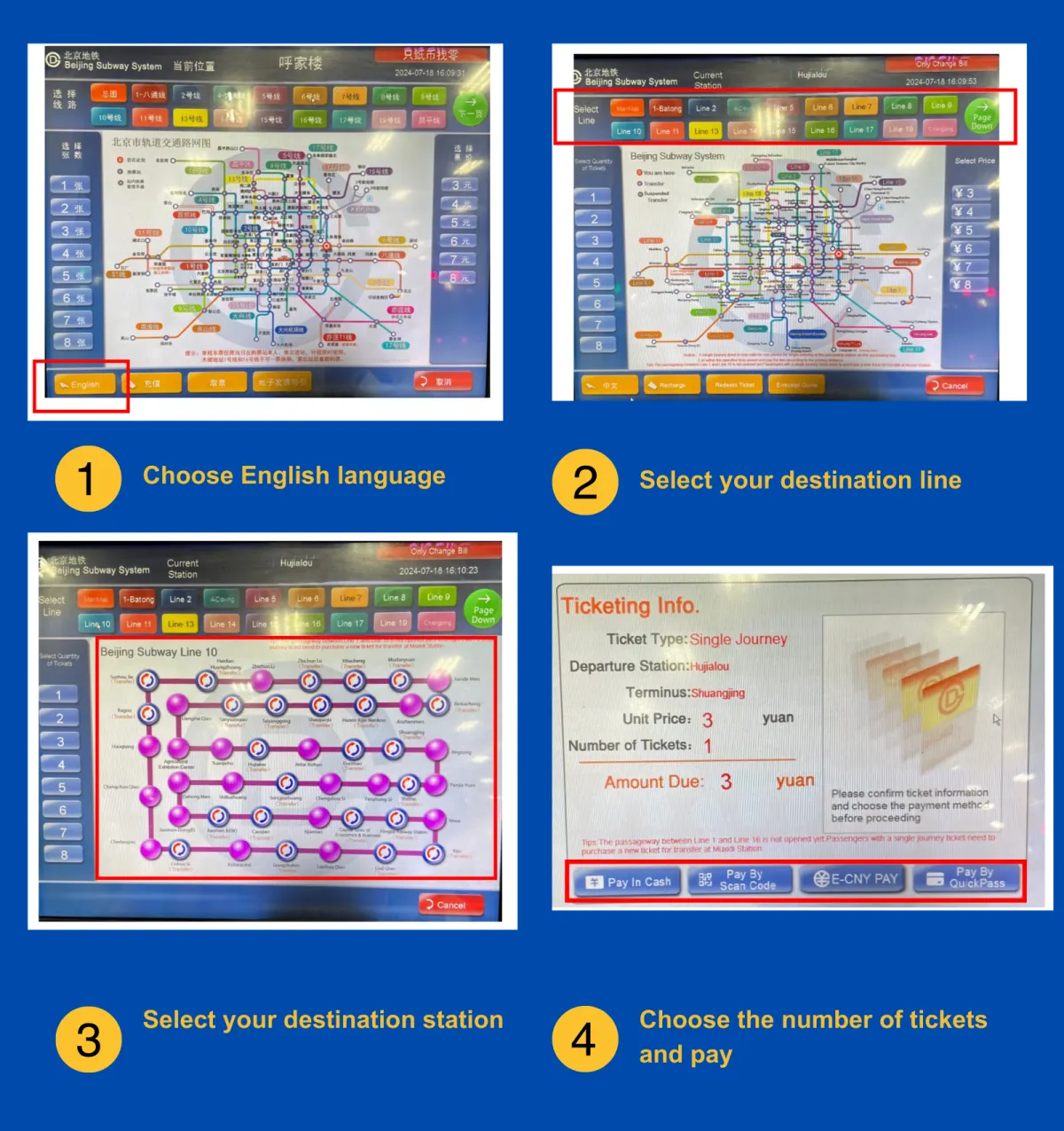
Available at ticket vending machines in all stations. Fares are distance-based, starting at ¥3 for trips up to 6 km, with incremental increases for longer distances. You can directly buy a ticket through vending machine:
A rechargeable card offering convenience and fare discounts. It can be used on subways, buses, and even some taxis. Purchase and recharge the card at service counters within subway stations.
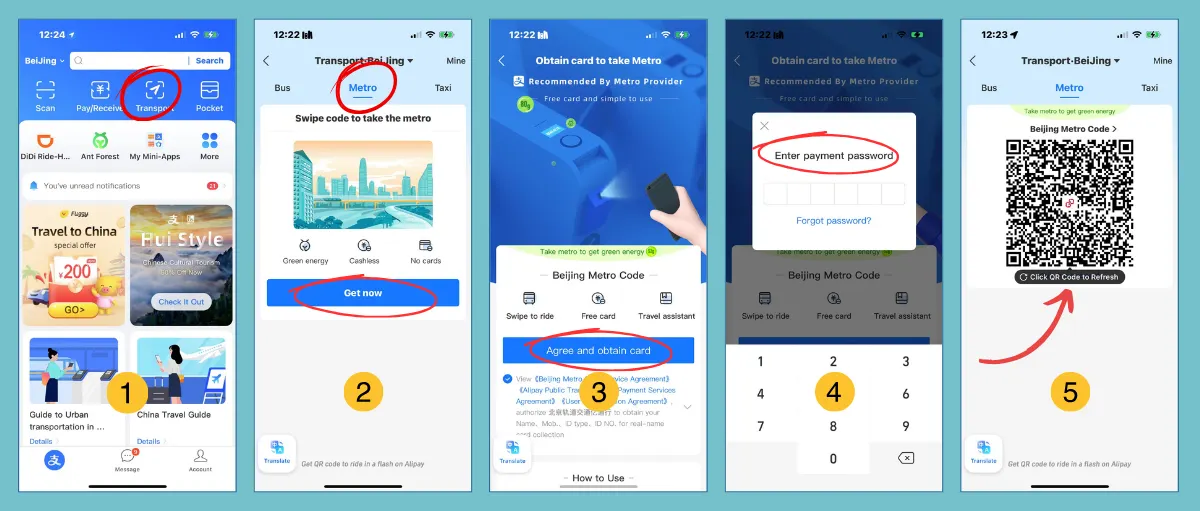
Alipay Digital Metro Card
The easiest way to ride Shanghai Metro is using Alipay's digital transport card, especially for international visitors. Just download Alipay, go to the "Transport" section on the homepage, and select "Transport. Beijing." You will find many transport options: metro, bus, bike taxi.
The Beijing Metro employs a distance-based fare system:
Base Fare: ¥3 for the first 6 kilometers.
Incremental Charges:
Distance
Fare
Common Routes
6 - 12 km
¥4
Beijing Railway Station → Wangfujing (Line 2 & 1)
12 - 22 km
¥5
Dongzhimen → Beijing South Railway Station (Line 2 & 4)
22 - 32 km
¥6
Olympic Park → Qianmen (Line 8 & 2)
32 - 52 km
¥7
Beijing West Railway Station → Capital Airport (Line 7, 10, Airport Express)
52 - 72 km
¥9
Changping → Tiananmen (Changping Line & Line 4)
72+ km
+¥2 per 20 km
Daxing → Haidian (Daxing Line & Line 4)
Airport Express
¥25
Dongzhimen → Capital Airport
Operating Hours
The Beijing Metro operates daily, with most lines running from approximately 5:00 AM to 11:00 PM. However, exact times can vary by line and station:
First Trains: Typically depart between 5:00 AM and 6:00 AM.
Last Trains: Generally depart between 10:00 PM and 11:00 PM.
During peak hours (around 7:00 AM to 9:00 AM and 5:00 PM to 7:00 PM), trains arrive every 3 to 5 minutes. In off-peak times, intervals may extend to 6 to 10 minutes.
Bags must go through X-ray scanners before entering any station. Lighters, flammable liquids, and large items may be confiscated.
2. No Eating or Drinking Allowed
Food and drinks are not allowed inside the metro. Drinking water is generally tolerated, but avoid eating to prevent fines.
3. Mobile Payment is the Easiest Way to Pay
The best option: Beijing Metro App, WeChat Pay, or Alipay QR codes. Physical Yikatong cards are available for tourists.
4. Announcements are Bilingual
All metro announcements are in Chinese and English, making navigation easier for visitors.
5. Transfers Can Be Long
Some interchange stations, like Xizhimen (Line 2, 4, 13), have long transfer corridors—be prepared to walk several minutes. Check station layouts beforehand if you have limited time.
6. First and Last Train Times Vary by Line
Most lines start around 5:00 AM – 6:00 AM and end between 10:30 PM – 11:30 PM. Airport Express runs later, but always check the last train times to avoid getting stranded.
The fare is based on distance. The base fare is ¥3 for the first 6 km, with additional charges as distance increases.
Do I need a Yikatong card, or can I buy single tickets?
Both options are available. The Yikatong card is convenient for multiple rides, while single tickets can be purchased at vending machines.
What time does the Beijing Metro open and close?
Most lines operate from around 5:00 AM – 11:30 PM, but times vary. Always check the schedule for specific lines.
How do I get to Beijing Capital International Airport by metro?
Take the Airport Express Line from Dongzhimen (Lines 2, 13) or Sanyuanqiao (Line 10) to Terminal 2 or Terminal 3.
Disclaimer: This article has been provided by an individual contributor or third party platform. If there is any discrepancy regarding the copyright, please contact us directly and we will delete the content immediately.
Hi, I’m Jeffery. I love visiting new cities, trying local food and finding fun, off-the-beaten-path spots. I share my real travel stories, easy itineraries and honest tips from my own trips. I hope my posts can help you plan better.