Check Through Baggage Guide - Recheck Rules for Connecting Flights


Will your bags go directly to your final destination when having connecting flights? Do you have to collect and recheck them at the transfer airport? The answers all depend on check through baggage rules, airline partnerships, and regional airport policies. Check below!
to Bangkok
to Manila
to Shanghai
to Tokyo
to Seoul
See all flights


What is Check Through Baggage?
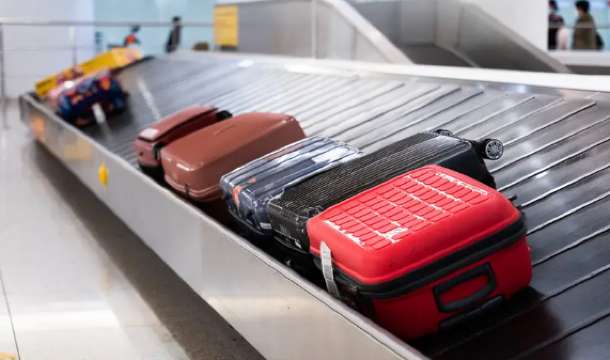
Check-through baggage is a standard service offered by most full-service airlines: when you check your bags at your origin airport, the airline handles all baggage transfers for your connecting flights — you do not need to collect, recheck, or complete any baggage procedures at transfer airports. Your bags are tagged directly to your final destination, and you can pick them up only at the baggage claim of your arrival airport.
This service is typically standard for connecting flights booked on a single ticket with partner airlines, and interline agreements are the key to making it possible.
What is Interline Agreements for Connecting Flights
An interline agreement is a formal partnership between two or more airlines that allows them to handle passenger and baggage transportation together for connecting flights. For travelers, this partnership has three key benefits:
- Automatic baggage transfer: Your bags are checked through to your final destination, even if your connecting flight is operated by a different airline.
- Single check-in: You can get all your boarding passes for every flight segment at your origin airport, in one go.
- Coordinated claims handling: Interline agreements enable collaborative baggage processing between carriers; liability for lost, delayed, or damaged baggage is determined in accordance with applicable international regulations and local rules.
In most cases, without a valid interline or codeshare agreement, airlines cannot automatically transfer baggage between each other, and you must collect and recheck your bags for the next flight at the transfer airport.
Do I Need to Recheck Luggage on a Connecting Flight? How It Works
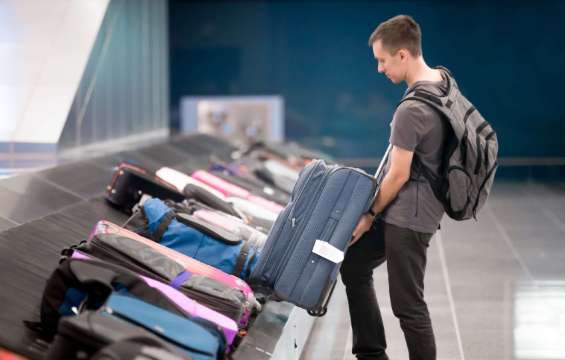
Do I Need to Recheck Luggage on a Connecting Flight
This is the most common question for travelers on connecting flights, and there are only two possible answers: your luggage is transferred automatically (no recheck needed) or you must collect and recheck your luggage in person. Here are the clear scenarios for each outcome.
When Your Luggage Transfers Automatically (No Recheck Needed)
Your bags will typically be checked through to your final destination with no action required from you only when all of the following conditions are met:
- Single itinerary booking: Your connecting flights are booked as a single itinerary with one ticket/PNR number.
- Valid airline partnership: The airlines operating your flights have a valid interline or codeshare agreement.
- Same airport with transfer access: Your connection takes place within the same airport, with accessible baggage transfer channels between terminals.
- No mandatory customs clearance at transfer: You do not need to clear customs/immigration for an international inbound flight at the transfer airport (see exceptions below).
- Compliant baggage size and weight: Your baggage meets the most restrictive weight and size limits of all airlines on your route.
When You Must Collect & Recheck Your Baggage
You will have to collect your checked luggage and recheck it for your next flight at the transfer airport if any of these apply — even if your itinerary would otherwise qualify for check-through baggage:
- International inbound with customs clearance required: If the transfer airport is your first port of entry (e.g., a US airport transfer for a flight from Europe to Canada), you must collect your bags to clear customs. After customs, most major airports provide a dedicated baggage recheck counter near the customs exit — no need to go back to the main check-in area.
- No interline/codeshare agreement between airlines: If the airlines for your connecting flights have no formal partnership, they cannot transfer baggage automatically, and manual recheck is required.
- Flights booked on separate tickets: If your two flight segments are booked as independent itineraries (e.g., a Delta flight to London on one ticket, a British Airways flight to Paris on another), they are typically treated as fully separate trips. You must collect your bags and recheck in for the second flight.
- Connection at a different airport or unconnected terminals: Some cities have multiple airports (e.g., London Heathrow + Gatwick, Tokyo Haneda + Narita), or some airport terminals have no baggage transfer channels between them. You will need to collect your bags, travel to the new airport/terminal, and recheck them.
- Baggage that violates airline rules: If your bags exceed the weight/size limits of the connecting airline, and the interline agreement does not cover this, you must collect your bags to adjust them (e.g., remove excess weight, split items) before rechecking.
- Low-cost carrier (LCC) fare rules: Most budget airlines (e.g., Ryanair, IndiGo, Spirit Airlines) do not include free check-through baggage service in basic fares. Some LCCs offer paid check-through options, while others require you to collect and recheck bags manually.
❗ Important Disclaimer: Check-through baggage policies are set independently by airlines, airports and local customs regulations, and are subject to change at any time without notice. The content below is for general reference only. Always confirm your baggage transfer status directly with your operating airline or check-in agent before departure.
General Check Through Baggage Policies
Below are common industry practices for check-through baggage, followed by most full-service airlines and major airports. Exceptions may apply depending on specific airline, airport and route rules.
Core Common Practices
- Baggage tagging rule: All check-through bags have a printed baggage tag with the airport code of your final destination — always double-check this at check-in, or ask the agent to confirm.
- Strictest rule applies: Your baggage must meet the most restrictive weight and size limits of all airlines on your route (e.g., if Airline A allows 23kg checked bags and Airline B only allows 20kg, your bags must be 20kg or less).
- Single ticket requirement: Free automatic baggage transfer is typically only available for connecting flights on a single ticket/PNR. Separate tickets usually do not qualify for complimentary check-through service.
- Minimum connection time (MCT): Official minimum connection times are set individually by each airport and vary by terminal, airline and route — typically 30–90 minutes for domestic connections and up to 3 hours for international connections. If your connection time is shorter than the official MCT for your route, the airline will typically not offer check-through baggage service.
- Liability rule: Under the Montreal Convention for international itineraries, you may file a claim against the first carrier, the last carrier, or the operating carrier of the flight segment where the loss, delay or damage occurred, subject to applicable international conventions and local regulations.
Regional & Airline Policy Differences
Beyond the general practices, there are small but critical differences in check-through baggage policies by region and airline type (full-service vs. LCC). These are key details for global travelers to note:
- North America: All international inbound flights require baggage collection for customs clearance — even if you are connecting to another international flight. Recheck counters are typically available post-customs for a smooth process at most major airports.
- Europe: Baggage is typically transferred automatically for intra-Schengen connecting flights, with no customs clearance required at transfer points. European LCCs (e.g., Ryanair, Wizz Air) rarely offer free check-through baggage; the service is only available for a fee on eligible routes.
- Asia: Major hub airports (e.g., Singapore Changi, Hong Kong International, Seoul Incheon) have seamless baggage transfer for interline flights, and customs clearance is only required at your final destination. Full-service Asian airlines (e.g., Cathay Pacific, Singapore Airlines) offer free check-through baggage for all connecting flights on a single ticket.
Full-service airlines vs. LCCs
- Full-service airlines: Free check-through baggage is a standard benefit for all connecting flights on a single ticket, for all cabin classes (economy, business, first).
- LCCs: Free check-through baggage is almost non-existent in basic fares. Most LCCs charge standard checked baggage fees per flight segment rather than a separate check-through fee; typical rates range from approximately €19–€60 per bag per segment depending on the airline, route and booking time. Some (e.g., IndiGo) only offer check through baggage for their own network flights (no interline partnerships with other airlines).
See all attractions
 2496 booked






How to Know If Your Bags Will Be Transferred to the Final Destination

flydubai announces seven new interline agreements
Confirming if your bags are checked through to your final destination is simple. Do one of these at your origin airport to avoid last-minute issues at the transfer airport:
- Ask the check-in agent: This is the most reliable way. Simply ask: “Is my baggage tagged to [final destination]? Will it be transferred automatically for my connecting flight?”
- Check your baggage tag: Look for the final destination airport code on the printed tag attached to your bag. If it shows the transfer airport instead, ask the agent to re-tag it immediately.
- Verify your ticket and boarding passes: If all your flights share one PNR/ticket number, and you receive all your boarding passes at check-in, your bags will very likely be checked through automatically.
- Check airline interline partners: Most airlines list their interline partners on their official website (under Travel Info > Baggage > Interline Agreements). If your connecting airline is listed as a partner, baggage transfer is typically permitted for single-ticket itineraries.
What to Do If Your Check Through Baggage Is Delayed/Lost
Even with all check-through conditions met, bags can still be delayed or lost (e.g., missed connection, mis-tagging). If this happens, follow these steps immediately at your final destination airport:
- Go to the airline’s Baggage Service Office: Located in the baggage claim area (all major airports have this counter).
- File a Property Irregularity Report (PIR): This is the official document for lost/delayed baggage claims. You will need your baggage tag, boarding pass, and passport/government-issued ID to complete it.
- Get a baggage tracking reference number: Use this number to monitor your baggage status in real time on the airline’s website or app.
- Keep all receipts for essential expenses: If you incur reasonable essential expenses (e.g., toiletries, basic clothing) due to delayed baggage, you may be eligible for reimbursement. Reimbursement covers necessary costs and is subject to statutory liability limits (e.g., 1,519 SDR / ~$2,175 USD under the Montreal Convention). Fixed daily reimbursement caps (such as $100 per day for 5 days) are a benefit offered by some credit card travel insurance plans, not a universal airline policy.
- Follow up on your claim: Under the Montreal Convention, baggage is deemed lost after 21 days of delay, at which point you may file an official lost baggage claim. Compensation is subject to statutory liability limits and accounts for depreciation of items; full actual value of contents is not guaranteed unless you have purchased excess valuation coverage.
[Discount] Global Hotel Recommendations
Find Best Global Hotels
See All Hotels







FAQs about Check Through Baggage
-
What is check through baggage?
-
Do I need to recheck my luggage on a connecting flight?
-
Do I need to receive my checked luggage between connecting flights?
-
Do checked bags go to the final destination?
-
How do I know if my bags will be transferred?
Disclaimer: This article has been provided by an individual contributor or third party platform. If there is any discrepancy regarding the copyright, please contact us directly and we will delete the content immediately.
Trending
-
Air Travel Guide
-
Latest Flight Deals
-
Popular Flight & Hotel Packages
-
Getting Around
-
eSIM/SIM card
- Cancun Vacation Packages
- Medellin Vacation Packages
- Hong Kong Vacation Packages
- Tokyo Flight and Hotel
- Koh Samui Flight and Hotel
- New Orleans Vacation Packages
- Hat Yai Vacation Packages
- Ottawa Vacation Packages
- BALI Flight and Hotel
- Cotonou Vacation Packages
- Mexico City Vacation Packages
- Ho Chi Minh City Vacation Packages
- Labuan Bajo Vacation Packages
- Marrakech Vacation Packages
- Grand Turk Vacation Packages
- Hong Kong Airport to Guangzhou
- JR Shikoku
- Haneda Airport to Tokyo
- Beijing Airport to City
- JR Kyushu
- Beijing Airports
- Shenzhen Airport
- Wuxi Metro
- Macau to Zhuhai
- How to get to Great Wall of China
- Haneda Airport Limousine Bus
- Ningbo Airport
- Chengdu Metro
- Macau to Shenzhen
- Macau to Hong Kong
- Narita Airport to Shinjuku
- Xian Metro Map