Chinese Desserts: What to Try and Where to Find Them

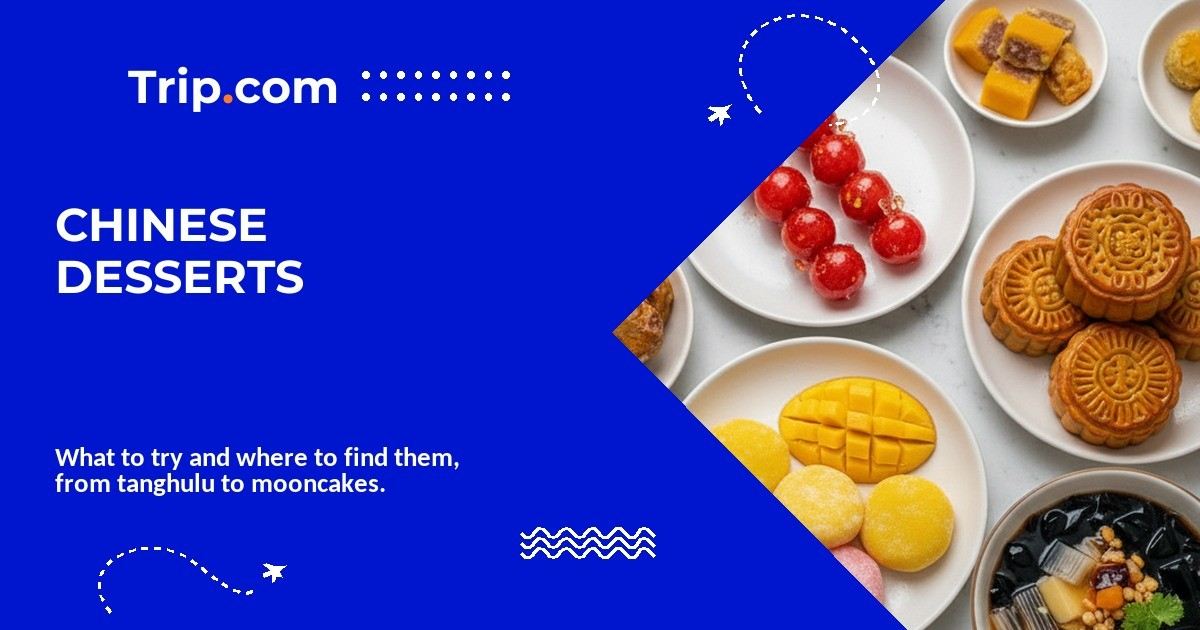
Quick answer: don't wait for a dessert menu after dinner. Most Chinese restaurants never hand you one. Plan dessert as its own separate stop instead: stroll out to a night market or a neighborhood bakery after you pay the check, and grab a skewer of tanghulu (candied hawthorn berries) first. In China, sweets live at street carts, bakery counters, and late-night dessert parlors, so you walk to them rather than expecting your dinner table to provide them.
Planning a trip across China? Compare flights into Beijing, Shanghai, and Guangzhou below before you map out your evening snack stops.
Compare flights to China on Trip.com
Beijing
Shanghai
Guangzhou
See all flights

AI Summary
This summary is AI-generated by Trip.com. For the complete guide, please refer to the article below.
Chinese dessert consumption occurs at street carts, bakeries, or parlors rather than restaurants. Tanghulu costs 10 to 25 yuan and peaks in winter.
What desserts do people actually eat in China?
If you're expecting frosting and heavy buttercream, Chinese desserts will surprise you right away. Everyday sweets lean light on sugar and big on texture: steamed milk, red beans, sticky rice, sesame paste, and fresh fruit. Plenty of sit-down dinners simply end with sliced watermelon or oranges, which tells you everything about local taste. Complimenting a sweet in China often sounds like "not too sweet."
What you'll find changes completely by region. Down in Guangdong, Cantonese kitchens perfected late-night sweet soups and silky milk puddings. Up north, winter streets belong to sticky-rice cakes and sugar-glazed fruit skewers, while western snack alleys fry crisp sesame balls and dough twists. Hong Kong dessert parlors gave modern chains chilled mango pomelo sago, now easy to spot in malls nationwide. Go with whatever the city you're in does best.
Tanghulu, the street classic
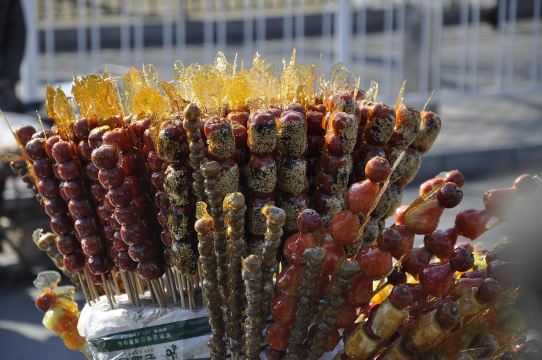
Nothing catches your eye on a chilly Chinese street faster than a stand bristling with bright red tanghulu, 冰糖葫芦 (bīngtáng húlu). Vendors thread whole hawthorn berries onto long bamboo sticks and dip them in boiling sugar until they cool into a glass-hard shell. Bite down and the sugar snaps cleanly before hitting tart, jammy fruit underneath. Because the berry is sour, you finish a whole stick without ever feeling weighed down.
Winter is peak tanghulu season. On cold Beijing evenings, a skewer typically runs 10 to 25 yuan (as of November 2026) depending on the street and fruit.
Stalls now glaze strawberries, green grapes, and cherry tomatoes too, and kids love them. Still, try the classic hawthorn stick first, because that sharp tang against the crunchy sugar is the whole point. Eat it right away before humidity softens the coat, and watch the sharp bamboo tip if children are sharing.
The festival sweets
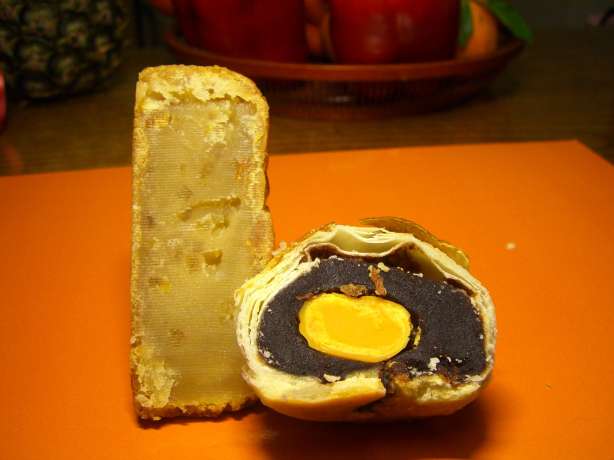
Walk into a bakery in September and you'll hit towering displays of mooncakes, 月饼 (yuèbǐng). These dense, stamped pastries pack lotus seed paste, sweet red bean, or mixed nuts (often wrapped around a rich salted egg yolk) for the Mid-Autumn Festival on the fifteenth day of the eighth lunar month. The catch? Once the holiday passes, fresh batches vanish. A mooncake sitting on a shelf in April isn't a lucky find; it's old factory stock. Most Chinese holiday sweets stick strictly to their calendar window.
Dessert | Chinese | What it is | Where to find it |
|---|---|---|---|
Tanghulu | 冰糖葫芦 (bīngtáng húlu) | Candied hawthorn berries on a skewer under a hard sugar shell | Street stalls, cold-weather streets and night markets |
Mooncake | 月饼 (yuèbǐng) | Dense filled pastry, lotus seed or red bean paste with possible salted egg yolk | Bakeries and shops around the Mid-Autumn Festival |
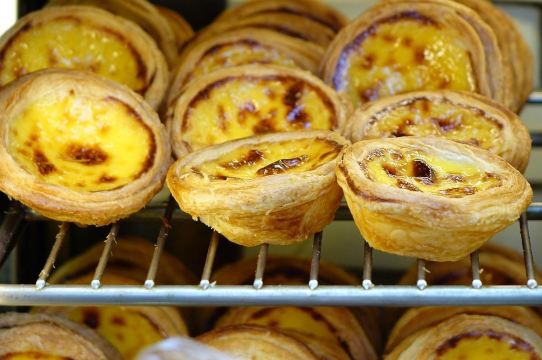
Egg tart | 蛋挞 (dàntà) | Cantonese custard tart in a flaky or short pastry shell | Bakeries and Cantonese dim sum houses, all day |
Sesame ball | 煎堆 (jiānduī) / 麻团 (mátuán) | Glutinous rice dough filled with sweet paste, fried and rolled in sesame | Dim sum carts, breakfast stalls, bakery counters |
Double-skin milk pudding | 双皮奶 (shuāngpínǎi) | Steamed milk pudding with a smooth skin, served warm or chilled | Cantonese dessert shops |
Red bean soup | 红豆沙 (hóngdòushā) | Sweet soup of boiled and sweetened red beans, served hot | Cantonese dessert shops, family kitchens |
Douhua | 豆腐花 (dòuhuā) | Soft tofu pudding under syrup, the gentlest sweet in the repertoire | Street stalls and dessert shops, morning to night |
Mango pomelo sago | 杨枝甘露 (yángzhī gānlù) | Chilled mango, pomelo and sago dessert from Hong Kong kitchens | Modern dessert shops and Hong Kong-style chains |
Where do you find desserts, day and night?
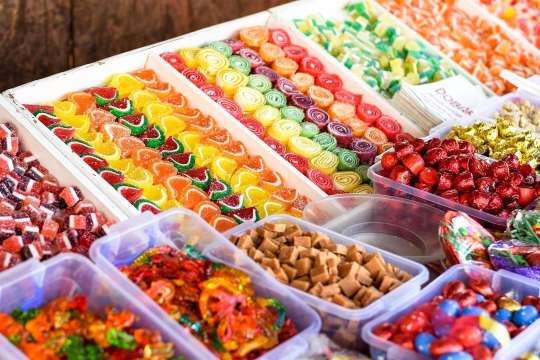
Look for sweets in three distinct spots: street carts and night markets after dark, neighborhood bakeries from morning through early evening, and Cantonese sweet-soup shops that keep humming past 10 pm. Know which spot sells what and you'll stop walking right past the best desserts in town.
At a night market, trust your eyes. Look for a tanghulu vendor actively dipping skewers into bubbling syrup or a sesame-ball stall pulling fresh batches straight from the wok. A short line of three or four locals beats an empty stall with cold trays every single time.
Bubble tea and fruit tea shops quietly handle half of China's sweet cravings too. Chains sit on almost every corner, and you pick your own sweetness right at the counter (half sugar, 半糖 bàntáng, or less sugar, 少糖 shǎotáng, is what most locals order). Load a cup with chewy boba, taro balls, or cheese foam and it drinks like dessert in a cup.
Save street sweets for after sundown. Evening snack alleys come alive right as dinner wraps up, and our street food guide pins down the best blocks to walk: Beijing's Guijie (簋街) and Huguosi Street, Shanghai's Huanghe Road, and Chengdu's Jianshe Lane. Head out after 6 pm, when sweet carts roll out beside the skewer grills.
During the day, duck into a bakery chain. Grab a metal tray and tongs by the door and load up on warm egg tarts, fluffy cream buns, or flaky wife cakes (老婆饼, lǎopó bǐng) filled with chewy winter melon paste, then pay at the register. After dinner on warm nights, hunt down a Cantonese dessert parlor signposted 糖水铺 (tángshuǐ pù, literally "sugar-water shop") for steaming red bean bowls or chilled milk puddings.
Reading a dessert shop menu
Don't let a wall of Chinese characters at a 糖水铺 intimidate you. Dessert names are remarkably literal. Spot 双皮奶 (shuāngpínǎi) and you've found double-skin milk pudding; 杨枝甘露 (yángzhī gānlù) is chilled mango pomelo sago. See 芝麻 (zhīma) for black sesame or 红豆 (hóngdòu) for red bean, then match it against the photo board or snap a quick camera translation.
Place | When it is open | What to look for | How to order |
|---|---|---|---|
Street stall or night market | Evening and night | Skewered and fried sweets made in front of you | Point and hold up fingers for the number |
Bakery chain | Daytime into evening | Egg tarts and wife cakes, usually warm from the tray | Self-serve tray and tongs, pay at the counter |
Cantonese dessert shop | Afternoon to late night | Sweet soups and milk puddings on a short menu | Order at the counter or from a numbered menu |
Supermarket or convenience store | All day | Packaged sweets and chilled desserts with labels | Self-serve, pay by QR code |
Finding hidden night markets and running camera translation at dessert shops takes reliable data, so grab a China eSIM before you land.
China eSIM plans
See all attractions
 2337844 booked


Which desserts should you try first?
Keep your first three picks dead simple: a glossy tanghulu stick from a street cart, a warm egg tart off a bakery tray, and a bowl of sweet soup at a dessert shop. None of those three requires explaining anything complicated at the counter, and trying all three gives you an instant feel for street, bakery, and parlor sweets.
Pick | Why it works first | Watch for |
|---|---|---|
Tanghulu | Sold by sight at any street stall, no menu needed | The shell is best fresh; the skewer point is sharp |
Egg tart | Universally available in bakeries, mild and familiar | Best warm from the tray; ask which tray just came out |
Double-skin milk pudding | Gentle, few ingredients, a Cantonese benchmark | Served warm or chilled; say which you want |
Red bean soup | The classic hot sweet soup, easy to eat slowly | Usually sweet; ask for less sugar if the shop allows |
Mooncake | The festival dessert worth planning around | Dense and rich; one pastry serves several people |
Sesame ball | Crisp shell, warm paste inside, fun to eat | Sesame coating; check if you avoid sesame |
Mango pomelo sago | Fresh and cold, a modern favorite | Contains fresh mango and dairy in most versions |
Douhua | The softest possible entry point, sweet or savory | Toppings vary by region; ask what is on offer |
Seasons decide half the menu
Timing your visit changes what's on offer more than which city you pick. Mooncakes peak around Mid-Autumn in autumn, chewy green mugwort dumplings called qingtuan (青团) show up around the Qingming Festival in spring, and hawthorn tanghulu belongs to chilly winter air. Order whatever stalls are piling high that week instead of chasing an off-season checklist.
What should you check before you buy?
Dessert counters move fast and staff won't usually pause to ask your preferences. Check three quick things before you hand over your phone to scan: how fresh the batch looks, how sweet or warm it comes, and what nuts or dairy sit inside.
With street sweets, you can spot freshness in two seconds. Tanghulu glaze should look shiny and snap hard, never tacky or dripping; fried sesame balls should sit warm rather than oily and deflated. Don't be startled if the first bite tastes milder than a Western brownie. Most travelers find that lighter touch refreshing by day three.
At shops that let you tweak sweetness, ask 甜一点还是淡一点? (tián yīdiǎn háishì dàn yīdiǎn?), sweeter or lighter, before they scoop your bowl.
The ingredient questions
Nuts and sesame show up constantly. Fried dough balls wear a thick jacket of sesame seeds, black sesame paste fills buns and sweet soups, and mixed-nut mooncakes pack whole walnuts, almonds, and melon seeds.
If you have a serious allergy, use the exact kitchen-check routine in our food-allergy guide. Ask about fillings, pastes, and shared frying oil, and walk away if the vendor can't give you a clear answer.
Need a late-night sweet or strict ingredient certainty? Walk into any convenience store or supermarket. Sealed red-bean buns, sesame biscuits, and chilled puddings carry full printed ingredient labels you can scan with a translation app at midnight when every street stall has packed up.
Expect to scan a QR code even for a 12-yuan street skewer (typical price as of November 2026). Link your card ahead of time using our Alipay and WeChat Pay guides, and keep a 20-yuan note tucked away just in case a tiny cart prefers cash.
Check | What to look for | Why it matters |
|---|---|---|
Freshness on street sweets | Hard glassy sugar shell, hot oil, quick turnover | Stale fried sweets and softened shells are the common disappointment |
Sweetness level | Ask sweeter or lighter when the shop offers it | Chinese desserts run less sweet than Western ones, and preferences differ |
Temperature | Confirm warm or chilled for milk puddings and soups | The same dessert arrives either way, and the choice is yours |
Sesame and nuts | Ask about coatings, fillings and pastes | They hide in the most popular sweets, including mooncakes |
Season | Buy mooncakes in autumn and tanghulu in cold months | Festival sweets sold out of season are stale leftovers |
What are the common dessert-buying mistakes?
Almost every disappointing dessert run in China comes from expecting Western restaurant habits. Waiting for a waiter to bring a dessert menu, equating quality with heavy sugar, or buying festival pastries months out of season are all easy traps to dodge.
- Waiting for a dessert menu at dinner. Most restaurants finish with fruit or just bring the bill. Treat dessert as a post-dinner walk to a bakery, stall, or dessert parlor.
- Judging a sweet by how sugary it tastes. Mild sweetness is deliberate. Great Chinese desserts taste clearly of tart hawthorn, roasted sesame, fresh mango, or earthy red bean.
- Buying mooncakes outside autumn. Once Mid-Autumn ends, fresh bakeries move on. Anything left on souvenir racks months later is stale.
- Ordering one whole mooncake per person. They're rich and heavy. Slice one into quarters to share with tea.
- Forgetting to say hot or cold. Double-skin milk pudding and sweet soups come either way, and if you don't specify, the shop picks its default.
The failure pattern, and the fix
It happens to almost everyone on night one: you finish an amazing dinner, ask the server for dessert, get a polite shake of the head, and walk back to your hotel craving something sweet.
Skip that letdown by pinning a dessert parlor or night market a five-minute walk from dinner before you sit down. Pairing dinner with a short stroll down the food streets in our street food guide turns the end of the night into the highlight.
More guides for your trip
- Find the top evening dessert and snack alleys in Beijing, Shanghai, and Chengdu in our street food guide.
- Check ingredient scripts and printable cards in our food-allergy guide.
- Get QR payments working before you land with our Alipay and WeChat Pay setup guides.
Want exact street names for Beijing, Shanghai, and Chengdu's best evening snack alleys?
Need the full kitchen-check script and printable Chinese card for nut, sesame, or dairy allergies?
FAQs about Chinese Desserts
-
What is tanghulu?
-
Are Chinese desserts very sweet?
-
When can I buy mooncakes?
-
Do Chinese desserts suit vegetarians and vegans?
-
How do I order at a dessert shop without speaking Chinese?
-
Are street desserts safe to eat?
-
What Chinese desserts should I try first?
Disclaimer: This article has been provided by an individual contributor or third party platform. If there is any discrepancy regarding the copyright, please contact us directly and we will delete the content immediately.
Trending Searches
-
Getting Around
-
Popular Attractions
-
eSIM/SIM card
- Chongqing Airport to City
- ETC Card Japan
- Narita Airport to Tokyo
- Tokyo Car Rental
- Shenzhen Metro Map
- Shenzhen Airport
- Sanya Airport
- Nanjing Airport
- Beijing to Shanghai Train vs Plane
- Changsha Airport
- Qingdao Metro Map
- Narita Airport Limousine Bus
- Kansai Airport to Nara
- Changsha Metro
- Macau to Hong Kong
- Narita Airport to Shinjuku
- Kunming Airport
- Forbidden City Tickets
- Shanghai Wild Animal Park
- Zhangjiajie National Forest Park
- Shanghai Disneyland Tickets
- Shanghai Tower Tickets
- Canton Tower Tickets
- Shanghai Disneyland Fast Pass
- shanghai to wangxian valley
- Huangshan
- Book China Attraction Tickets with Passport
- Shanghai Disneyland Crowd Forecast
- universal studios japan tickets
- Universal Studios Beijing Tickets
- Summer Palace Tickets
- Shanghai Zoo Tickets