Australia Plug: Types, Voltage, & Plug Adapters

Learn about Australia plug types, adapters, and how to charge devices even without a socket during your travels.👀
See all attractions
 378075 booked



Australia Plug Type (Type I)

Source from power-plugs-sockets
What Plug does Australia Use
Australia uses the Type I plug, a unique standard not commonly found outside countries like New Zealand and China.
With a voltage of 230V and a frequency of 50Hz, Australia’s electrical system is compatible with devices from regions like Europe and Singapore but requires some adjustments for travelers from the US, Canada, and similar countries with lower voltage standards.
What is Type I Plug
The Type I plug has two flat, slanted pins in a V-shape, along with a grounding pin below, which provides extra safety for high-powered devices. This plug type is designed for general electronics, like phone and laptop chargers, which are typically dual-voltage.
Voltage & Frequency in Australia

When charging devices in Australia, understanding its 230V/50Hz electrical system is key. While this setup is standard across Europe and parts of Asia, travelers from North America and similar regions may need a few extra considerations.
Voltage in Australia
Australia operates on a 230V voltage system, which is similar to the UK, Ireland, and Singapore. This is beneficial for travelers from those regions, as their devices generally don’t require voltage converters.
However, visitors from the United States, Canada, and Japan, where 110V is standard, should double-check if their devices are dual-voltage (100-240V).
Dual-voltage devices can adapt automatically to the higher voltage with just a plug adapter; however, single-voltage devices need a voltage converter to avoid potential overheating or damage.
Frequency in Australia
The electrical frequency in Australia is 50Hz, the same as in Europe and most of Asia. For travelers from countries like the United States (where 60Hz is standard), this usually won’t pose an issue, as most modern electronics are built to handle both 50Hz and 60Hz frequencies.
However, frequency-sensitive devices, such as some older clocks or certain appliances, may not function properly if they’re designed exclusively for 60Hz. Always check your device label or manual before use to ensure compatibility.
💖If you're curious about how to stay connected in Australia, check Global eSIM, Wifi and SIM card!
Do I Need a Converter or Plug Adapter for Australia?

When heading to Australia, you may need either a plug adapter or a voltage converter, depending on the type of devices you're bringing and your home country’s standards.
Do You Need a Plug Adapter for Australia?
Yes, if you're coming from countries like the United Kingdom, United States, Canada, or Singapore, you’ll need a plug adapter.
Australia uses the Type I plug, which has two flat, angled pins and an optional grounding pin, arranged in a “V” shape.
Travelers from regions with Type A/B (like the US) or Type G (like the UK and Singapore) plugs will require a Type I adapter. For travelers from New Zealand or other Type I regions, an adapter isn’t necessary.
Do You Need a Voltage Converter for Australia?
Australia operates on 230V and 50Hz, which is compatible with devices from many countries in Europe and Asia (like the UK and Singapore).
However, if you're coming from a country with a lower voltage, such as the United States or Canada (which uses 110V), you’ll need a voltage converter for single-voltage devices like hair dryers or some electric shavers.
Many modern devices, like laptops and phone chargers, are dual-voltage (100-240V), so you’ll only need a plug adapter for these.
How to Charge Without a Socket in Australia

Charging devices without a socket is easy with a few smart travel gadgets.
- Power banks are essential for days out exploring—choose one with at least 10,000mAh to get multiple charges for your phone or small devices.
- You can also find solar-powered chargers handy, especially if you're venturing into the Australian outback or hiking where outlets are scarce. Solar chargers work best in sunny areas, and Australia’s weather is ideal for it!
- Additionally, some buses and modern public transport, particularly in cities like Sydney and Melbourne, are equipped with USB charging ports on board, so you can recharge on the move.
Can I Use My Phone or Laptop Charger in Australia

you can use your phone and laptop charger in Australia, but you might need a plug adapter and, in some cases, a voltage converter depending on your home country’s standards.
Phone Charger
Most modern phone chargers, especially popular models from Apple, Samsung, and Google, are dual-voltage (100-240V). This means they automatically adjust to Australia’s 230V system without needing a voltage converter, so all you’ll need is a Type I plug adapter. Travelers from countries like the UK, US, and Canada will need this adapter since Australia’s outlets are different from the Type A/B/G plugs used in these regions.
Laptop Charger
Similarly, most laptops from brands like Apple, Dell, HP, and Lenovo are also dual-voltage, making them compatible with both 110V and 230V systems. As with phones, you’ll just need a Type I adapter to fit Australia’s unique plug configuration if you're traveling from the United States, United Kingdom, or Canada. Make sure to check the label on your charger, but most newer models automatically handle both voltage levels
Where to Buy a Converter or Plug Adapter for Australia

Finding the right converter or Type I plug adapter before traveling to Australia can make a world of difference. Here are some convenient places to shop for them.
Before Traveling
- Online Retailers: Sites like Amazon, eBay, and Best Buy offer a variety of international plug adapters, including those for Australia’s Type I plug. Purchasing online lets you choose a universal adapter, which is useful if you're planning future trips to other destinations as well.
- Electronics Stores: In countries like the United States, United Kingdom, and Singapore, electronics stores like Best Buy, Argos, or Challenger carry plug adapters and converters that cover Australia’s 230V system.
After Arriving in Australia
- Airport Stores: Most major Australian airports, like Sydney Airport and Melbourne Airport, have shops in the arrivals area that sell plug adapters. Though slightly more expensive, it’s convenient for last-minute purchases.
- Electronics Stores: Stores like JB Hi-Fi and The Good Guys in cities throughout Australia stock plug adapters and converters. You’ll find a range of adapters suited for Type I plugs, often alongside travel accessories.
- Supermarkets and Convenience Stores: Large supermarkets like Coles or Woolworths sometimes stock basic plug adapters in their electronics sections.
Best Sydney Hotels
See All Hotels






Where to Charge Easily in Australia

Finding places to charge your devices while traveling in Australia is quite convenient, especially if you know where to look.
Airports and Major Train Stations
Large airports like Sydney Airport and Melbourne Airport are equipped with both traditional charging outlets and wireless charging stations. In Sydney, for example, Aircharge stations in T1 International allow you to power up devices simply by placing them on a wireless pad, no cable required. Major train stations in cities such as Sydney Central and Flinders Street Station in Melbourne also offer dedicated charging points for travelers who need a quick top-up.
Cafés, Restaurants, and Shopping Centers
Many cafés and coffee shops, including popular spots like Starbucks and local Australian cafés, offer charging options for paying customers. Shopping malls like Westfield Sydney or Chadstone Shopping Centre in Melbourne provide shared charging stations, making it easy to recharge your phone while taking a break or grabbing a bite to eat.
Hotels and Co-Working Spaces
Most hotels provide in-room charging facilities, and some even have USB charging ports for international travelers. For those needing a reliable work setup, co-working spaces such as WeWork and Hub Australia in major cities offer ample outlets, making them ideal for travelers needing power while working remotely.
5 Safety Tips for Using Plugs in Australia

Using plugs and adapters safely is essential, especially in a new environment. Australia’s 230V/50Hz electrical system and unique Type I plug configuration mean it’s important to handle devices carefully and ensure compatibility with the local standards.
1. Check Voltage Compatibility
Make sure your devices are compatible with 230V before plugging them in. While most modern chargers for phones and laptops are dual-voltage (100-240V), some single-voltage devices, like certain hair dryers from the United States or Canada, may require a voltage converter. Using a device that isn’t compatible can lead to overheating or even damage.
2. Use Only Reliable Adapters
Purchase a quality Type I adapter from a reputable source to ensure it fits securely and provides good contact. Avoid forcing an ill-fitting adapter into an outlet, as this could cause sparks or short circuits. Universal adapters that cover multiple plug types, including Type I, are a smart choice for frequent travelers.
3. Avoid Overloading Outlets
When charging multiple devices, avoid overloading a single outlet. Use a multi-port USB charger or power strip with surge protection to safely power multiple devices. This is particularly useful in hotels where outlets may be limited, but it reduces the risk of overheating.
4. Keep Hands and Devices Dry
Australia has humid regions, so make sure your hands and devices are completely dry before handling electrical outlets. Moisture can increase the risk of electrical shock, particularly if your device has metal or exposed plug prongs.
5. Watch for Signs of Damage
If you notice any buzzing sounds, burning smells, or sparks, immediately unplug your device. These are signs of an electrical issue, which can sometimes occur if an adapter is faulty or a device isn’t compatible with the electrical system. Never ignore these signs, as they can be dangerous.
Global Electrical Standards Overview
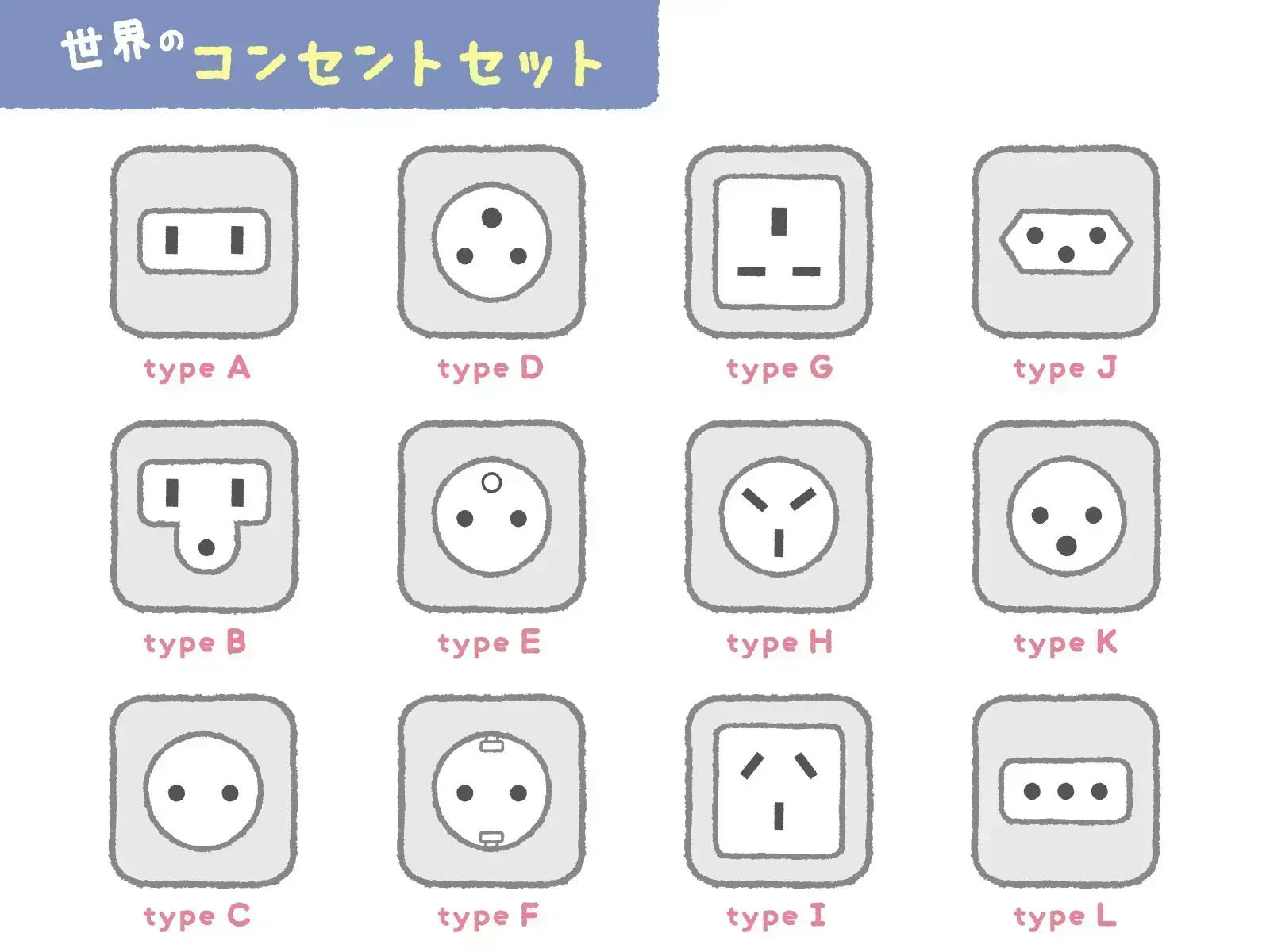
Globally, there are three main electrical standards for devices: 110-120V used primarily in North and Central America, 220-240V prevalent in Europe, Asia, and Oceania, and the dual-voltage system. These standards also differ in frequency, either 50 Hz or 60 Hz, and include a variety of plug types specific to each region. Understanding these differences is essential for safely using electronic devices while traveling internationally.
Asia & Oceania Electrical Standards
| Country | Frequency (Hz) | Voltage (Volts) | Plug Type |
| Australia | 50 | 230 | I |
| China | 50 | 220 | A, C, I |
| China (Hong Kong S.A.R.) | 50 | 220 | G |
| India | 50 | 230 | C, D, M |
| Indonesia | 50 | 230 | C, F |
| Japan | 50 Hz in Eastern Japan & 60 Hz in Western Japan | 100 | A, B |
| Malaysia | 50 | 240 | G |
| New Zealand | 50 | 230 | I |
| Philippines | 60 | 230 | A, B, C |
| Republic of Korea (South Korea) | 60 | 220 | C, F |
| Singapore | 50 | 230 | G |
| China (Taiwan) | 60 | 110 | A, B |
| Thailand | 50 | 220 | A, B, C |
| Vietnam | 50 | 220 | A, C |
North America & South America Electrical Standards
| Country | Frequency (Hz) | Voltage (Volts) | Plug Type |
| Argentina | 50 | 220 | C, I |
| Brazil | 60 | 127/220 | C, N |
| Canada | 60 | 120 | A, B |
| Chile | 50 | 220 | C, L |
| Colombia | 60 | 120 | A, B |
| Mexico | 60 | 127 | A, B |
| Peru | 60 | 220 | A, C |
| USA | 60 | 120 | A, B |
| Venezuela | 60 | 120 | A, B |
Europe Electrical Standards
| Country | Frequency (Hz) | Voltage (Volts) | Plug Type |
| France | 50 | 230 | C, E |
| Germany | 50 | 230 | C, F |
| Italy | 50 | 230 | C, F, L |
| Russia | 50 | 230 | C, F |
| Spain | 50 | 230 | C, F |
| United Kingdom | 50 | 230 | G |
Oceania Electrical Standards
| Country | Frequency (Hz) | Voltage (Volts) | Plug Type |
| Australia | 50 | 230 | I |
| Fiji | 50 | 240 | I |
| New Zealand | 50 | 230 | I |
Disclaimer: This article has been provided by an individual contributor or third party platform. If there is any discrepancy regarding the copyright, please contact us directly and we will delete the content immediately.
Trending Searches
-
Popular attractions
-
Trending Stays
-
Getting Around
-
eSIM/SIM card
- Hotels in Shanghai
- Hotels in Guangzhou
- Hotels in Beijing
- Hotels in Bangkok
- Hotels in Shenzhen
- Hotels in Hong Kong
- Hotels in Chongqing
- Hotels in Tokyo
- Hotels in Ho Chi Minh City
- Hotels in Kuala Lumpur
- Hotels in Chengdu
- Hotels in Seoul
- Hotels in Zhangjiajie
- Hotels in Singapore
- Hotels in Hanoi
- Hotels in Hangzhou
- Hotels in Xi'an
- Hotels in Bali
- Hotels in Istanbul
- Hotels in Osaka
- Tokyo Metro
- Wuhan Airport
- Xiamen Metro Map
- Beijing Airport to City
- Chengdu to Chongqing
- Kunming Airport to City
- Wuxi Airport
- Hong Kong Airport to Shenzhen
- How to Get from Osaka to Kansai Airport
- Chongqing Airport
- Narita Airport Lounge
- Lijiang Airport
- Ningbo Metro
- Shenzhen Airport
- Macau to Hong Kong
- Narita Airport to Shinjuku
- Incheon International Airport to Seoul