Flying with Medicine: Is It Okay to Bring Medicine on a Plane?

by Bonnie
May 22, 2026
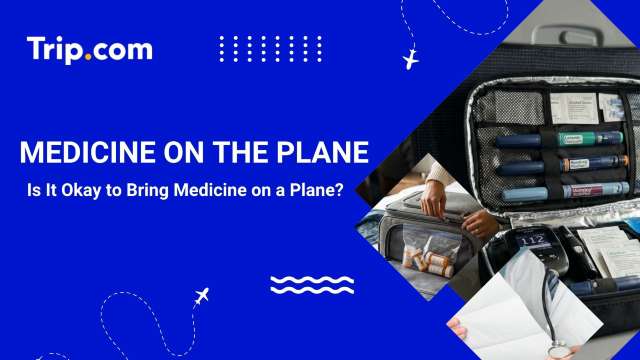
Yes, medications can board planes however, improper packing can lead to medication confiscation, security delays and travel disruptions. This guide summarizes global flight regulations, practical packing tips and cross-border medication policies, helping travelers carry medicines safely and compliantly for domestic and international flights.
to Bangkok
to Manila
to Shanghai
to Tokyo
to Seoul
See all flights


Is It Okay to Bring Medicine on a Plane? The Short Answer
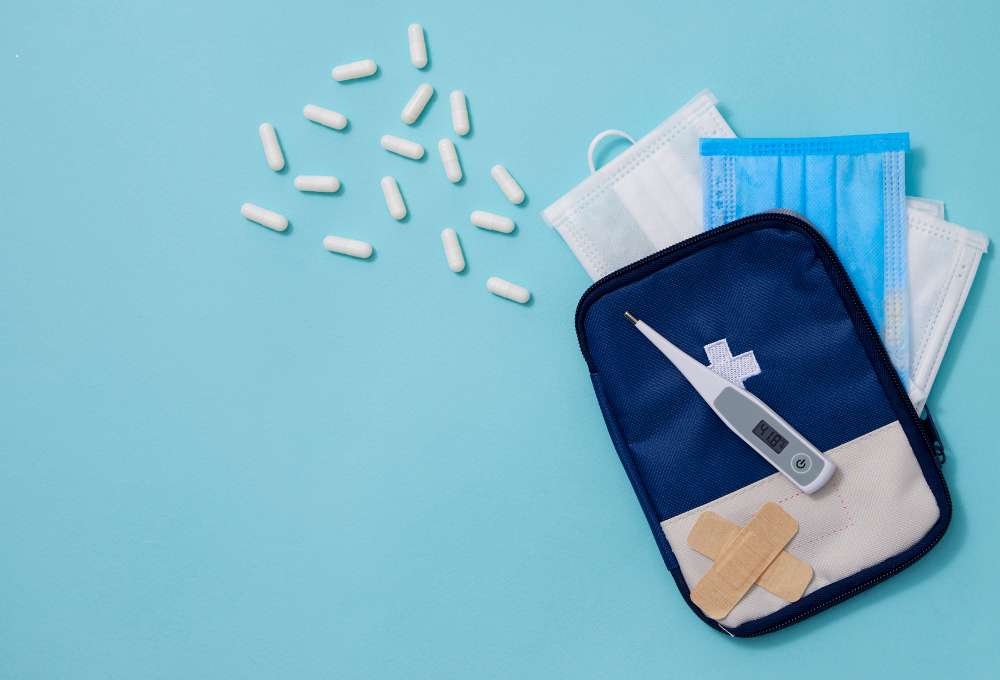
Travelers may legally bring almost all prescription and over-the-counter medications on planes in either carry-on or checked bags. This includes pills, liquids, vitamins, supplements and essential medical devices.
Domestic flights worldwide allow unlimited personal-use solid medications, while liquid medications qualify for special airport security exemptions. For international travel, reasonable amounts of personal medication are permitted globally, with extra documentation required for restricted ingredients and controlled substances.
Can You Bring Prescription Medications on a Plane?

All prescription drugs, over-the-counter medicines and supplements are permitted on flights globally. Core global rules for these items are summarized in the comparison table below:
Medication Type | Packaging Rules | Security Screening Rules | Supporting Documents |
|---|---|---|---|
Prescription Medications | Original bottles not required for domestic travel (pill organizers allowed); original labeled packaging strongly recommended and practically mandatory for international travel | Solid pills: no declaration needed. Liquid prescriptions, injectables and medical devices require verbal declaration and separate screening | Not mandatory domestically; doctor’s notes or prescription copies recommended for rare/specialized drugs and required for international travel |
OTC Drugs & Supplements | Original packaging optional for domestic travel; recommended globally to avoid screening confusion | Solid OTC meds and supplements: standard X-ray screening, no declaration needed. Liquid OTC meds enjoy universal medical liquid exemptions | No documents required for standard personal-use quantities worldwide |
Global Medication Flight Rules: What Every Traveler Must Know

2025 global official flight medication guidelines unify standard policies for all domestic and international connecting flights worldwide. Core rules for all personal medications are summarized in the table below:
Rule Category | Key 2025 Global Flight Guidelines |
|---|---|
Solid Medications | All solid medications (pills, capsules, powders, tablets) have no quantity limits for personal use. Travelers may pack enough medication for their full trip plus extra doses for unexpected delays. |
Medical Liquids, Gels & Aerosols | Medically necessary liquids, gels and aerosols are exempt from the standard 3-1-1 liquid rule. These items may exceed the 3.4-ounce (100ml) limit for regular travel liquids. |
Medical Accessories & Devices | All accessories and devices essential for medication use are fully permitted, including syringes, insulin pumps, inhalers, EpiPens, nebulizers and pill organizers. These items require separate screening but are never prohibited for legitimate medical use. |
Security Screening Protocols | Airport security staff may conduct additional screening on any medication that triggers a scanner alarm or appears unusual. This is a routine safety measure and will not result in confiscation of valid personal medication. No fees or penalties apply to standard medical screening procedures. |
Can You Bring Pills in a Ziploc Bag on a Plane?
Travelers may carry solid medications in Ziploc bags, pill organizers or clear cases on all flights globally. Repackaged loose pills are fully permitted for domestic travel, with no requirement for original pharmacy bottles.
Clear packaging speeds up security screening. For international travel, keep original labels or a doctor’s note on hand to avoid customs issues.
Do You Have to Declare Medication on a Plane or at Customs?
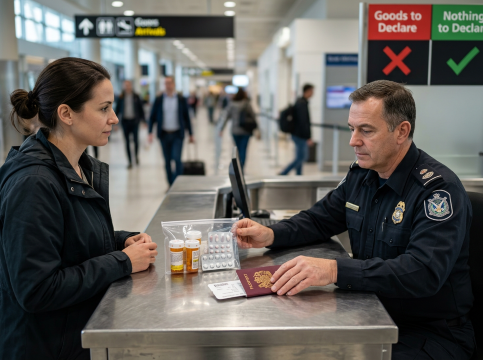
Medication declaration rules vary for domestic flights and international customs, causing common travel confusion. Simplified 2025 global rules are as follows:
- Domestic Flights: Ordinary solid medications require no declaration. Only medical liquids, injectables and medical devices need verbal declaration for separate security screening.
- International Customs: Small amounts of daily personal medications are usually exempt from declaration. Controlled substances, narcotics, excessive medication quantities and special prescription drugs must be declared.
- Core Distinction: Airport security rules regulate items allowed on board, while local customs rules govern medication entry into foreign countries. Always check destination rules in advance.
Do Meds Need to Be in Original Bottles When Flying?
A common travel myth clarified by 2025 global flight rules: original pharmacy bottles are not legally required for domestic air travel worldwide.
For domestic travel, pills can be repackaged in organizers or Ziploc bags. Original labeled bottles are not required but strongly recommended for security checks and emergencies.
For international travel, original packaging is practically mandatory. Most customs require verified labeling, especially for controlled drugs. Missing valid packaging and documents may lead to delays or medication confiscation.
Stay Connected With Trip.com!
See all attractions
 668634 booked













How to Pack Medicine for a Flight: Step-by-Step Packing Guide
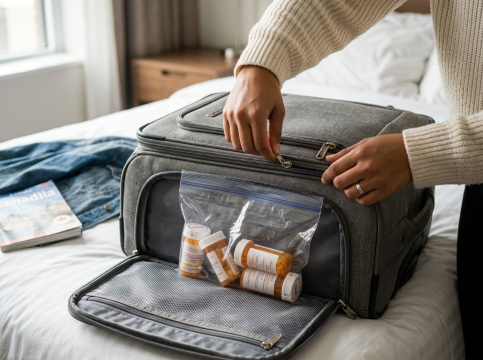
Follow these simple core steps to pack medications safely and efficiently for flights:
- Sort by type: Separate solid pills, liquid meds, injectables and medical devices for faster security checks and better protection.
- Use carry-on only for essentials: Store all daily critical medications in carry-on bags; avoid checked baggage to prevent loss, damage or temperature degradation.
- Keep accessible: Place frequently used meds in an easy-reach pouch for quick declaration and screening.
- Keep original packaging: Use original labeled bottles for international travel; pill organizers are acceptable for domestic trips.
- Pack extra doses: Prepare 3–5 extra days of medication to cover flight delays and trip extensions.
- Store backup documents: Keep physical and digital copies of prescriptions and medical certificates for special or controlled drugs.
- Protect temperature-sensitive meds: Use insulated cases and ice packs for insulin, biologics and other refrigerated medications.
Carry-On vs. Checked Baggage: Where Should Your Medications Go?
Always store essential medications in carry-on bags rather than checked luggage. Checked bags face common risks including loss, misplacement and extreme cargo temperature fluctuations that can damage medication potency.
Carry-on storage ensures stable cabin temperatures and full control of your medications. Only non-essential OTC supplements and backup supplies may be placed in checked bags.
Never check emergency medications, daily prescriptions, temperature-sensitive drugs or controlled substances.
Traveling with Temperature-Sensitive Medications (Insulin & Biologics)
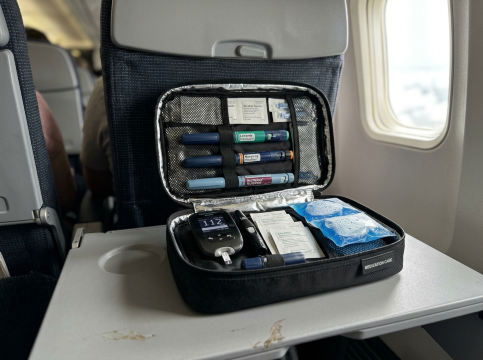
2025 global flight rules offer lenient standards for traveling with temperature-sensitive medications such as insulin and biologics. All core regulations and best practices are summarized in the table below:
Category | Key 2025 Global Flight Guidelines |
|---|---|
Permitted Medications | Insulin, injectable biologics, immunosuppressants and other refrigerated prescription drugs; unlimited personal-use quantity for carry-on |
Liquid Rule Exemption | All liquid temperature-sensitive medications bypass the standard 3-1-1 liquid limit |
Allowed Accessories | Insulin pens, syringes, medical pumps, and reusable/frozen gel ice packs (partially frozen packs are also permitted) |
Security Requirement | Must verbally declare temperature-sensitive medications and cooling packs for separate screening |
Travel Best Practices | Use insulated medical coolers; keep meds in personal possession and avoid direct sunlight; store small coolers under airplane seats; use pre-chilled gel packs for long-haul flights |
Traveling with Controlled Substances and Narcotics on a Plane
Traveling with legally prescribed controlled substances (opioids, benzodiazepines, ADHD stimulants, prescription sleep narcotics) requires strict compliance with special rules for domestic and international flights. Key 2025 guidelines are listed below:
- Domestic Travel (Global): Fully permitted with valid prescriptions. Original bottles and medical documents are not legally required but highly recommended to avoid screening issues.
- International Travel Basic Rules: Regulations are far stricter globally. Valid prescriptions and official medical certificates are mandatory in most countries. Personal-use supply is usually limited to 30–90 days, and some nations ban certain controlled substances entirely.
- Customs Declaration Requirement: All controlled substances must be actively declared at international customs checkpoints.
- Schengen Zone Special Rule: A formal Schengen Medical Declaration is legally required for all narcotic and psychotropic medications.
- Non-compliance Consequences: Missing documentation may lead to medication confiscation, fines, or legal penalties.
Flying with Medication Internationally: Key Rules by Region
Medication import rules differ widely across countries. Airport security agencies regulate in-flight screening, while local customs decide whether medications are allowed to enter a nation. Below are key 2025 compliance rules for popular travel regions.
Asian countries have strict medication import regulations with unique restrictions for travelers. Below is a consolidated rule table for popular Asian travel destinations:
Country | Key Restrictions | Required Documentation | Quantity Limit |
|---|---|---|---|
Japan | Bans meds with pseudoephedrine and codeine; strict controls on psychotropic and narcotic drugs | Original medication bottles; translated doctor certificate for regulated drugs; pre-approval for narcotics/psychotropics | Personal trip use only |
China | Strict regulation of psychiatric, narcotic and controlled prescription medications | English & Chinese bilingual medical documents | Personal trip use only; excess quantities will be confiscated |
Singapore | Zero tolerance for unapproved controlled substances | Pre-travel official approval from local health ministry for controlled drugs | Max 14-day personal supply |
Thailand | Strict limits on codeine-based drugs and Schedule II/III narcotics | Official health authority approval for narcotic substances | Max 30-day personal supply (2025 rule) |
European and Schengen Zone medication rules are unified for cross-border travel. Key standardized regulations for all travelers are listed below:
Travel Scenario | Core Rules | Required Documentation | Quantity Limit |
|---|---|---|---|
General EU/Schengen Travel | Standardized cross-border medication policies for prescription and OTC drugs | Original labeled medication bottles | Max 90-day personal supply |
Intra-Schengen Travel | EU-issued prescriptions are valid across all Schengen countries | Original prescription labels; English doctor’s note (non-EU travelers); Schengen Medical Certificate for controlled substances | Max 90-day personal supply |
Non-EU Entry to Europe | Customs strictly verify medication legitimacy; unmarked repackaged pills are not recommended | Complete original packaging and valid prescriptions | Max 90-day personal supply |
Switzerland (Non-EU Schengen) | Follows Schengen controlled substance rules; does not recognize foreign prescriptions for refills | Same as standard Schengen requirements | Max 90-day personal supply |
Tips for Stress-Free Travel with Medications: Holiday and Long-Haul Flight Advice
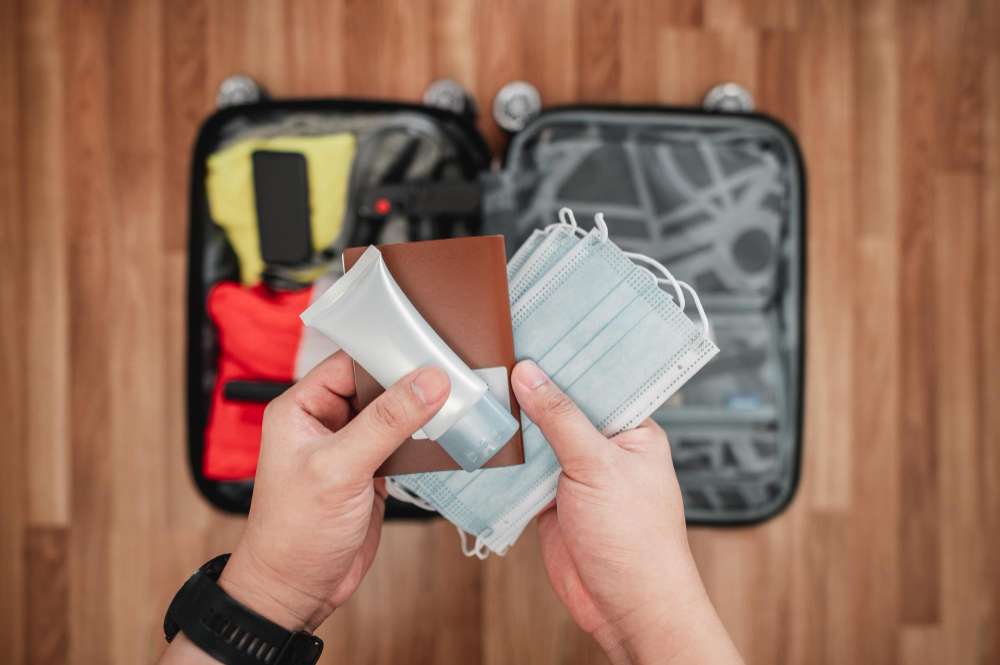
Long-haul flights, holiday travel rushes, and multi-stop itineraries can easily disrupt daily medication routines. Follow these simple, actionable 2025 tips for stress-free medication travel:
- Pack extra medication: Prepare 3–5 additional doses to cover flight delays, trip extensions, or unexpected schedule disruptions, especially during peak holiday travel.
- Stick to medication schedules: Adjust dose timing for time zone changes and set phone reminders during long-haul flights. Keep daily medications accessible for in-flight use to avoid missed or double doses.
- Streamline security checks: Store all medical items in a dedicated pouch for fast screening. Proactively declare liquid medications and specialized medical devices to avoid secondary inspection delays.
- Split medication supplies: Do not pack all medications in a single bag. Separate travel and backup supplies between carry-on and checked luggage to prevent total loss from delayed or missing bags.
- Verify seasonal travel rules: Customs and security screenings are stricter during peak travel seasons. Confirm destination medication regulations in advance to avoid confiscation issues.
- Backup medical documents digitally: Save photos of prescriptions, doctor’s notes, and medical certificates in cloud storage for quick access if physical documents are lost or damaged.
Following global flight guidelines and destination-specific customs rules allows travelers to fly with prescription drugs, OTC medications and medical supplies safely and compliantly. With proper packing and basic preparation, traveling with medications can be simple and stress-free for all domestic and international flights.
[10% OFF] Global Hotel Recommendations
Find Best Global Hotels
See All Hotels







FAQs about Medicine on the Plane
-
How should I carry my medication on a plane?
-
Do you have to declare medication on a plane?
-
Is it okay to bring medicine on a plane?
Disclaimer: This article has been provided by an individual contributor or third party platform. If there is any discrepancy regarding the copyright, please contact us directly and we will delete the content immediately.
Popular Searches
-
Air Travel Guide
-
Latest Flight Deals
-
Popular Flight & Hotel Packages
-
Getting Around
-
eSIM/SIM card
- Cancun Vacation Packages
- Medellin Vacation Packages
- Tokyo Flight and Hotel
- Koh Samui Flight and Hotel
- Osaka Flight and Hotel
- Paris Vacation Packages
- Mackinac Island Vacation Packages
- Singapore Flight and Hotel
- Riga Vacation Packages
- Santorini Vacation Packages
- El Nido Vacation Packages
- Bucaramanga Vacation Packages
- Marinduque Vacation Packages
- Brussels Vacation Packages
- Bali Vacation Packages
- AREX Timetable
- Shanghai Pudong Airport Transfer
- Child Car Seats in China
- China domestic flight vs train with kids
- Chengdu Layover
- Hongqiao Railway Station to Pudong Airport
- Switzerland Day Tours
- Guangzhou Day Tours
- Wiang Pa Pao Spa & Massage
- Lombok Activities
- Naples Day Tours
- Guangxi Spa & Massage
- Hoi An Activities
- Phang Nga Town Sports & Adventure
- Chessy Day Tours
- Kyrgyzstan Sports & Adventure
- Dalian Day Tours