Can You Bring a Power Bank on a Plane? Everything You Need to Know

by Bonnie
May 9, 2026

Many travelers ask: can you take a power bank on an airplane? Confusing airline rules often cause airport delays or confiscation. This 2026 guide shares official ICAO standards to help travelers safely and legally bring a power bank on plane for all flights.
to Bangkok
to Manila
to Shanghai
to Tokyo
to Seoul
See all flights


Can You Take a Power Bank on an Airplane? The Short Answer
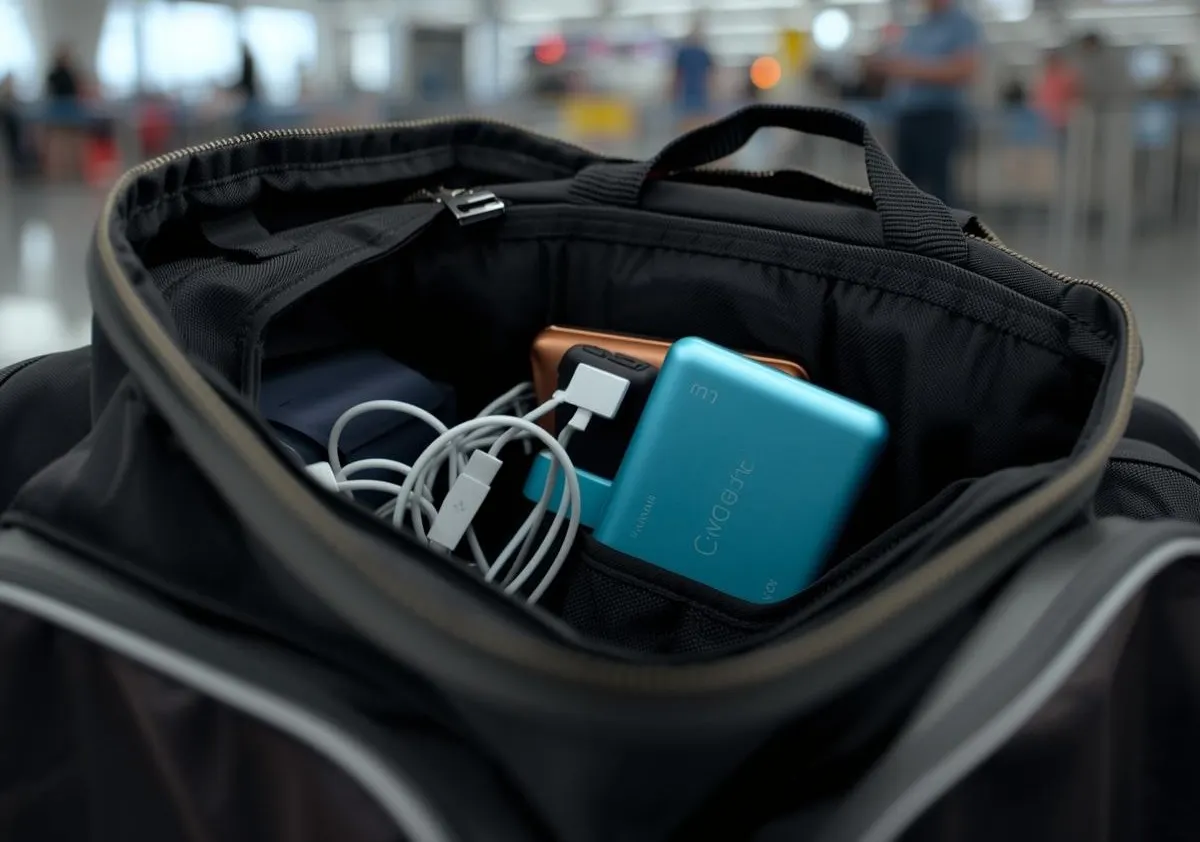
Yes, travelers can bring a power bank on a plane. That said, lithium power banks are subject to strict aviation rules for carriage and onboard use. Anyone askingcan you take a power bank on an airplane must follow global ICAO standards to avoid confiscation or delays. Core rules are set by the ICAO, with minor variations across national aviation authorities and individual airlines.
Who Makes the Power Bank Regulation Rules?
Global airplane power bank rules follow unified standards set by the International Civil Aviation Organization (ICAO), a UN body that issues universal safety guidelines for lithium battery air transport. All countries adopt these baseline rules with minor local adjustments, while individual airlines add supplementary operational safety policies.
These safety rules are enforced to prevent aviation accidents. Lithium-ion power banks may experience thermal runaway, which causes overheating, smoke, explosions and severe fires. Storing unmonitored power banks in sealed cargo holds is extremely dangerous, as crew cannot access or extinguish cargo fires mid-flight, putting passengers and aircraft at serious risk.
ICAO's New Power Bank Restrictions: What Changed for International Flights
The ICAO released stricter global lithium battery rules effective March 27, 2026. These updates aim to cut in-flight fire risks amid rising confirmed power bank-related aviation incidents worldwide.
Two key ICAO updates apply to all global international passenger flights, unifying scattered airline rules for better aviation safety:
- Quantity limit: Each passenger may carry a maximum of 2 power banks, replacing the previous unlimited allowance for low-capacity devices.
- Usage ban: Power bank recharging via onboard USB or AC outlets is completely prohibited during flights.
Exception rule: Only flight crew are allowed limited power bank use for operational work.
Power Bank mAh Limits on Planes: What Size Is Allowed?
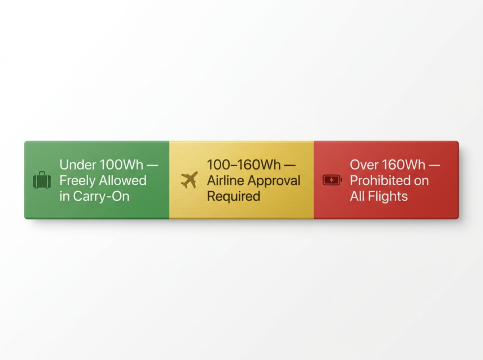
This is one of the most commonly searched topics for air travelers. While most people check mAh ratings, all official aviation regulations rely on watt-hour (Wh) values to define legal power bank capacity limits. Nearly all consumer power banks run on a standard 3.7V internal voltage, enabling simple conversion between mAh and Wh for quick compliance checks.
Two global threshold rules apply across all commercial flights:
- 0–100 Wh: Fully permitted for carry-on travel with no prior airline approval required
- 100–160 Wh: Conditionally allowed only with official advance airline approval
- Over 160 Wh: Strictly prohibited on all passenger flights with zero exceptions
Converted for real-world traveler reference at 3.7V: 100Wh equals roughly 27,000mAh, and 160Wh equals approximately 43,200mAh. Below are clear, direct answers for the most popular power bank sizes travelers fly with, including 10,000mAh, 20,000mAh, 30,000mAh and 40,000mAh models.
Common Power Bank Capacity Rules (10,000–40,000mAh)
Below is a clear compliance breakdown of the most common power bank sizes for global air travel, calculated based on the standard 3.7V voltage and official 2026 ICAO rules:
Power Bank Capacity | Calculated Wh | Compliance Status | Travel Requirements | Key Notes |
|---|---|---|---|---|
10,000mAh | 37Wh | Fully allowed | No airline approval needed | Counts toward the 2-unit per passenger limit |
20,000mAh | 74Wh | Fully allowed | No airline approval needed | Most popular travel-friendly capacity |
30,000mAh | 111Wh | Conditionally allowed | Mandatory pre-flight airline approval | Exceeds the 100Wh unrestricted threshold |
40,000mAh | 148Wh | Conditionally allowed | Mandatory approval + strict security screening | Close to the 160Wh maximum legal limit |
Over 43,200mAh | Over 160Wh | Strictly prohibited | Not permitted on any passenger flight | Zero exceptions globally |
Practical Approval Tip: For 100–160Wh power banks, travelers need to submit a pre-flight request, complete on-site security checks and obtain official airline tagging. Most budget airlines refuse approval for these high-capacity devices.
Carry-On vs. Checked Baggage: Where Does Your Power Bank Go?
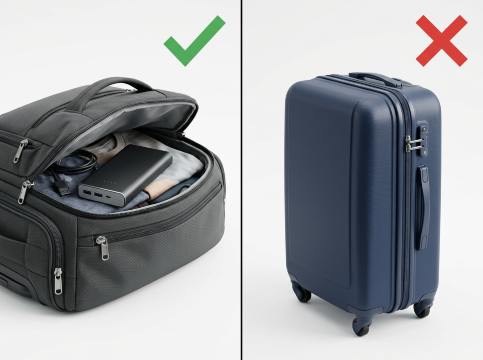
This is the most non-negotiable rule for traveling with lithium power banks: all power banks must stay in carry-on baggage and are strictly forbidden in checked luggage. No commercial airline or global aviation authority allows these devices in aircraft cargo holds, regardless of capacity size.
This strict cabin-only rule is enforced entirely for aviation safety, with clear, evidence-based reasons:
- Cabin fire controllable: If a power bank overheats or catches fire in the cabin, flight crew can access, contain and put out the fire immediately.
- Cargo hold high risk: Aircraft cargo holds are fully sealed, unmonitored and crew-inaccessible during flight.
- Hidden fire danger: Lithium battery fires in cargo spread undetected, which may cause serious aircraft damage and safety accidents.
- Universal zero exception: The carry-on-only rule applies to all power bank capacities and models worldwide.
Practical Tips for Traveling with a Power Bank
Simple pre-trip preparation eliminates security headaches and ensures smooth airport screening for travelers carrying power banks. These actionable tips align with global and regional aviation rules:
- Check clear device labeling: Confirm the power bank has legible printed mAh, voltage and Wh markings. Unmarked batteries are frequently flagged or confiscated at international security checkpoints.
- Stick to quantity limits: Follow the 2026 ICAO rule of a maximum of two power banks per passenger for all international flights.
- Prevent short circuits: Cover all USB and charging ports with factory caps or insulating tape, a mandatory requirement for many East Asian airlines.
- Keep devices accessible: Store power banks in easy-to-reach carry-on pockets to speed up security screening and avoid full bag searches.
- Avoid damaged batteries: Never travel with swollen, cracked, dented or malfunctioning power banks, as these are universally prohibited due to high fire risk.
- Avoid onboard recharging: Refrain from charging power banks with aircraft outlets to comply with global ICAO in-flight safety bans.
Best Power Banks for Air Travel: What to Look for When Buying
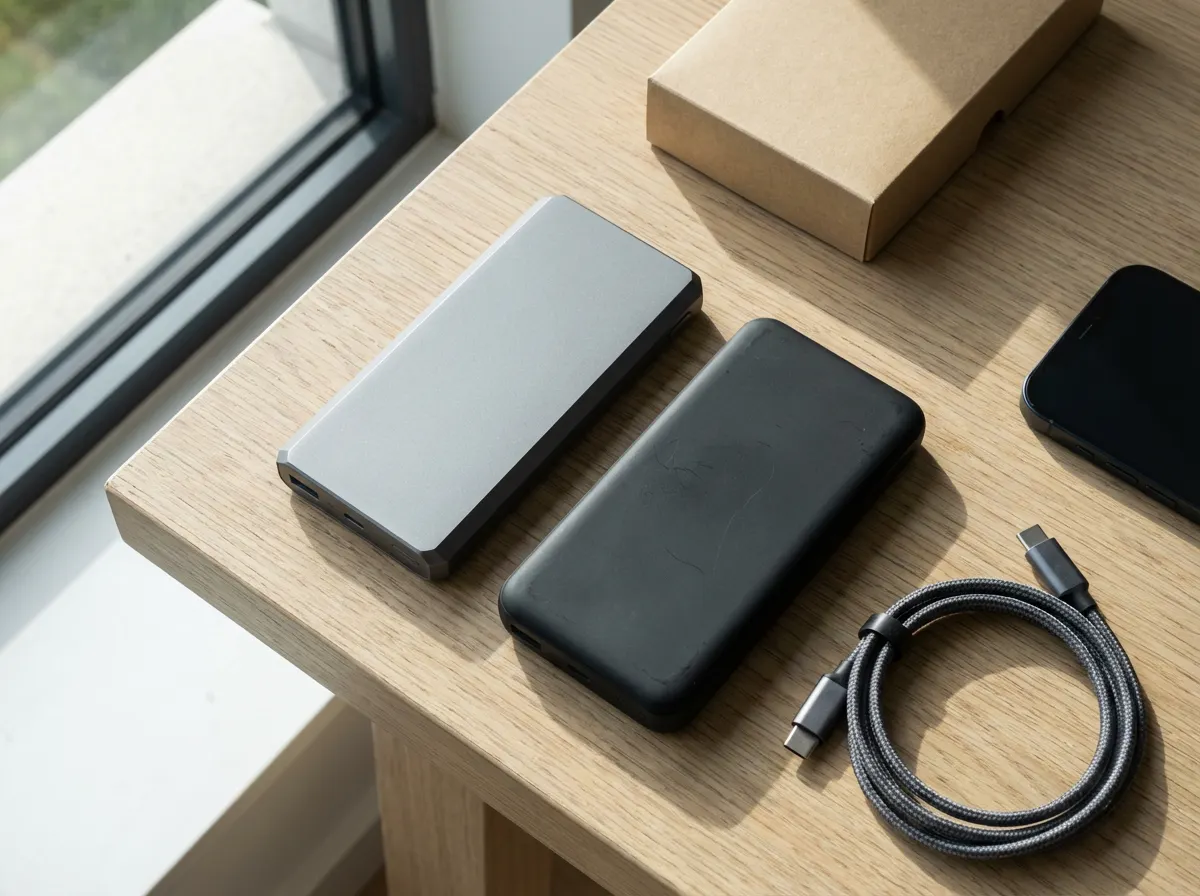
Travel-friendly power banks prioritize full aviation compliance, safety and practicality for global flights. The ideal devices meet four key criteria for stress-free air travel:
- Sub-100Wh capacity: Choose models of 20,000mAh or below for unrestricted carry-on access on all global flights, eliminating the need for airline approval.
- Permanent clear labeling: Select batteries with etched or printed Wh, mAh and voltage specs. Peelable sticker labels are prone to fading or falling off, leading to security flags.
- Compact insulated build: Opt for lightweight, travel-sized designs with built-in port covers to prevent short circuits and fit easily in carry-on bags or pockets.
- Official safety certification: Pick globally certified power banks to reduce screening complications and meet strict regional airline safety standards.
How to Calculate Your Power Bank's Watt-Hours (Wh)
Travelers can verify any power bank’s aviation compliance with a simple, universal conversion formula. Official airline and security assessments rely on this standard calculation:
Wh = (mAh × Voltage) ÷ 1000
Virtually all consumer power banks use a 3.7V default voltage for aviation compliance checks. For quick reference: 10,000mAh = 37Wh, 20,000mAh = 74Wh, 30,000mAh = 111Wh, and 40,000mAh = 148Wh. This formula lets travelers self-check unmarked devices to avoid security rejection before arriving at the airport.
Stay Connected With Trip.com!
See all attractions
 2503 booked






What Happens If Your Power Bank Gets Flagged at Security?
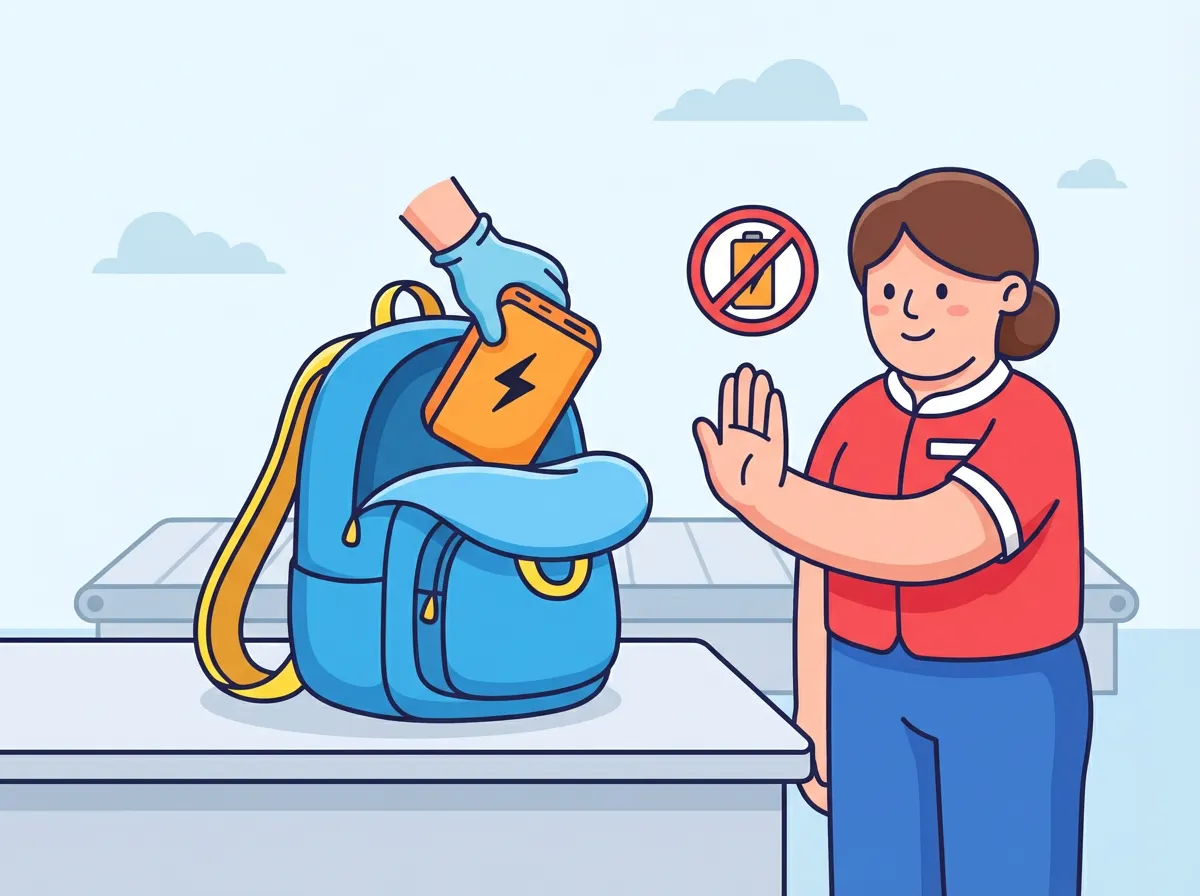
Security officers commonly flag power banks for issues including missing capacity labels, excess quantity, over-limit capacity, physical damage or uncovered open ports. The screening process follows a consistent, transparent workflow across most international airports.
- Secondary inspection: Flagged power banks will receive manual detailed checks to verify specifications and safety status.
- Minor issues handling: Fixable problems like missing port covers or blurry labels can be resolved on-site, and travelers may keep their devices.
- Major issues handling: Non-compliant devices (over-capacity, excessive quantity, damaged batteries) will be confiscated.
- Official disposal: Most international airports offer dedicated lithium battery bins for safe disposal of rejected power banks.
Formal appeals are rarely successful for clear rule breaches, and non-compliant power banks cannot be moved to checked baggage. Resolved minor labeling ambiguities result in no penalties or flight delays for travelers.
Power Banks on International Flights
International flights require extra power bank compliance checks beyond basic ICAO rules. Travelers must follow the strictest regulations across multi-leg trips with the following key priorities:
- Priority of local rules: Destination and transit country policies override departure airport baseline standards.
- Transit compliance: Layover country rules apply to transit passengers, even if the departure airline has looser policies.
- Regional restrictions: Many countries enforce unique rules for battery labeling, storage and quantity limits.
- Airline-specific policies: Individual carriers may set stricter limits for high-capacity power banks and safety preparation.
- Pre-trip check required: Verifying airline and destination rules in advance avoids last-minute screening issues and travel delays.
South Korea’s Latest Power Bank Flight Rules
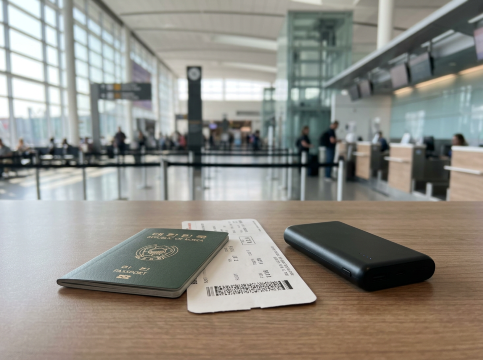
South Korea is tightening the rules for bringing power banks on board starting March 1, 2025, to keep everyone safe in the skies. Planning to fly with a Korean airline? Make sure you’re up to speed on the latest rules below!
Carrying options
Carry-on only: Power banks can’t go in checked luggage—they must be in your carry-on.
Do not place it in the overhead bin; it must be stored in a bag under the seat.
Capacity and Quantity Limits
100 Wh or less (Typical small power banks)
You can bring up to 5 items per person; if you bring more, they must be inspected by the airline and tagged with an approval label.
100 Wh ~ 160 Wh (Medium-sized, high-capacity power banks)
At check-in, it must be inspected and tagged by the airline.
Each person may bring up to 2 items.
Over 160 Wh (Large power banks)
Absolutely not allowed on the plane!
Other Important Guidelines
Your power bank must be clearly labeled with its Wh (required) or mAh; otherwise, you won’t be allowed to bring it on board.
All power bank ports must be covered with electrical tape or protective caps and placed in the clear zip-top bag provided by the airline to prevent short circuits.
Do not use or charge power banks during the flight!
Before you go, double-check your power bank to make sure it complies with regulations—so your trip goes smoothly!
China Power Bank Restrictions: Must Have the CCC Certification Mark
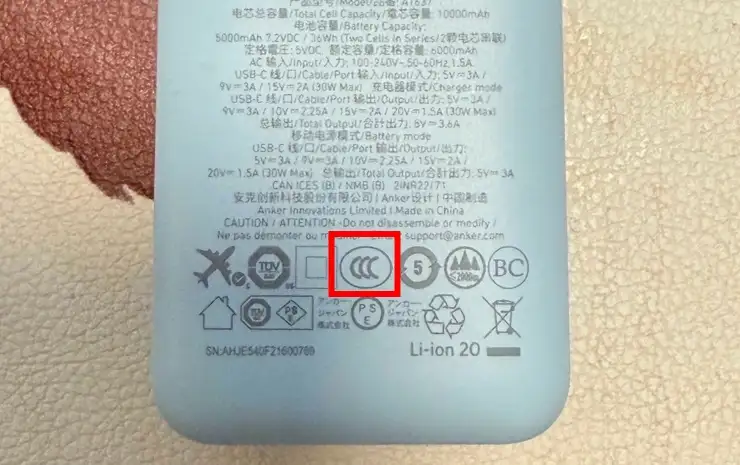
Starting June 28, 2025, China’s civil aviation authority will implement new rules for domestic flights within mainland China. To bring a power bank on board, it must be clearly labeled with the China 3C certification mark; otherwise—regardless of capacity or brand—it won’t be allowed. If your trip includes a connecting leg within mainland China (such as a connection), you’ll need to comply.
To avoid running afoul of the rules and having it confiscated, check before you fly that your power bank has China’s CCC (3C) certification mark. Many airports now offer voluntary disposal bins where travelers can ditch non-compliant power banks. Heads up: bring the wrong one and you might have to toss it on the spot—or worse, it could delay your trip. Don’t overlook this new rule.
Japan’s Power Bank Rules
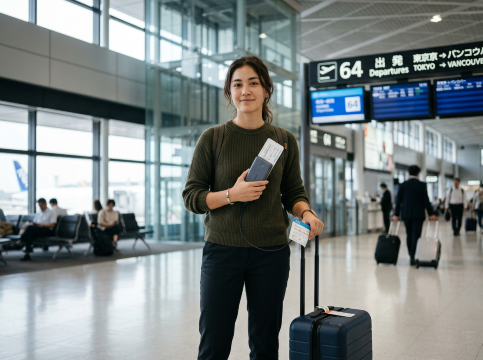
Starting July 8, 2025, Japan’s rules for bringing power banks on flights are getting stricter—so be sure to pay extra attention!
Power Banks are NOT Allowed in Checked Baggage
Power banks should never go in checked baggage! Many airlines have had this rule in place for years. The main reason is that the lithium-ion batteries inside can enter “thermal runaway,” causing sudden overheating or even a fire—risks that shouldn’t be taken lightly.
Power Bank Capacity Limits
Japan’s latest rules also set limits based on capacity: power banks over 160 watt-hours (Wh) are strictly prohibited on planes. For models between 100 Wh and 160 Wh, each passenger may carry no more than two. If you use a high-capacity laptop power bank, be sure to check its rating in advance to avoid being denied boarding or asked to discard it.
Cannot be Stored in the Overhead Bin
It’s easy to toss things into the overhead bin and forget about them when you fly. But under current rules in Japan, power banks aren’t allowed in the overhead compartment. The concern is that if one heats up or catches fire up there, passengers might not notice right away—making it riskier. Keep your power bank in a bag at your feet or in your pocket, somewhere you can see it, so if you’re using or charging it, you can spot any issue and deal with it immediately.
Following the ICAO power bank rules guarantees smooth air travel. Adhering to official capacity limits and carry-on-only policies helps travelers avoid airport issues. Compliant power banks serve as safe and convenient travel accessories for all flights.
[10% OFF] Global Hotel Recommendations
Find Best Global Hotels
See All Hotels







Power Bank on Plane FAQs
-
Can I bring a 30,000mAh power bank on a plane?
-
Can I fly with a 40,000mAh power bank?
-
What power banks are not allowed on planes?
-
Can I use my power bank to charge devices during a flight?
-
Do international flights have different power bank rules?
-
How do I convert mAh to Wh for my power bank?
Disclaimer: This article has been provided by an individual contributor or third party platform. If there is any discrepancy regarding the copyright, please contact us directly and we will delete the content immediately.
Popular Searches
-
Air Travel Guide
-
Latest Flight Deals
-
Popular Flight & Hotel Packages
-
Getting Around
-
eSIM/SIM card
- Cancun Vacation Packages
- Medellin Vacation Packages
- Hong Kong Vacation Packages
- Tokyo Flight and Hotel
- Koh Samui Flight and Hotel
- Buffalo Vacation Packages
- Cuenca Vacation Packages
- Kathmandu Vacation Packages
- Nashville Vacation Packages
- Puerto Princesa Flight and Hotel
- Gorontalo Vacation Packages
- Iloilo City Vacation Packages
- Mexico City Vacation Packages
- Siem Reap Vacation Packages
- Pittsburgh Vacation Packages
- Zhangjiajie Airport to City
- Changsha Metro
- Ho Chi Minh Airport
- Xiamen Metro Map
- Narita Airport to Tokyo
- Zhangjiajie Airport
- Guilin Airport
- JR Kyushu
- Taipei Airport
- Chongqing Airport
- Fuzhou Airport
- Narita Airport Limousine Bus
- Beijing Airports
- Wuxi Airport
- Macau to Hong Kong
- Narita Airport to Shinjuku
- Hong Kong Airport Express