2026 Guide to Riding the New York Subway

by Kristin
April 17, 2025
Check out our detailed guide to riding the New York City subway, including an easy-to-follow NYC itinerary visiting the city's best attractions in one day!
What is the New York Subway (MTA Subway System)?
New York City is known for being the city that never sleeps, and the Metro is one of the many reasons why the city keeps going all day and night! Opened in 1904, the New York City Metro (more commonly known as the subway) is one of the oldest metro systems in the world. The subway connects Manhattan, Brooklyn, Queens, and The Bronx with most trains running through Manhattan while connecting the Outer Boroughs. There are 25 different routes and over 470 stations across an impressive 665 miles of tracks. There are also 238 local bus routes, making the New York public transport system one of the most developed and far-reaching systems in the world.
The subway runs 24 hours a day, seven days a week, and 3.6 million people ride it on average each day. It connects most of the major tourist attractions in New York City. It’s usually the fastest way to get around New York City, especially if you are visiting during peak season. Thanks to its impressive reach and non-stop service, it’s a great way for tourists to explore the city while getting a small taste of local everyday life.
How Much Does the New York Subway Cost?
New York Metro fares cost $3.25 for each ride, $34 a week for a 7-day unlimited pass or $132 for a monthly pass. Unfortunately, there is no NYC day pass for riding the subway.
How to Pay for the New York Subway?
It’s very easy to pay for the New York City subway. You can purchase a single-use MetroCard, a stored-value MetroCard, or an OMNY card at ticket machines within the subway system or you can pay using a contactless Visa or Mastercard credit card, debit card, phone, or smart device.
The MetroCard vs. OMNY debate has been going strong since the MTA introduced the new payment system a few years ago. Although both OMNY and MetroCard are very easy to use, one of the biggest advantages of using OMNY is that there is a $34 fare cap each week. Once you have paid for 12 rides in 7 days, all the rides for the rest of the week are free. This often makes it a better option for tourists than the single-use or stored-value MetroCard who may not know exactly how many times they will be riding the subway and aren’t sure whether it’s better to buy single-use tickets or an unlimited 7-day pass.
Please note: the single-use and stored value MetroCards as well as the 7-day and 30-day Metrocards will be phased out by the end of 2025 and you’ll only be able to pay via OMNY.
Important Info
The first thing you need to know when riding the subway is that there are two types of stations, large interchange stations and smaller “local” stations. The interchange stations will handle multiple train lines, including both local and express trains, and have several different entrances. You can usually use any of these entrances and simply follow the signs once you’re underground for the direction you need to go. The most popular interchange stations include Times Square, Port Authority, Penn Station, Fulton Street, Columbus Circle, and West 4th Street.
The smaller stations handle “local” trains that stop at every stop on the line. These will also have different entrances that you can use but it's important to double-check if you are entering the correct direction that you want to travel as most entrances will only take you to one side of the platform. If you need to change sides, you need to exit to street level, walk across the street, and then go back downstairs.
If you are travelling in Manhattan, you’ll often see signs or hear announcements for “Uptown” which means north and “Downtown” which means south. You will also see signs indicating whether a train is heading to The Bronx, Queens, or Brooklyn.
US eSIM Recommendations for Travelers
It's important to stay connected while you're travelling around New York City and tourist SIMs can be very expensive in the United States. You may want to consider getting an eSIM before you arrive as it could help you save a lot of money without losing touch with friends, family, or social media!
Unfortunately, there is very little mobile phone service in the subways themselves. However, most major subway stations have free wifi access that you can use while you're waiting on the platform. You can connect to this simply by entering your email address. From there, you can access Google Maps and the MTA apps.
See all attractions
 20154 booked



How to Ride the New York Subway: Step-by-Step Guide
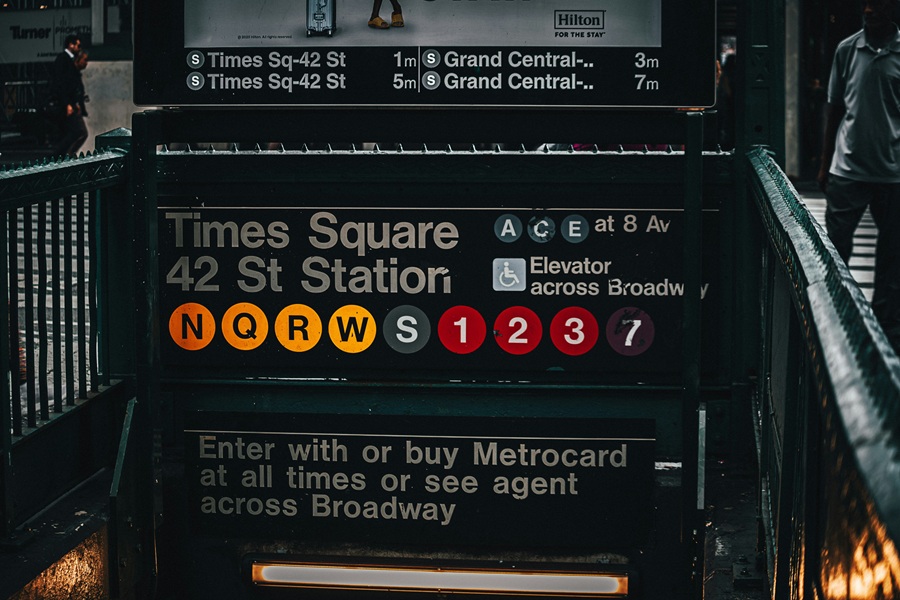
Riding the subway can be a little confusing until you get the hang of it. To enter a station, you simply need to swipe your MetroCard or tap your OMNY and walk through the turnstile. There are many different types of turnstiles within the NYC subway system and you will usually encounter straight-forward gate-like barriers that you can easily walk through.
Unlike other metro systems, the New York City Subway has a flat rate structure where all rides cost the same regardless of whether you’re going one stop or 20 stops. This means that you don't need to use your MetroCard or OMNY when exiting the station and can simply walk through the turnstiles.
If you miss a subway stop, don't panic. You can simply get off at the next stop. Many of the local stations are less than a kilometre apart so you may just need to walk a little bit extra to get to your destination. However, the bit challenge with these is that you will likely have to exit the station and pay again to re-enter on the other side of the street and ride back one stop. In this case, the better option is to ride to the next interchange station and walk underground to the other platform. This may sound confusing but trust us, it's pretty easy to figure out when you're there! The distance between express trains can be much longer. Luckily, these are far easier to reboard going in the opposite direction and you can simply get off at the next station and go back in the other direction.
New York is one of the most diverse cities in the world and there are many resources available for non-native English riders. The MTA website and app are available in many languages, including Spanish, Chinese, Russian, and Arabic. If you get really lost, don't worry. There are maps that you can look at to regain your bearings. Otherwise, you can ask an MTA employee, police officer, or fellow rider for help. Most people are more than happy to help.
Safety Concerns When Riding the Subway
Overall, the subway in New York is very safe as long as you take precautions and stay alert, particularly when standing on the platforms. Make sure to stand away from the edge and keep an eye on your surroundings. You should also avoid sitting alone in a subway car, especially late at night. If you find yourself all alone, it's a good idea to move to another car where there are other people. You’ll often find people using their mobile phones on the subways. This is generally safe but once again, be aware of your surroundings.
Although there are no security checks to enter the station as you find in cities across Asia, there are uniformed police officers in most of the stations who you can contact if you need assistance.
New York Hotels Recommodation

New York Subway Map and Major Lines
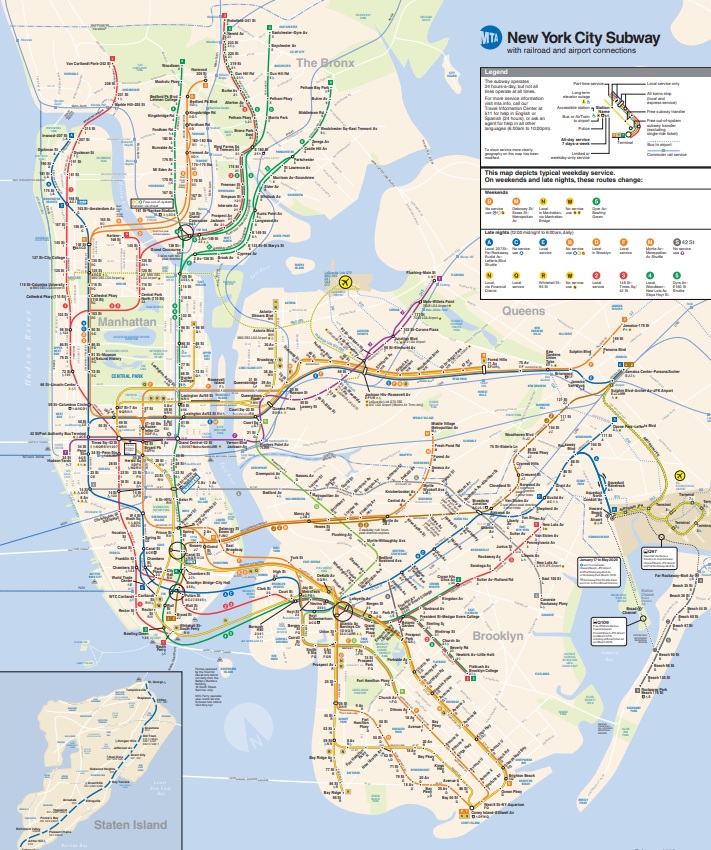
If you are sightseeing in New York, you're very likely to find yourself cruising along on the 1/2/3, A/C/E, N/Q/R, and the B/D/F/M lines. Collectively, these lines help you reach popular destinations like Times Square, Wall Street and the World Trade Center, Central Park, and the Brooklyn Bridge.
Recommended 1-Day NYC Itinerary via Metro
Below you’ll find a sample itinerary for a day in New York City.
| Time | Location | Subway Line | Activity |
| 9:00 AM | Times Square | 1/2/3 | Start your day with iconic views of the world’s most famous intersection |
| 10:30 AM | Central Park | B/C | Walk and explore nature in New York City’s biggest park |
| 1:00 PM | Chinatown | J/Z | Eat lunch at an authentic Chinese restaurant and absorb the vibrant culture of this bustling neighborhood |
| 3:00 PM | Brooklyn Bridge | 4/5/6 | Take photos of this iconic site and walk across the bridge to DUMBO |
| 6:00 PM | DUMBO | F | Sunset + dinner at one of the Big Apple’s most beloved and trendy neighbourhoods |
NYC Attraction #1: Times Square
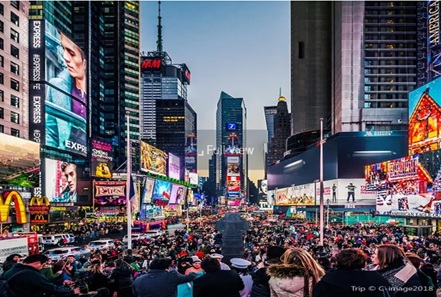
Located at 42nd and 7th, Times Square is one of the city’s biggest interchange stations with the 1,2,3, N, Q, and R stopping right in the middle of the intersection. The A, C, and E trains all stop nearby at Port Authority on 42nd St and 8th while the B, D, F, and M all stop at Bryant Park on 42nd and 6th Ave. The breathtaking New York Public Library sits on the eastern side of Bryant Park and the western side of the park is a lovely green space with benches where you can rest your feet in the sunshine.
NYC Attraction #2: Central Park
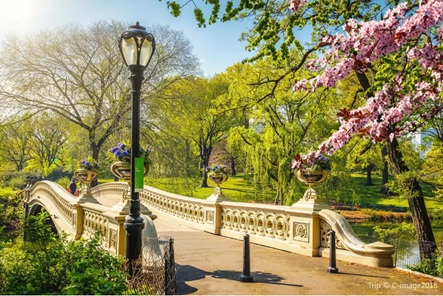
Central Park is the green lung of New York City and one of the best examples of landscape architecture in the world. From Times Square, you can walk up Broadway to 59th St and 8th Avenue and enter Central Park via Columbus Circle. Alternatively, you can take the A, B, C or D train to Columbus Circle Station. If you want to travel further north along the western edge of the park, you can jump on the B or C trains. The eastern side of the park can be accessed via the 4,5 or 6 train.
NYC Attraction #3: Brooklyn Bridge
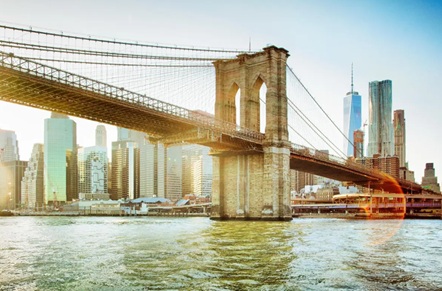
Connecting Lower Manhattan to Brooklyn, the Brooklyn Bridge has long been an icon of the Big Apple. To access Brooklyn Bridge, you can take the 4,5,6, J, or Z train to City Hall and then walk across the bridge to DUMBO. Alternatively, you can take the A or C to High Street and then walk across the bridge to Manhattan.
Insiders Tip: The 6 train terminates at City Hall Station and when the train pulls onto the platform, there will be announcements that you should leave the train. However, you can stay on the train as it turns around in the OLD City Hall Station. This richly decorated station was one of the original stations built way back in 1904. Sadly, it is no longer in use as a normal station so this is the only way that you can see how beautiful it was!
NYC Attraction #4: The MET Museum
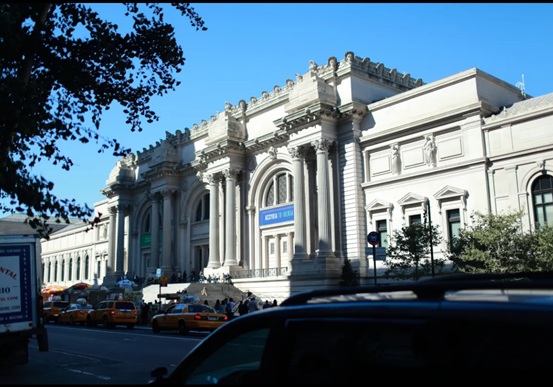
Full of treasures from around the world, the Metropolitan Museum of Art (The Met) is one of the world’s most beloved art museums. The Met is located on Fifth Avenue which runs along the eastern edge of Central Park between 80th and 84th Streets. To access the museum, you can take the B or C train to 86th St and walk across the park or you can take the 4,5, or 6 train to 86th Street and Lexington Avenue and walk to the museum.
Travel Tips for First-Time Visitors to New York City
If possible, try to avoid taking the subway from roughly 8 a.m. to 9:30 a.m. and again from around 4 p.m. to 6 p.m. This is when most people are going to or leaving work, and the subways can get very crowded, especially the express lines.
When you are in a busy station, make sure to walk on the right hand side of the hallway or walkway. When riding escalators, stand to the right and walk on the left. This will allow other people to keep moving.
New York’s subways can be very deep, and unfortunately, not all of the stations have elevators. If you’re traveling with luggage or have a disability, try to only use stations that have elevator access. You can find which stations have elevators on the MTA website.
Disclaimer: This article has been provided by an individual contributor or third party platform. If there is any discrepancy regarding the copyright, please contact us directly and we will delete the content immediately.
Trending
-
Getting Around
-
Popular Attractions
-
eSIM/SIM card
- Kansai Airport to Wakayama
- JR EAST PASS
- New York Subway
- Hangzhou Metro Map
- How to Get to the Canton Fair
- Shanghai Airport Transfer
- Nara Transportation
- Eurail Pass Discount
- Kobe Transportation
- Keisei Skyliner
- Beijing Airport to City
- Shanghai Airport Transfers
- Ho Chi Minh Airport
- Chongqing Metro
- Narita Airport to Shinjuku
- Macau to Hong Kong
- Suzhou metro
- Forbidden City Tickets
- Zhangjiajie National Forest Park
- Shanghai Tower Tickets
- Shanghai Wild Animal Park
- Shanghai Disneyland Tickets
- Canton Tower Tickets
- Huangshan
- Universal Studios Beijing Tickets
- Great Wall of China Tickets
- Summer Palace Tickets
- universal studios japan tickets
- Yu Garden Tickets
- Shanghai Zoo Tickets
- Nanjing Road Pedestrian Street
- hong kong disneyland tickets