The Ultimate Guide to Airport Tax & How to Save

by Bonnie
May 31, 2026
Airport tax is a standard travel cost for air travelers, but many are unsure of its purpose, differences from other flight fees, refund rules, and money-saving methods. This simple guide covers all key airport tax knowledge for both domestic and international travel.
to Bangkok
to Manila
to Shanghai
to Tokyo
to Seoul
See all flights


What Is Airport Tax?

Airport tax — also commonly called departure tax or passenger facility charge — is a mandatory fee enforced by national governments or local airport authorities. It applies to all passengers departing from commercial airports around the world. Unlike airline-specific fees that fund an airline’s own operations, airport tax goes toward public aviation infrastructure and essential on-site airport services.
In nearly all cases, this tax is already included in the total price of your airline ticket. Only a small number of countries and regional airports require passengers to pay it separately by cash or card directly at the airport before departure. All proceeds from airport tax fund the maintenance, upgrades, and daily operations of public airport facilities, keeping air travel safe and efficient for every passenger.
Airport Tax vs. Other Travel Fees: Key Differences
Many travelers confuse airport tax with other flight fees. Below is a simplified breakdown of the key differences between official airport tax and common airline charges:
- Airport Tax: A mandatory, fixed public fee set by governments or airport authorities. It applies equally to all departing passengers, is non-negotiable, and funds airport infrastructure, security systems and public passenger facilities.
- Fuel Surcharges (YQ): Variable airline-specific fees used to offset fluctuating jet fuel costs. Not government taxes, with rates differing by airline, route and travel season.
- Airline Service Fees: Private airline charges for optional operational services, including assisted check-in, ticket modifications and customer support. Separate from official public taxes.
- Baggage Fees: Optional airline-specific fees for checked, overweight or oversized luggage. Avoidable by adhering to the airline’s free baggage allowance policy.
- Standalone Security Charges: Virtually non-existent for routine travel. Standard passenger and baggage security screenings are fully covered by official airport tax.
Who Pays Airport Tax — and When?

By law, every departing passenger is responsible for paying airport tax. For almost all commercial flights, this tax is collected upfront during ticket booking and bundled into the final ticket price shown at checkout. Only a handful of small regional airports require in-person payment on-site before boarding.
Certain groups of passengers qualify for statutory airport tax exemptions worldwide, though exact rules differ slightly from country to country:
- Infants and toddlers: Most countries waive standard departure taxes for children under 2 years of age.
- Diplomatic staff: Travelers with valid diplomatic or official mission credentials are exempt under international reciprocal agreements.
- Short-term transit passengers: Travelers who remain airside (without clearing immigration and customs) within a country’s required time window — usually 24 to 72 hours — do not need to pay local departure taxes.
Standard adult travelers, tourists and passengers with extended stopovers must pay full airport tax with no general exemptions available.
What Does Airport Tax Cover? A Line-by-Line Breakdown
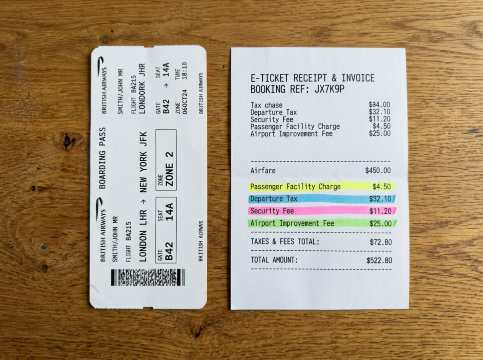
The broad term “airport tax” on ticket receipts covers multiple standardized official charges that fund public aviation infrastructure and services. Below is a clear tabular breakdown of all core components:
Tax & Fee Component | Detailed Purpose |
|---|---|
Government Departure Taxes | A mandatory national tax charged by aviation or treasury authorities on all outbound domestic and international flights. |
Airport Improvement Fees | Covers runway maintenance, terminal renovations, facility upgrades, and aviation equipment replacements at local airports. |
Passenger Facility Charges (PFC) | Fund FAA-approved airport capital improvement projects such as runway/taxiway improvements, terminal building improvements, noise mitigation, and airport planning. |
Aviation Security Fees | Supports airport security staffing, passenger and baggage screening devices, and anti-threat security operations. |
International Travel Facility Charges | Exclusive to international flights, covering customs processing, immigration services, border control and international terminal upkeep. |
Hidden vs. Disclosed Airport Fees: Reading Your Ticket Receipt
E-ticket receipts list all travel taxes and fees using standardized IATA three-letter codes, making it easy to tell official airport taxes apart from airline surcharges. Most so-called “hidden fees” on tickets are simply bundled, fully disclosed charges with no hidden surprises. Below are the most common codes seen on global flight itineraries:
- YQ: Fuel surcharge (airline-imposed fee, not a government airport tax; the most common non-tax charge on flight tickets)
- YR: Carrier security and insurance surcharge (airline operational fee, separate from official government airport tax)
- XF: U.S. Passenger Facility Charge (official government tax funding U.S. airport infrastructure)
- AY: Standard aviation security fee (government-mandated security tax included in official airport tax bundles)
- XT: Bundled code for miscellaneous small airport taxes and fees that airlines do not list individually
All official airport tax codes are regulated by national aviation authorities, while YQ and YR are private airline surcharges and not classified as legitimate airport taxes.
Airport Tax Refunds: Can You Get Your Money Back?
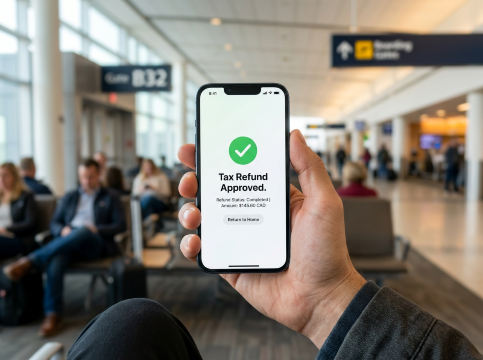
One of the most useful travel hacks to know: official airport taxes are almost always refundable, even on non-refundable base fares. Airlines only retain payment for flight services they provide. Unused public tax funds are required to be refunded to passengers under global aviation regulations.
Travelers can claim airport tax refunds in the following common scenarios:
- The airline cancels the flight, and the passenger declines any alternative rebooking options
- A travel visa is officially denied, preventing the passenger from departing, with valid official rejection documentation
- The passenger voluntarily cancels the ticket or misses the flight, with no portion of the travel itinerary used
- The trip is abandoned due to verified medical issues or unavoidable force majeure events
Refunds cover 100% of unused airport tax amounts, though a minor administrative processing fee may apply in some regions. Unlike airport taxes, fuel surcharges and airline service fees are typically non-refundable.
Stay Connected With Trip.com!
See all attractions
 635402 booked













Airport Tax for International vs. Domestic Flights: Is There a Difference?

Airport tax rules differ significantly between domestic and international flights. The table below summarizes the key differences:
Comparison Dimension | Domestic Flights | International Flights |
|---|---|---|
Tax Cost Level | Low and affordable | Noticeably higher |
Fee Coverage | Covers only basic airport maintenance, terminal amenities, and routine security screenings. No border, customs, or immigration fees are included. | Covers all basic domestic fees plus additional mandatory costs: customs inspections, immigration staffing, border control services, and international terminal upkeep. |
Regulatory Factors | Governed by local national aviation rules only | Affected by bilateral international air service agreements that set minimum cross-border tax standards |
Multi-stop Tax Rule | Single consolidated tax for one-way domestic travel | Direct flights charge one consolidated tax; multi-stop itineraries may incur separate taxes at each departing airport |
How Layovers and Transit Stops Affect Your Airport Tax
Transit and layover rules directly impact airport tax fees, with clear exemption rules for connecting passengers:
- Transit exemption rule: Most countries waive departure taxes for airside passengers who stay within 24–72 hours and do not clear immigration or enter the country.
- Single-ticket connecting flights: Qualify for automatic transit tax exemptions at intermediate stops, with no extra airport tax charged.
- Separate ticket bookings: Require immigration clearance and recheck-in, triggering full airport taxes at every transit airport.
- Long entry layovers: Layovers requiring customs and immigration entry void transit exemptions, incurring standard departure taxes.
Tips to Minimize Airport Tax Costs When Booking Flights

Travelers can cut airport tax costs easily without sacrificing travel experience with the following practical tips:
- Choose low-fee airports: Airport taxes are higher at major international hubs. Opt for nearby regional airports to lower facility and improvement fees.
- Book single-ticket connecting flights: Airside connections on one ticket qualify for transit tax exemptions, avoiding repeated departure taxes on multi-country routes.
- Limit long layovers: Keep transit stays within the 24–72 hour exemption window to prevent extra transit airport taxes.
- Compare all-in fares: Low-cost carriers split taxes from base fares while full-service airlines bundle them. Always check total ticket prices instead of base fares only.
- Claim refunds in time: Submit airport tax refund applications for unused, cancelled or visa-rejected trips before airline deadlines.
In short, airport tax is a fixed government fee for airport and security operations, separate from airline surcharges and service fees. Understanding domestic and international tax differences, transit exemptions, ticket fee codes and refund rules helps travelers avoid extra charges and book flights smarter. Simple booking and layover adjustments can easily reduce airport tax costs for a smooth travel experience.
[10% OFF] Global Hotel Recommendations
Find Best Global Hotels
See All Hotels







FAQs about Airport Tax
-
What is airport tax?
-
Do I have to pay airport tax?
-
What is included in airport tax?
-
Can I get a refund on airport tax if I don't fly?
-
Do airport taxes differ between international and domestic flights?
-
How can I find out the exact airport tax for my flight?
Disclaimer: This article has been provided by an individual contributor or third party platform. If there is any discrepancy regarding the copyright, please contact us directly and we will delete the content immediately.
Popular Searches
-
Air Travel Guide
-
Latest Flight Deals
-
Popular Flight & Hotel Packages
-
Getting Around
-
eSIM/SIM card
- Medellin Vacation Packages
- Hong Kong Vacation Packages
- Tokyo Flight and Hotel
- Koh Samui Flight and Hotel
- Hong Kong Flight and Hotel
- Pattaya Vacation Packages
- Natuna Vacation Packages
- Batumi Vacation Packages
- Sharm El Sheikh Vacation Packages
- Aktau Vacation Packages
- Paros Vacation Packages
- Kansas City Vacation Packages
- Banff Vacation Packages
- Puerto Princesa Vacation Packages
- Barcelona Vacation Packages
- Hangzhou Airport
- Shanghai Pudong Airport Transit
- Haruka Express
- Hong Kong Airport Express
- Beijing Capital International Airport
- Chongqing Metro
- Foshan Metro
- How to Get from Osaka to Kansai Airport
- Xian Metro Map
- Ningbo Airport
- Gimpo Airport to Seoul
- Kobe Airport
- Guangzhou Airport to City
- Wuxi Airport
- Narita Airport to Shinjuku
- Macau to Hong Kong
- Hangzhou Metro