Greece Plug: Types, Voltage, & Plug Adapters


Learn about Greece's plug types, voltage, and adapter needs. Find out how to charge your devices safely with Type C and Type F plugs while in Greece.👀
Greece utilizes Type C and Type F plugs with a standard voltage of 230V and 50Hz frequency, requiring adapters for most non-European devices.
2 Greece plug types

Source: world power plugs
Greece primarily uses Type C and Type F plugs.
- The Type C plug has two round pins and is commonly found across Europe, often referred to as the “Europlug.” However, it lacks grounding, making it more suited to lower-power devices like phone chargers.
- Type F plugs also have two round pins but include grounding clips on the sides for added safety, ideal for higher-power electronics.
💖If you're curious about how to stay connected in Greece, check Global eSIM, Wifi and SIM card!
Greece Power Plug Voltage & Frequency
In Greece, the electrical system operates at a voltage of 230V and a frequency of 50Hz, which is standard across much of Europe.
This setup is compatible with most European devices but may require attention for travelers from lower-voltage countries, like the United States or Canada (where the voltage is 110V).
If you're bringing single-voltage items from these regions, such as certain hair dryers, a voltage converter is necessary to safely step up the voltage.
For devices like laptops and phones, most are dual-voltage (100-240V) and can handle the voltage shift, meaning only a plug adapter is needed to fit the Type C or Type F outlets in Greece.
Do I Need a Converter or Plug Adapter for Greece?
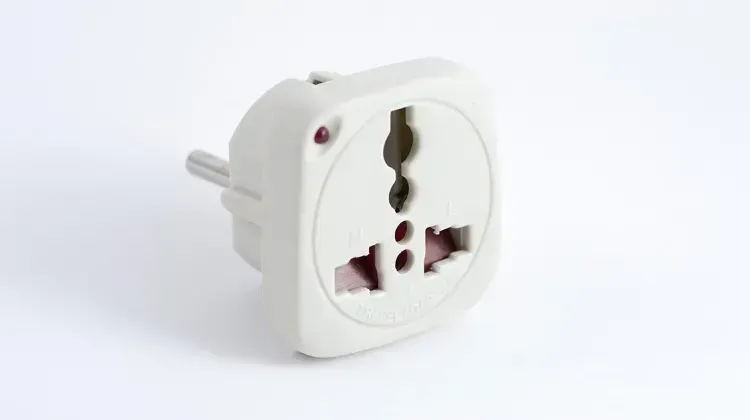
When traveling to Greece, you’ll likely need a plug adapter and, in some cases, a voltage converter, depending on where you’re coming from and the type of devices you’re bringing.
Do You Need a Plug Adapter for Greece?
If you’re visiting from countries like the United Kingdom, United States, Canada, Singapore, or Australia, you’ll need a plug adapter. Greece primarily uses Type C and Type F outlets, both with two round pins.
If your home country uses different plug types, like Type G in the UK or Type A/B in the US, you’ll need a Type C or Type F adapter to fit Greek outlets.
Do You Need a Voltage Converter for Greece?
Greece operates on a 230V system with a 50Hz frequency, which matches the standards of much of Europe.
If you’re coming from Europe, Australia, or Asia, your devices will likely be compatible without a voltage converter. However, travelers from North America (110V) should check if their devices are dual-voltage (100-240V).
Most modern electronics, like laptops and phone chargers, are dual-voltage, so only a plug adapter is required. For single-voltage devices, like some hair dryers, you’ll need a voltage converter to safely use them in Greece.
How to use travel adapters and converters in Greece?
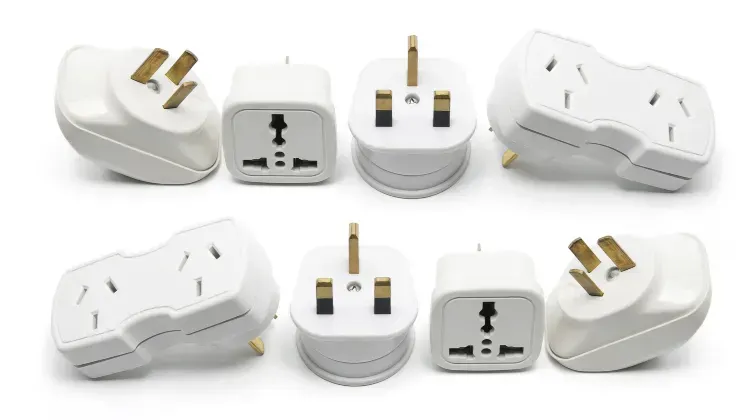
Step 1: Choose the Right Adapter or Converter
- Adapter: An adapter allows your device to physically connect to the local socket if the plug shapes differ. Use an adapter when your device’s voltage already matches the local voltage. For example, if your device supports 220V and you’re visiting a country with 220V outlets, an adapter is all you need.
- Converter: Use a converter when the voltage your device needs doesn’t match the local supply. Converters step down (or up) the voltage to align with your device’s requirements, such as converting 220V to 110V for lower-voltage devices.
Tip: Always check your device’s voltage rating, usually listed on the power adapter. If it states a voltage range (like 100V–240V), it’s compatible in most regions without a converter.
Step 2: Plug the Adapter into the Outlet
- Insert the adapter into the local socket, ensuring it’s stable.
- Plug your device into the adapter. Confirm that your device turns on and charges as expected, which indicates a secure connection.
Note: Adapters only modify the plug type and do not convert voltage. If your device isn’t dual voltage and the local voltage is different, you risk damaging it.
Step 3: For Converters
- Plug the converter into the outlet first, ensuring a secure fit.
- Next, plug your device into the converter. Confirm that the converter can handle your device’s wattage (check this on the device or its charger).
- Some converters are only suitable for short-term use, so if you’re charging for extended periods, consider investing in a reliable, continuous-use converter.
Step 4: Safety Tips for Using Adapters and Converters
- Check Voltage Compatibility: Verify that your device’s voltage matches the local voltage or that you have a converter for safe use.
- Avoid Overloading: Plugging multiple high-wattage devices into a single adapter or converter can overload it, leading to overheating.
- Unplug When Not in Use: Leaving devices, adapters, or converters plugged in when not actively charging can lead to overheating or even short-circuiting. Unplug when not needed.
Can I use my Phone or Laptop Charger in Greece?

✅you can use both your phone and laptop chargers in Greece, but you’ll likely need a Type C or Type F plug adapter to fit Greek outlets. Greece’s electrical system operates on 230V and 50Hz, which aligns with the voltage in most of Europe.
Phone Charger
Most modern phone chargers, including those for iPhones and Android devices (like Samsung and Google), are dual-voltage (100-240V). This means they automatically adjust to different voltage levels, so you only need a plug adapter. Just check the fine print on your charger for the “100-240V” marking to confirm it’s dual-voltage.
Laptop Charger
Laptop chargers from brands like Apple, HP, Dell, and Lenovo are also commonly dual-voltage, which allows you to use them safely with a simple plug adapter. If your laptop charger shows “100-240V,” it will work seamlessly in Greece without a voltage converter. However, travelers from the United States and Canada will need to bring an adapter to fit Greece’s Type C or F outlets.
Where Can I Buy a Plug Adapter for Greece?

If you need to buy a plug adapter for Greece, it’s easy to find options both online and in-country. Here’s where to look:
Before Traveling to Greece
For convenience, it’s best to purchase a Type C/F adapter before your trip. Amazon and other major retailers like Best Buy and Walmart offer adapters specifically for European plugs, including Greece’s Type C and Type F outlets. This is a reliable way to find universal adapters with added USB ports, useful if you’ll be charging multiple devices
Once in Greece
If you’re already in Greece, you can pick up plug adapters at major airports like Athens International, where shops in the arrivals area stock travel essentials. In tourist-heavy areas like Plaka in Athens, many electronics stores, and even some souvenir shops, sell adapters to accommodate travelers. Some large hotels may offer adapters for loan, so it's worth asking at the front desk if you’re in a pinch
Global Electrical Standards Overview
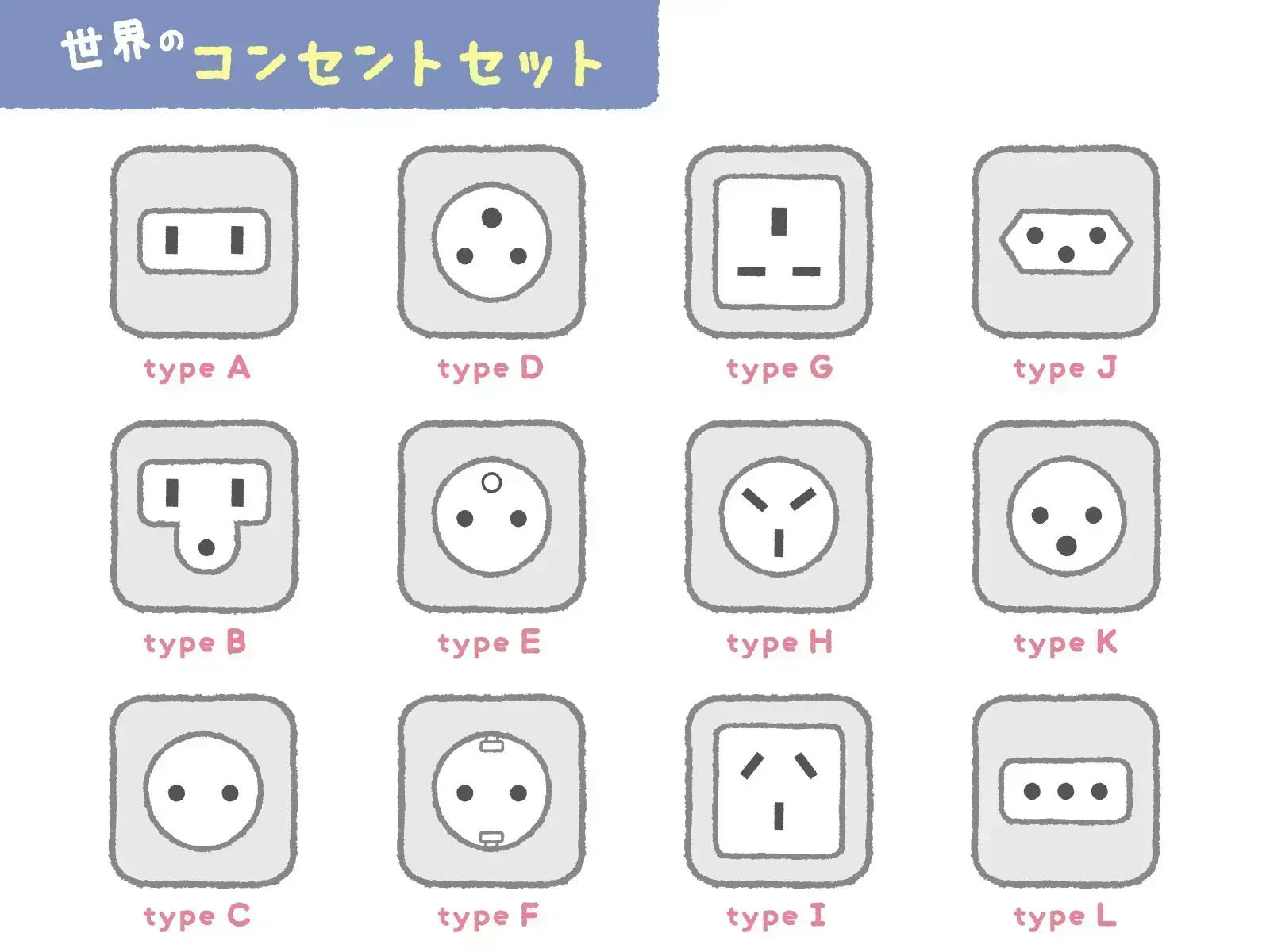
Globally, there are three main electrical standards for devices: 110-120V used primarily in North and Central America, 220-240V prevalent in Europe, Asia, and Oceania, and the dual-voltage system. These standards also differ in frequency, either 50 Hz or 60 Hz, and include a variety of plug types specific to each region. Understanding these differences is essential for safely using electronic devices while traveling internationally.
Asia & Oceania Electrical Standards
| Country | Frequency (Hz) | Voltage (Volts) | Plug Type |
| Australia | 50 | 230 | I |
| China | 50 | 220 | A, C, I |
| China (Hong Kong S.A.R.) | 50 | 220 | G |
| India | 50 | 230 | C, D, M |
| Indonesia | 50 | 230 | C, F |
| Japan | 50 Hz in Eastern Japan & 60 Hz in Western Japan | 100 | A, B |
| Malaysia | 50 | 240 | G |
| New Zealand | 50 | 230 | I |
| Philippines | 60 | 230 | A, B, C |
| Republic of Korea (South Korea) | 60 | 220 | C, F |
| Singapore | 50 | 230 | G |
| China (Taiwan) | 60 | 110 | A, B |
| Thailand | 50 | 220 | A, B, C |
| Vietnam | 50 | 220 | A, C |
North America & South America Electrical Standards
| Country | Frequency (Hz) | Voltage (Volts) | Plug Type |
| Argentina | 50 | 220 | C, I |
| Brazil | 60 | 127/220 | C, N |
| Canada | 60 | 120 | A, B |
| Chile | 50 | 220 | C, L |
| Colombia | 60 | 120 | A, B |
| Mexico | 60 | 127 | A, B |
| Peru | 60 | 220 | A, C |
| USA | 60 | 120 | A, B |
| Venezuela | 60 | 120 | A, B |
Europe Electrical Standards
| Country | Frequency (Hz) | Voltage (Volts) | Plug Type |
| France | 50 | 230 | C, E |
| Germany | 50 | 230 | C, F |
| Italy | 50 | 230 | C, F, L |
| Russia | 50 | 230 | C, F |
| Spain | 50 | 230 | C, F |
| United Kingdom | 50 | 230 | G |
Oceania Electrical Standards
| Country | Frequency (Hz) | Voltage (Volts) | Plug Type |
| Australia | 50 | 230 | I |
| Fiji | 50 | 240 | I |
| New Zealand | 50 | 230 | I |
Tips for Travelling in Greece

1. Best Time to Visit
- High season (June-August): Summer brings crowds, especially to islands like Santorini and Mykonos. If you love warm weather and lively atmospheres, this is the ideal time.
- Shoulder season (April-May, September-October): A great time for mild weather, fewer tourists, and lower prices. Spring and fall are perfect for exploring mainland Greece and quieter islands.
- Low season (November-March): Winter is off-season, with fewer crowds, but some tourist spots may close. Ideal if you’re visiting Athens and prefer a quieter experience.
2. Transportation Tips
- Public Transport: In Athens and Thessaloniki, use buses, trams, and the metro for convenient, affordable transport. Buy tickets at kiosks and validate them once on board.
- Island Ferries: Book ferry tickets in advance during high season, especially for popular routes. Ferries connect many islands and are an essential part of Greek travel.
- Driving: Renting a car is excellent for exploring remote spots, especially on larger islands like Crete. Note that driving can be challenging in some mountainous areas, and roads are often narrow.
3. Cash and Payments
- Currency: Greece uses the Euro (€). Cash is commonly used, especially in small towns and rural areas.
- ATMs and Credit Cards: ATMs are widely available, but carry some cash for smaller businesses. Many places accept credit cards, but it’s always good to ask first.
4. Stay Safe in the Heat
- Summer temperatures can soar, especially in July and August. Wear sunscreen, stay hydrated, and seek shade during peak midday hours. Drink bottled water, as tap water on some islands may have a different mineral taste.
5. Greek Dining Etiquette
- Meals and Tipping: Greeks enjoy leisurely meals. Dinner is usually late, starting around 8-9 PM. Tipping is customary, with 5-10% considered generous.
- Trying Local Food: Savor dishes like moussaka, souvlaki, and fresh seafood. Local tavernas offer the most authentic experience.
Trending Searches
-
Popular attractions
-
Trending Stays
-
Getting Around
-
eSIM/SIM card
- Hotels in Shanghai
- Hotels in Guangzhou
- Hotels in Beijing
- Hotels in Bangkok
- Hotels in Shenzhen
- Hotels in Hong Kong
- Hotels in Chongqing
- Hotels in Tokyo
- Hotels in Ho Chi Minh City
- Hotels in Chengdu
- Hotels in Kuala Lumpur
- Hotels in Seoul
- Hotels in Zhangjiajie
- Hotels in Hanoi
- Hotels in Singapore
- Hotels in Hangzhou
- Hotels in Xi'an
- Hotels in Istanbul
- Hotels in Bali
- Hotels in Osaka
- ETC Card Japan
- Hangzhou Airport
- Telepass
- Shenzhen Metro Map
- Hong Kong MTR Map
- Shanghai Airport Transfers
- Japan Transport App
- Suzhou metro
- Wenzhou Airport
- Wenzhou Metro
- Qingdao Metro Map
- Nankai Electric Railway
- How to Get Around Shanghai
- Hong Kong Airport to Shenzhen
- Narita Airport to Shinjuku
- Macau to Hong Kong
- Qingdao Metro Travel Guide