Ireland Plug: Types, Voltage, & Plug Adapters

by Yuan Wu
October 24, 2024
Ireland utilizes the Type G plug standard, operating on a 230V voltage and 50Hz frequency. Travelers require a plug adapter for compatibility, while devices lacking dual-voltage support also necessitate a converter.
Learn about the Ireland plug types, voltage requirements, and whether you need a plug adapter or voltage converter for your trip.👀
Ireland plug type
If you're traveling to Ireland, you'll need to be aware of the plug type they use. Ireland uses the Type G plug, which has three rectangular prongs. This is the same plug type used in the UK, so if you’ve been to the UK before, you’re already familiar with it.
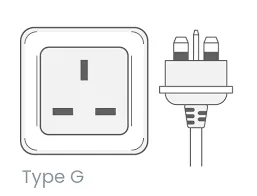
Source: World-Power-Plugs.com
Ireland power plug voltage and frequency
Ireland operates on a standard voltage of 230V and a frequency of 50Hz. This is common across Europe, but if you're coming from countries like the U.S. or Japan, where the voltage is lower (110-120V), you’ll need to check if your electronics can handle Ireland’s higher voltage.
Ireland plug: Adapters and converters for travelling in Ireland
To use your devices in Ireland, you’ll likely need an adapter and possibly a converter. An adapter allows you to plug your electronics into the Type G socket, while a converter is necessary if your devices can't handle Ireland's 230V. Always check if your gadgets are dual-voltage before packing them!
Do you need a travel adapter in Ireland?
If you’re from the U.S., Europe (excluding the UK), or other regions that don’t use the Type G plug, you’ll definitely need a travel adapter in Ireland. It’s essential for charging your phone, laptop, or other devices.
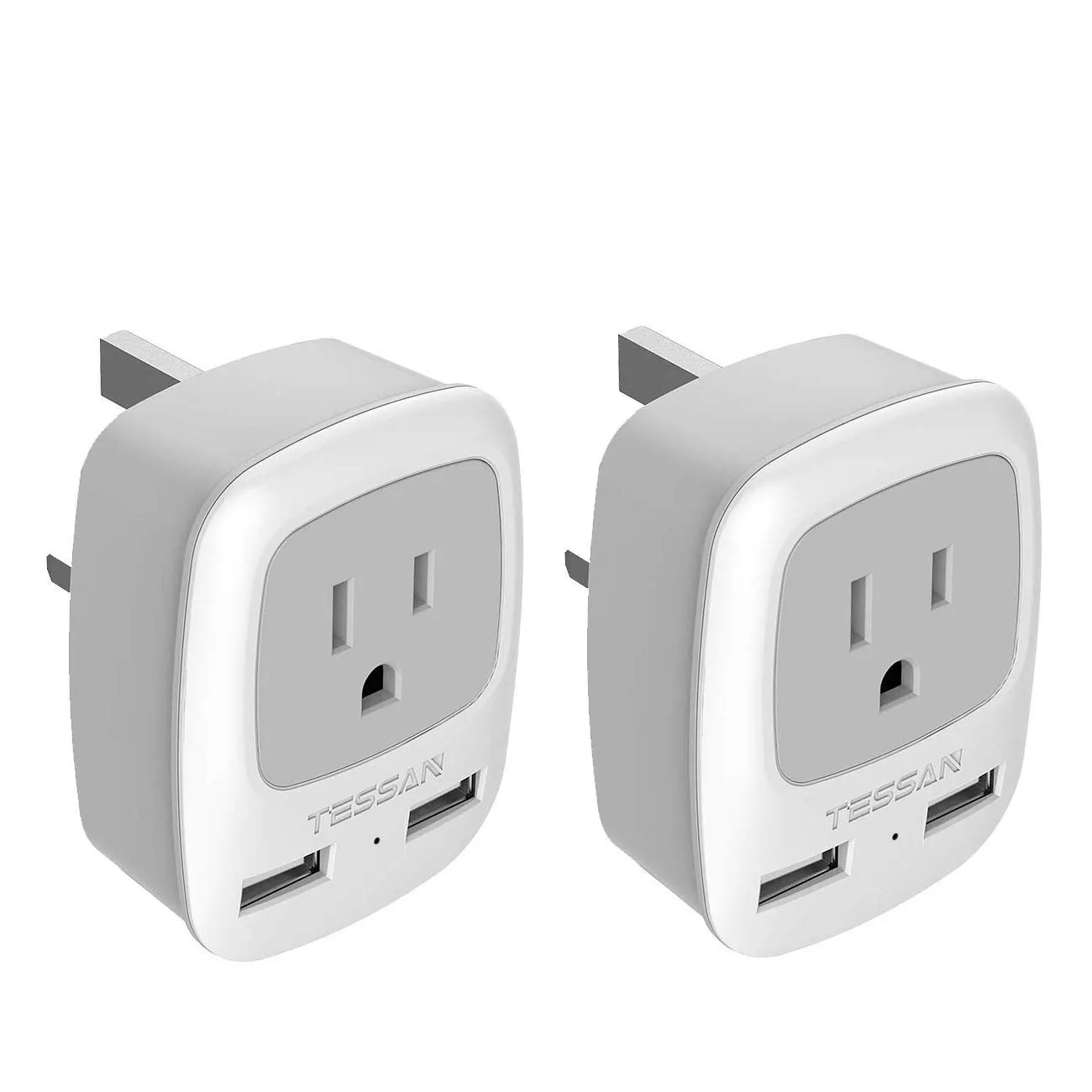
Source: Amazon
Do you need a voltage converter in Ireland?
Whether you need a voltage converter depends on your devices. Many modern electronics, like smartphones, laptops, and cameras, are dual-voltage, which means they can work with Ireland's 230V power. However, some appliances like hair dryers or straighteners may not be, so check their labels and bring a converter if needed.
👉Tip from Quora
To decide whether or not to bring a travel adapter or a voltage converter depends on where you are from. If you're from UK, obviously you don't need to bring them. If you're from Europe or most countries that work on a similar voltage between 220–240 then you just need a simple adaptor. If you are coming from a country like the US you will need an adaptor that also coverts to the lower voltage that you need.

Source: Ireland.com
How to use travel adapters and converters?
Using adapters and converters is pretty straightforward. Plug your adapter into the Irish outlet first, then connect your device. If your device isn’t dual-voltage, you’ll need to use a voltage converter between the adapter and your device. Just make sure everything is properly plugged in and compatible with the local voltage to avoid any mishaps.
Where to buy ireland adapters?
It’s a good idea to buy an Ireland travel adapter before you leave. They’re widely available online, at electronics stores, or even at airports. If you forget to bring one, you can usually find them in local shops or larger supermarkets in Ireland, but buying one ahead of time is always more convenient.
Where to charge easily in Ireland?
Charging your devices in Ireland is pretty easy. You'll find charging stations at airports, train stations, cafés, and even in some public spaces. Many hotels also offer USB ports or universal outlets in the rooms. However, having your own adapter will always come in handy when you're on the go.
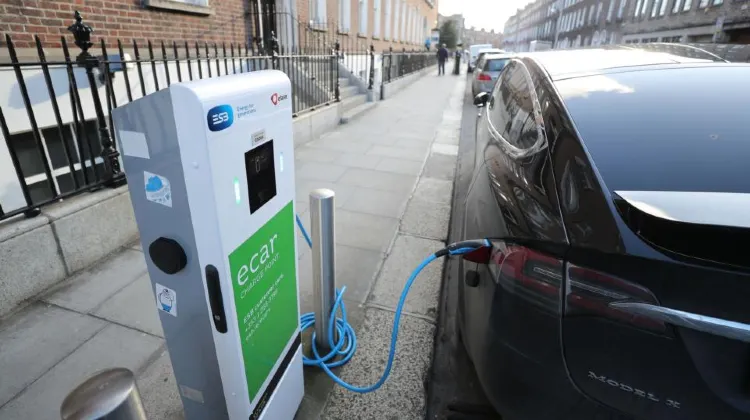
Source: The Irish Times
Global electrical standards overview
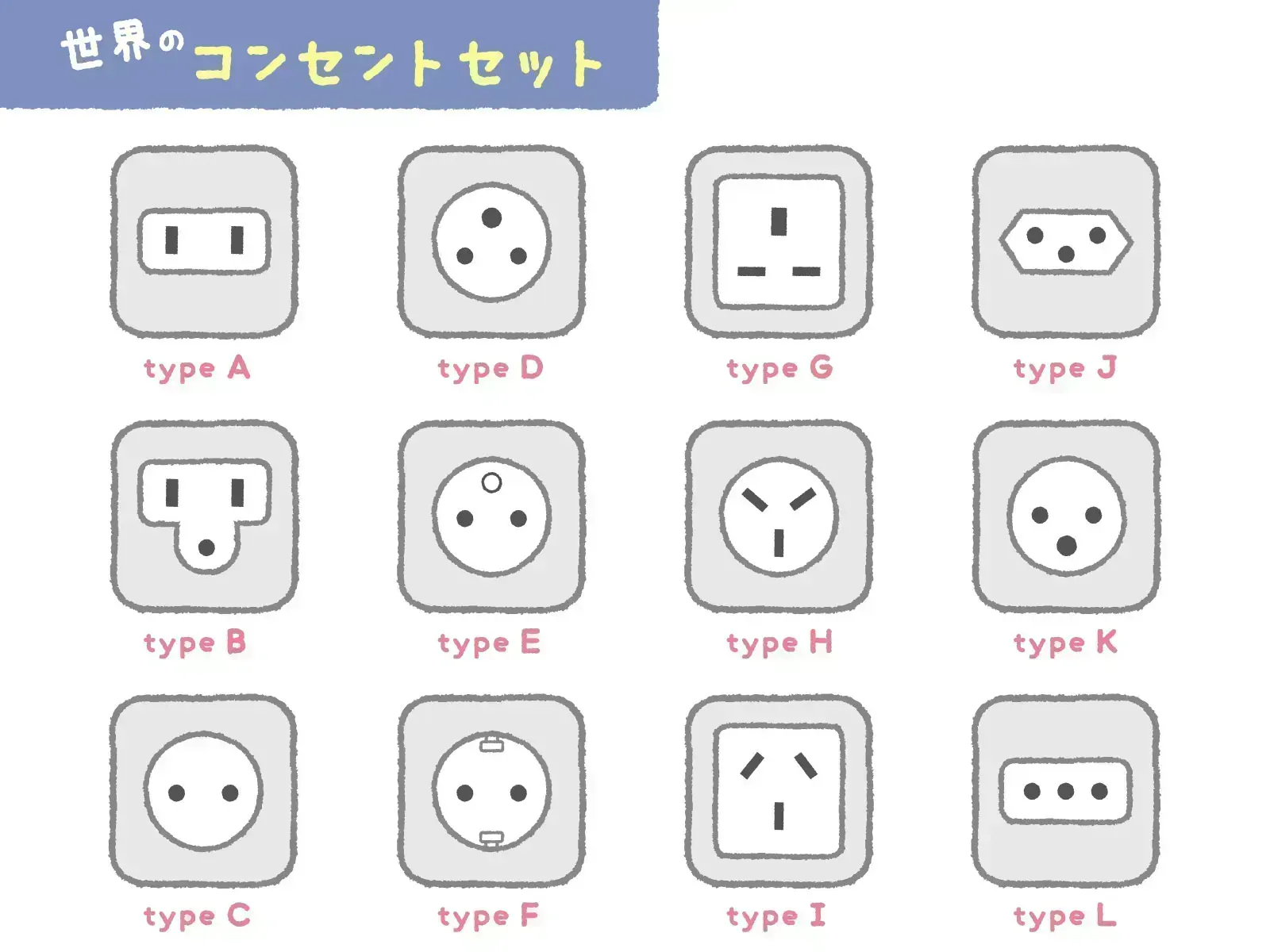
Globally, there are three main electrical standards for devices: 110-120V used primarily in North and Central America, 220-240V prevalent in Europe, Asia, and Oceania, and the dual-voltage system. These standards also differ in frequency, either 50 Hz or 60 Hz, and include a variety of plug types specific to each region. Understanding these differences is essential for safely using electronic devices while traveling internationally.
Asia & Oceania electrical standards
| Country | Frequency (Hz) | Voltage (Volts) | Plug Type |
| Australia | 50 | 230 | I |
| China | 50 | 220 | A, C, I |
| China (Hong Kong S.A.R.) | 50 | 220 | G |
| India | 50 | 230 | C, D, M |
| Indonesia | 50 | 230 | C, F |
| Japan | 50 Hz in Eastern Japan & 60 Hz in Western Japan | 100 | A, B |
| Malaysia | 50 | 240 | G |
| New Zealand | 50 | 230 | I |
| Philippines | 60 | 230 | A, B, C |
| Republic of Korea (South Korea) | 60 | 220 | C, F |
| Singapore | 50 | 230 | G |
| China (Taiwan) | 60 | 110 | A, B |
| Thailand | 50 | 220 | A, B, C |
| Vietnam | 50 | 220 | A, C |
North America & South America electrical standards
| Country | Frequency (Hz) | Voltage (Volts) | Plug Type |
| Argentina | 50 | 220 | C, I |
| Brazil | 60 | 127/220 | C, N |
| Canada | 60 | 120 | A, B |
| Chile | 50 | 220 | C, L |
| Colombia | 60 | 120 | A, B |
| Mexico | 60 | 127 | A, B |
| Peru | 60 | 220 | A, C |
| USA | 60 | 120 | A, B |
| Venezuela | 60 | 120 | A, B |
Europe electrical standards
| Country | Frequency (Hz) | Voltage (Volts) | Plug Type |
| France | 50 | 230 | C, E |
| Germany | 50 | 230 | C, F |
| Italy | 50 | 230 | C, F, L |
| Russia | 50 | 230 | C, F |
| Spain | 50 | 230 | C, F |
| United Kingdom | 50 | 230 | G |
Oceania electrical standards
| Country | Frequency (Hz) | Voltage (Volts) | Plug Type |
| Australia | 50 | 230 | I |
| Fiji | 50 | 240 | I |
| New Zealand | 50 | 230 | I |
Tips for Travelling in Ireland
Handshake: When meeting guests in social settings, people typically greet each other with a handshake. Just be sure to avoid crossing over other people’s handshakes, as this can be seen as impolite.
Cheek Kisses: When greeting close friends or family, it’s common to exchange two or three cheek kisses, or just touch cheeks, instead of shaking hands. This shows warmth and friendliness.
Respect for Women: The concept of "ladies first" is a well-established tradition. Men are expected to take care of women, giving them priority in most situations.
Avoid Sensitive Topics: It’s best to steer clear of discussing sensitive topics like religion or politics, as these could lead to arguments or make people uncomfortable.
Privacy Matters: The Irish don’t appreciate being asked about personal matters like where they’re going, their salary, age, or marital status. These are considered private topics that shouldn’t be pried into.
Dining Habits: Irish traditional food is quite similar to British cuisine, with potatoes, vegetables, and beef being common staples. Bread is also a big part of their meals. Irish dishes tend to be light and not too greasy, and meals are usually eaten with a knife and fork.
Love for Green: No country embraces the color green more than Ireland. The famous St. Patrick's Day (March 17th) is their national holiday, and the shamrock, a green clover, is the national symbol. So if you see an Irish person wearing a green hat, give them a friendly smile!
FAQs about Ireland Plugs
-
What type of plug is used in Ireland?
-
Do I need a plug adapter to use my electronics in Ireland?
-
Where can I purchase a plug adapter for Ireland?
Trending Searches
-
Popular attractions
-
Trending Stays
-
Getting Around
-
eSIM/SIM card
- Hotels in Shanghai
- Hotels in Guangzhou
- Hotels in Beijing
- Hotels in Bangkok
- Hotels in Shenzhen
- Hotels in Hong Kong
- Hotels in Chongqing
- Hotels in Tokyo
- Hotels in Ho Chi Minh City
- Hotels in Chengdu
- Hotels in Kuala Lumpur
- Hotels in Seoul
- Hotels in Zhangjiajie
- Hotels in Hanoi
- Hotels in Singapore
- Hotels in Hangzhou
- Hotels in Xi'an
- Hotels in Istanbul
- Hotels in Bali
- Hotels in Osaka
- Shanghai Bike Rental
- Hong Kong Airport Express
- JR Shikoku
- Guilin Airport
- Shinkansen Tokyo to Kyoto and Osaka
- Beijing Metro Map
- Chengdu Airport
- KL MRT Map
- jr tokyo wide pass
- Beijing to Shanghai Train vs Plane
- Japan Transport App
- Incheon International Airport to Seoul
- Kunming Metro Map
- Singapore Airport to City
- Narita Airport to Shinjuku
- Macau to Hong Kong
- AREX