Flying with Batteries: Complete Rules for Carry-On & Checked Baggage

by Bonnie
May 11, 2026
Air travel battery rules are frequently misunderstood by global travelers, yet they are essential for aviation safety. This guide simplifies all official battery regulations, helping travelers pack compliantly and avoid airport delays or confiscation.
Types of Batteries Allowed on a Plane
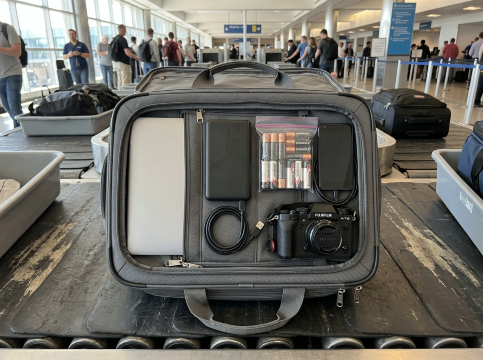
Travelers carry a wide range of batteries for personal electronics, everyday devices, and specialty gear, but not all batteries follow the same flight rules. Aviation authorities classify all aircraft-approved batteries into three core categories based on chemical composition, rechargeability, and fire risk:
- Standard non-lithium dry batteries: Conventional single-use or rechargeable dry cells for daily small devices, with extremely low fire risk and flexible packing rules.
- Rechargeable lithium-ion batteries: High-energy rechargeable batteries built into most modern electronics, subject to strict watt-hour capacity restrictions.
- Non-rechargeable lithium metal batteries: Single-use specialty lithium cells with higher combustion risk, featuring unique lithium content limits.
Each category has distinct restrictions for carry-on baggage, checked baggage, quantity limits, and watt-hour (Wh) ratings. Additionally, portable power banks — a subset of lithium-ion batteries — have unique standalone rules that differ from device-integrated batteries. Understanding these basic categories lets travelers quickly identify which rules apply to their gear and avoid security delays or confiscation.
Standard (Non-Lithium) Batteries: AA, AAA, C, D, and 9V
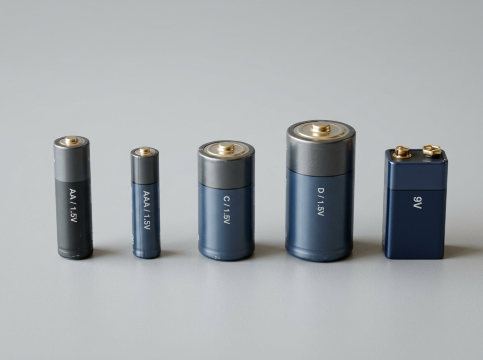
Standard non-lithium batteries are common daily-use batteries with low safety risks. They cover multiple battery chemistries, standard sizes, and daily application scenarios, detailed in the table below:
Battery Types | Common Sizes | Typical Applications |
|---|---|---|
Alkaline, NiMH, NiCd, zinc-carbon, silver oxide, zinc-air | AA, AAA, C, D, 9V | Flashlights, remote controls, toys, smoke detectors and other small household devices |
With far lower fire risks than lithium batteries, standard non-lithium batteries follow flexible air travel rules. Per TSA, FAA, and IATA regulations, they are fully allowed in both carry-on and checked baggage for all domestic and international flights, with no official quantity limits for personal travel use.
The only mandatory rule is short-circuit and damage protection. Loose batteries should stay in original packaging, protective cases, or have covered terminals to avoid contact with metal items. Damaged, leaking, or corroded batteries are prohibited for air travel due to chemical leakage risks.
to Bangkok
to Manila
to Shanghai
to Tokyo
to Seoul
See all flights


Lithium-Ion Batteries: Laptops, Cameras, Drones, and More
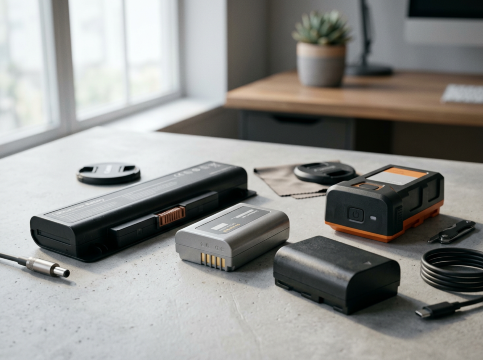
Lithium-ion (Li-ion) batteries power most portable electronics, including laptops, cameras, drones and mobile devices. Boasting high energy density, they deliver strong performance but carry risks of overheating and thermal runaway when damaged or short-circuited.
Global aviation rules strictly regulate lithium-ion batteries based on watt-hour (Wh) ratings, the official measurement of battery energy capacity. The universal IATA and FAA guidelines are consistent across most commercial flights:
- 0–100 Wh batteries: Fully permitted in carry-on baggage with no quantity limits, covering most consumer electronics like phones, laptops, and small drone batteries.
- 100–160 Wh batteries: Allowed only with prior airline approval, limited to 2 spare batteries per passenger for professional high-capacity devices.
- Over 160 Wh batteries: Completely prohibited on all commercial passenger flights.
Lithium-ion batteries installed inside electronic devices follow modified rules. Devices with integrated Li-ion batteries, like a built-in laptop battery, can be packed in checked baggage only if fully powered off and secured against accidental activation. Spare, uninstalled lithium-ion batteries are never allowed in checked baggage, regardless of Wh rating.
Lithium Metal Batteries: Non-Rechargeable and Specialty Cells
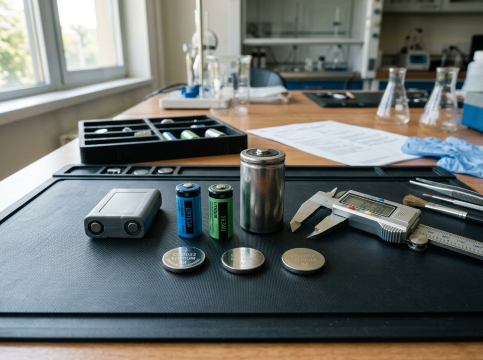
Lithium metal batteries are single-use cells for watches, camera coin cells and medical devices. Containing pure metallic lithium, they carry higher fire risks if damaged or exposed to air. TSA and FAA enforce strict lithium content limits for lithium metal batteries (separate from watt-hour ratings), with clear rules for air travel eligibility and baggage packing. All core regulations are summarized in the table below:
Lithium Content Per Cell | Air Travel Approval | Carry-On Allowance | Checked Baggage Allowance | Key Notes |
|---|---|---|---|---|
≤ 2 grams | Fully approved for standard passenger travel | No strict quantity limits for personal use | Only permitted if permanently installed in a fully powered-off device | Must be protected from short circuits; covers most coin, watch, and small medical device batteries |
2–8 grams | Allowed only with prior airline approval | Maximum 2 spare batteries per passenger | Strictly prohibited | For professional/specialty high-capacity lithium metal cells |
> 8 grams | Strictly prohibited | Not allowed | Not allowed | Banned on all commercial passenger flights with no exceptions |
Universal rule for all lithium metal batteries: spare, uninstalled cells are strictly banned from checked baggage, regardless of lithium content.
Power Banks and Portable Chargers on a Plane
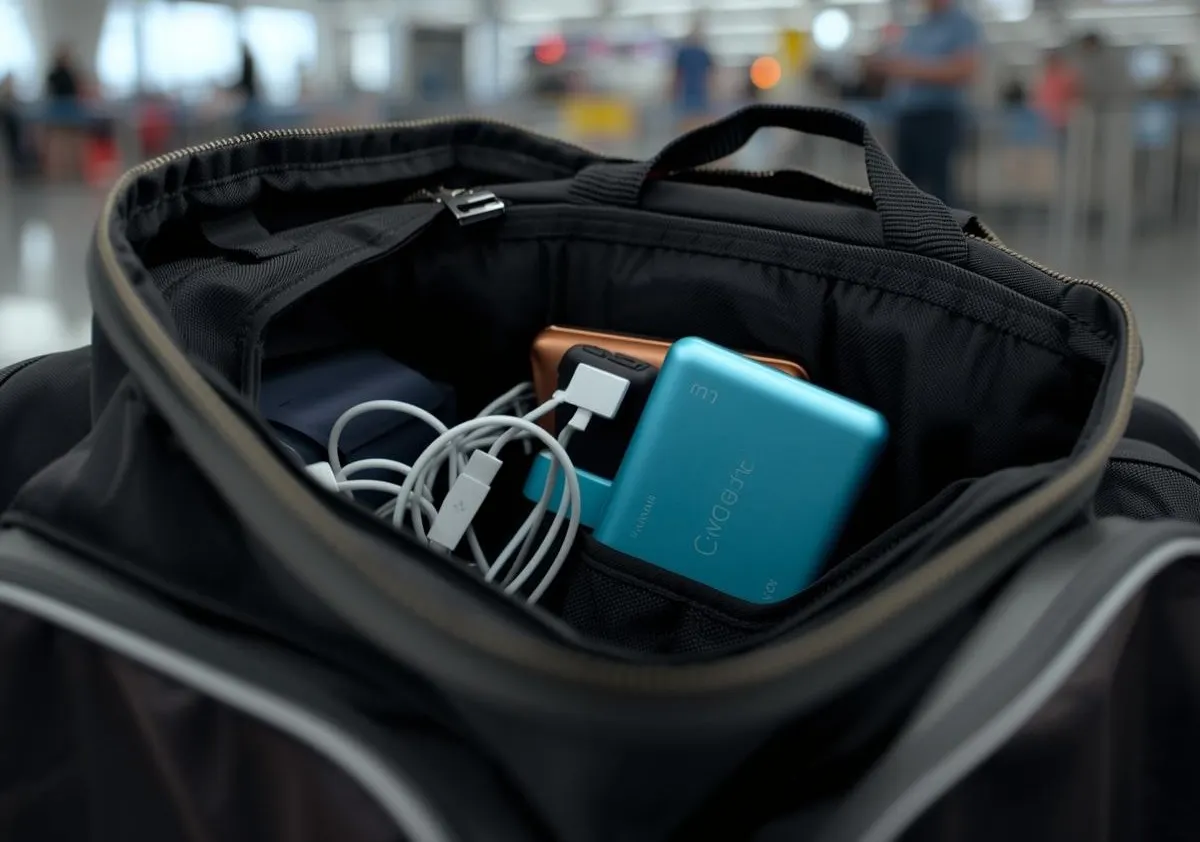
Power banks and portable phone chargers are the most frequently questioned battery item for air travel, and they follow strict non-negotiable global rules. All portable chargers are classified as spare, uninstalled lithium-ion batteries by IATA, FAA, and TSA, which places them under the strictest packing regulations.
The core rule all travelers must remember: power banks are carry-on ONLY and strictly prohibited in checked baggage. This rule applies to every size and capacity of portable charger, with zero exceptions. If a carry-on bag is gate-checked or moved to the aircraft hold, all power banks must be removed and kept in the passenger’s personal cabin bag or pocket.
Power bank capacity rules align with standard lithium-ion battery regulations, with clear approval tiers based on watt-hour (Wh) ratings, detailed in the table below:
Watt-Hour (Wh) Range | Official Air Travel Approval | Core Restrictions | Key Notes |
|---|---|---|---|
Under 100 Wh | Fully approved for personal use | No quantity limits for standard travel | Covers most consumer-grade power banks, automatically compliant for regular trips |
100–160 Wh | Allowed only with prior airline approval | Maximum 2 units per passenger | For high-capacity professional or specialty power banks |
Over 160 Wh | Strictly prohibited | Not permitted on any commercial passenger flight | No exceptions for standard travelers |
The vast majority of consumer power banks available on the market have a capacity well below 100 Wh, making them fully compliant for standard air travel. Additionally, power banks must never be charged while onboard the aircraft, even if cabin USB ports are available. They must be protected from short circuits during travel, with loose terminals covered or stored in a padded case to prevent contact with metal objects.
Carry-On vs. Checked Baggage: Where Should Your Batteries Go?
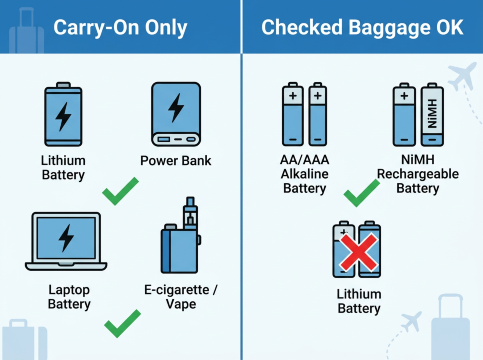
One of the biggest travel misconceptions is assuming all batteries can be packed freely in either bag type. The key distinction hinges on whether a battery is installed in a device or spare/uninstalled, as well as its battery type. Below is a clear breakdown of official carry-on and checked baggage permissions:
Carry-On Baggage (Cabin Approved)
- Allowed battery types: All compliant batteries are permitted in carry-on baggage, including standard non-lithium batteries, approved lithium-ion batteries, lithium metal batteries, and qualified power banks.
- Core advantage: Cabin storage is the safest and most universally accepted packing method for all battery-powered travel gear.
- Official preference: Crews can quickly detect and resolve battery overheating hazards in the cabin, so aviation authorities prioritize carry-on battery storage.
Checked Baggage (Hold Restrictions)
Cargo holds are unattended during flights, so checked baggage has strict battery restrictions. Rules for battery packing are listed below:
- Allowed in checked baggage: All standard AA, AAA, C, D, 9V non-lithium batteries; fully powered-off electronic devices with installed lithium-ion or lithium metal batteries.
- Prohibited in checked baggage: All spare uninstalled lithium-ion batteries, spare lithium metal batteries, and all power banks. Unattended lithium battery fires in cargo holds are extremely dangerous and hard to extinguish, with zero exceptions for these banned items.
Stay Connected With Trip.com!
See all attractions
 2503 booked






International Travel with Batteries: What Changes When You Fly Abroad

Nearly all global commercial airlines follow baseline IATA battery safety standards, so core Wh limits, spare lithium battery restrictions, and power bank carry-on rules are consistent worldwide. However, international travel introduces minor regional and airline-specific variations that travelers must note to avoid issues.
Region/Travel Area | Core Battery Regulations | Key Enforcement & Exception Notes |
|---|---|---|
European Flights |
|
|
Asian Flights |
|
|
Global International Destinations |
|
|
What Happens If You Have a Lithium Battery in Checked Luggage?
Stowing spare lithium batteries and power banks in checked baggage is a common and dangerous violation. Unattended cargo holds offer no real-time fire monitoring; faulty or short-circuited lithium batteries can trigger thermal runaway and spread fires rapidly, posing critical flight safety risks.
Non-compliant batteries will be confiscated with no refund. Violations may cause boarding delays and extra security inspections. Severe thermal events can lead to emergency landings and flight disruptions, so airlines enforce a strict zero-tolerance policy.
Special Battery Items: Drones, E-Cigarettes, Hearing Aids & Smart Luggage
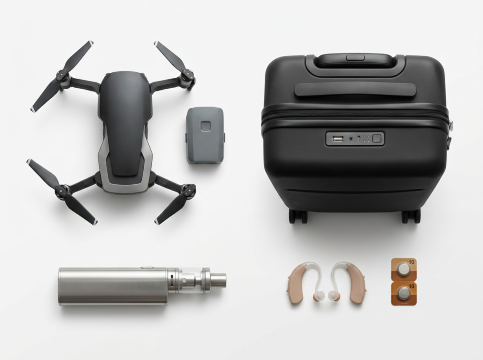
Specialty electronic devices with built-in batteries have unique flight rules that differ from standard consumer gear, addressing their specific safety profiles and design features.
- Drones: Drone batteries follow standard lithium-ion Wh rules. Drones with installed batteries are allowed in carry-on bags. Spare batteries require terminal protection and cabin storage. 100–160 Wh batteries need airline approval; batteries over 160 Wh are banned. Most airlines limit the quantity of spare drone batteries per passenger.
- E-Cigarettes & Vapes: Strictly carry-on only and prohibited in checked baggage globally. Using or charging these devices during flight is forbidden, with some airlines and countries enforcing full bans.
- Hearing Aids & Medical Devices: Lenient rules apply to personal medical battery devices. Devices can be worn on board, and spare medical lithium batteries are permitted in carry-on bags with flexible quantity limits.
- Smart Luggage: Smart luggage with removable lithium batteries is allowed (batteries must be removed and packed in carry-on bags; luggage can be checked or carried on). Smart luggage with non-removable lithium batteries is banned on nearly all commercial airlines.
Pro Tips for Packing Batteries Safely for Your Flight
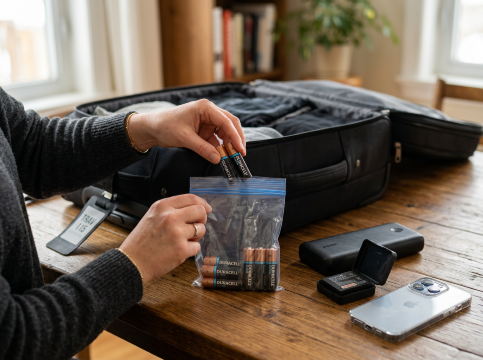
Following these actionable, official safety tips ensures full regulatory compliance, eliminates security delays, and protects batteries and devices from damage during air travel:
1. Keep all spare lithium batteries and power banks in carry-on baggage only. Never place uninstalled lithium cells or portable chargers in checked luggage, regardless of size or capacity.
2. Protect all battery terminals from short circuits. Use original factory packaging, electrical tape to cover exposed metal terminals, or padded travel cases for loose batteries and power banks. Avoid mixing loose batteries with keys, coins, or other metal objects.
3. Power off all battery-powered devices in checked baggage. Any laptop, camera, or electronic device placed in checked luggage must be fully shut down (not in sleep mode) to prevent accidental activation and overheating.
4. Check watt-hour ratings for high-capacity batteries. Verify the Wh label on drone batteries, large camera batteries, and power banks. Secure written airline approval for any battery between 100–160 Wh well before departure.
5. Remove batteries from smart luggage before checking bags. Always detach removable smart bag batteries and stow them in your cabin carry-on to avoid luggage rejection at check-in.
6. Discard damaged or swollen batteries. Never travel with punctured, bulging, leaking, or recalled batteries, as they are highly unstable and prohibited on all aircraft.
7. Remove lithium devices from gate-checked bags. If your carry-on bag is moved to the hold at the gate, always retrieve all power banks and spare lithium batteries to keep them in the cabin.
8. Confirm airline-specific rules in advance. While IATA, FAA, and TSA rules are universal, individual airlines may enforce stricter quantity or capacity limits. Verify carrier policies before every flight.
Final Thoughts
Following guidelines and safe packing best practices ensures compliant, hassle-free air travel with batteries. Always check individual airline and destination-specific rules before departure, as minor policy variations may apply. With these clear rules, travelers can pack their battery-powered devices safely and confidently for any flight worldwide.
[10% OFF] Global Hotel Recommendations
Find Best Global Hotels
See All Hotels







FAQs About Batteries on Plane
-
Can you bring batteries on a plane in your carry-on?
-
Do you put batteries in hand luggage or a suitcase?
-
Can I take normal AA batteries on a plane?
-
Can I bring AAA batteries on a plane?
-
Why are lithium batteries not allowed in checked baggage on planes?
-
Are batteries allowed on international flights?
Disclaimer: This article has been provided by an individual contributor or third party platform. If there is any discrepancy regarding the copyright, please contact us directly and we will delete the content immediately.
Popular Searches
-
Air Travel Guide
-
Latest Flight Deals
-
Popular Flight & Hotel Packages
-
Getting Around
-
eSIM/SIM card
- Cancun Vacation Packages
- Medellin Vacation Packages
- Hong Kong Vacation Packages
- Tokyo Flight and Hotel
- Koh Samui Flight and Hotel
- Pattaya Vacation Packages
- Riga Vacation Packages
- Vienna Vacation Packages
- Mexico City Vacation Packages
- Skopje Vacation Packages
- Budapest Vacation Packages
- Paros Vacation Packages
- Salem Vacation Packages
- Las Vegas Vacation Packages
- Tromso Vacation Packages
- Wuhan Airport
- JR Hokkaido
- Changsha Metro
- Haneda Airport to Tokyo
- Hangzhou Metro
- Cruises from Shanghai to Japan vs Korea
- Hotels near LAX with Shuttle
- How to Get to Furong Ancient Town
- Wuxi Airport
- Macau Taxi
- Beijing Daxing International Airport
- Shanghai Metro
- How to Choose the Right Train Station in China
- Foshan Metro
- Macau to Hong Kong
- Narita Airport to Shinjuku
- Osaka Metro