China Restricted & Prohibited Items: Entry/Exit Declaration Rules

China’s customs regulations aim to protect national security, public health, cultural heritage, and ecological environment. All inbound and outbound passengers must abide by the "personal use + reasonable quantity" principle for carried items. Items beyond this scope, prohibited, or restricted require formal declaration or relevant permits—failure to declare may result in confiscation, fines, or legal liability.
to Shanghai
to Guangzhou
to Beijing
See all flights

Entering China: Prohibited/Restricted Items & Declaration Rules
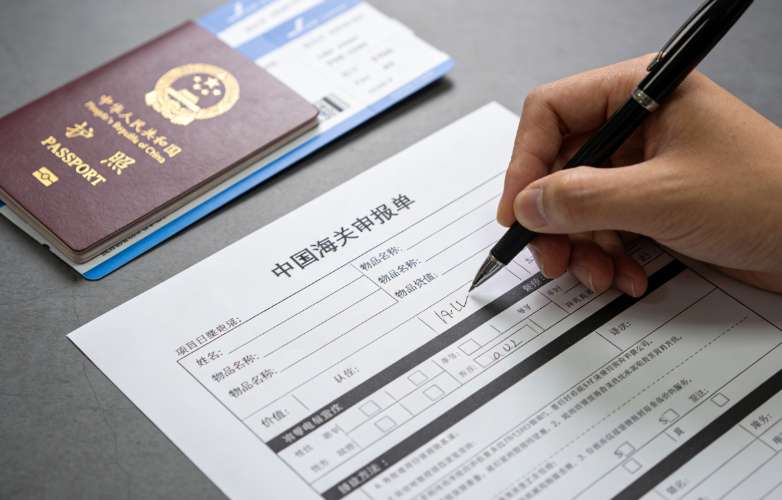
Entering China: Prohibited/Restricted Items
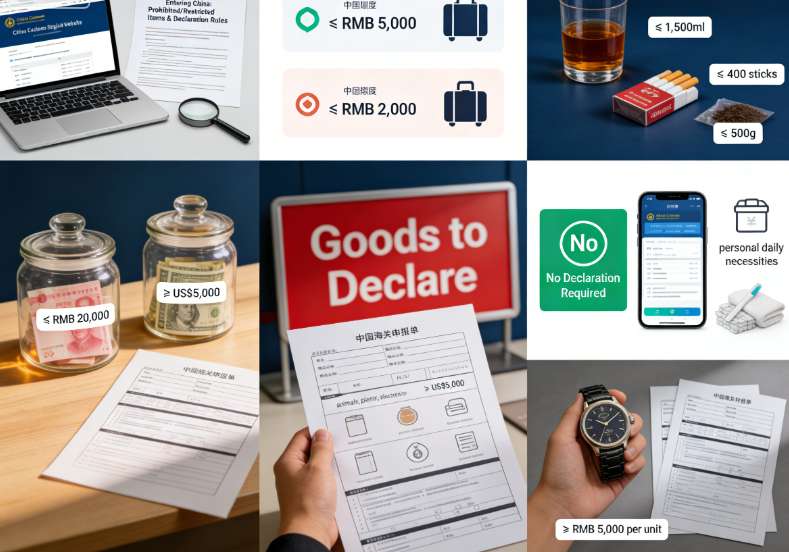
Duty-Free Items: Limits & Exemptions
Duty-free privileges apply only to personal items for non-commercial use. Exceeding limits requires duty payment.
- Chinese Residents (returning after overseas travel): Total value of overseas-purchased personal items ≤ RMB 5,000 (duty-free); excess portion is levied duty (tax rate varies by item, generally 10%-50%).
- Non-Chinese Residents (temporarily staying in China): Total value of items intended to remain in China ≤ RMB 2,000 (duty-free); excess is subject to duty.
- Tobacco & Alcohol Limits (universal for adults):
- Alcohol: ≤ 1,500ml (alcohol content ≥12%);
- Cigarettes: ≤ 400 sticks (or cigars ≤100 sticks, or tobacco ≤500g);
- Excess quantities must be declared and taxed.
Cash & Currency Declaration Rules
- Chinese Yuan (RMB): Maximum carry-on limit = RMB 20,000; excess is prohibited.
- Foreign Currency: No limit for entry, but amounts ≥ US$5,000 (or equivalent) must be declared.
- Tip: If you plan to take unspent foreign currency out of China later, fill out two declaration forms—keep the customs-endorsed copy for exit verification.
Items Requiring Mandatory Declaration for Entry
Choose the Red Channel (Goods to Declare) if carrying any of the following:
- Items exceeding duty-free limits in value or quantity;
- Cash ≥ RMB 20,000 or foreign currency ≥ US$5,000;
- Animals, plants, or their products (e.g., meat, milk, eggs, bird’s nests, fresh fruits);
- Medicines (prescription drugs, Chinese herbal medicines, health supplements);
- Electronics (radio transmitters, communication devices, drones);
- Commercial goods, samples, or advertisements;
- Unaccompanied baggage (shipped separately from your travel itinerary);
- Cultural relics, endangered species, or precious metals.
Exempted Items for Entry
- Personal daily necessities (e.g., clothing, toiletries) within reasonable quantity;
- One unit of each common personal electronic device (e.g., phone, camera) for personal use (not for resale);
- Small gifts with low value (generally ≤ RMB 100 per recipient, total value not exceeding duty-free limits).
Exit China: Prohibited/Restricted Items & Declaration Rules
Exit China: Prohibited/Restricted Items & Declaration Rules
High-Value Items: Declaration for Re-Entry
If carrying high-value items (≥ RMB 5,000 per unit) that you plan to bring back to China later (e.g., laptop, camera, luxury watch), fill out two customs declaration forms upon exit. Keep the endorsed copy to prove the item was originally brought from abroad and avoid duty on re-entry.
Cash & Currency Limits for Exit
- Same as entry rules: RMB carry-on limit ≤ 20,000; foreign currency amounts ≥ US$5,000 must be declared (with proof of legal source if exceeding the amount declared upon entry).
- Prohibited: Illegally obtained foreign currency or drafts.
Prohibited/Restricted Export Items
Mandatory declaration or official permits are required for the following items:
- Cultural relics (especially those over 100 years old, or classified as national treasures—requires a valid Cultural Relic Export Permit);
- Endangered animals/plants and their products (e.g., ivory, rhino horn, tiger bone, certain protected herbal medicines);
- Precious metals (gold, silver, platinum) in large quantities;
- Radio transmitters, communication security devices, or drones (requires relevant regulatory approvals);
- Chinese herbal medicines/patented drugs prohibited for export (e.g., musk, dried toad venom, tiger bone-containing products);
- Items involving state secrets (manuscripts, data storage devices with sensitive information);
- Commercial goods with high value (≥ RMB 5,000) or large quantity.
China Strictly Prohibited Items (Entry & Exit)
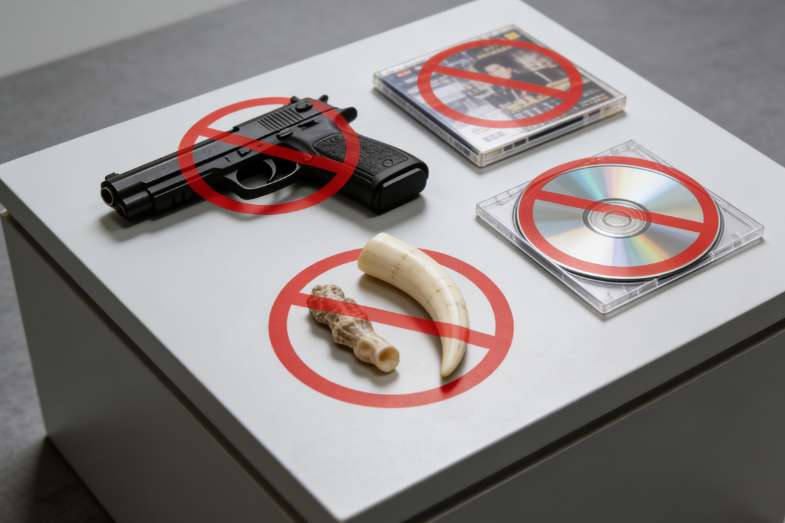
China Strictly Prohibited Items
These items are banned in both directions—carrying them may lead to legal action, including fines, confiscation, or criminal charges.
Weapons & Explosives
- Firearms, ammunition, imitation guns, grenades, dynamite, and other explosive devices.
Counterfeit & Illegal Goods
- Fake currency, counterfeit securities, pirated products, or counterfeit branded goods (e.g., fake luxury bags, knockoff electronics).
Harmful Media & Information
- Printed matter, films, photos, audio/video tapes, USB drives, or online data that endangers China’s politics, economy, culture, or public morality (e.g., anti-government content, violent/obscene materials).
Drugs & Nar cotics
- All addictive drugs or psychotropic substances (without special official permits).
Toxic & Hazardous Items
- Lethal poisons, highly toxic chemicals, pathogenic microorganisms, animal/plant pests, or infected animal carcasses.
Entry-Specific Prohibited Items
- Fresh fruits, solanaceous vegetables (e.g., tomatoes, potatoes), live animals (except qualified pets), and animal products from epidemic areas;
- Soil, genetically modified organisms, or items that may spread diseases (e.g., unprocessed meat, raw milk).
Exit-Specific Prohibited Items
- Unregistered cultural relics or national treasure-level artifacts;
- Rare and precious non-commercial books on China’s revolution, history, or culture;
- Unauthorized biological species resources.
China Restricted Items by Category
China Restricted Items by Category
Pets (Dogs & Cats)
- Limit: Only 1 pet per traveler (dogs or cats only; other pet species require special regulatory approval).
- Required Documents:
- Official quarantine certificate issued by the exporting country/region;
- Rabies vaccination certificate (vaccination must be completed at least 30 days before entry).
- Process: Declare at the Red Channel → Customs refers to the port animal/plant quarantine office → Quarantine inspection (certificate valid for 30 days) → Release if qualified.
- Note: No pets are allowed entry without complete documents; excess pets will be temporarily detained or returned.
Medicines & Health Supplements
Prescription Drugs
- Quantity: Must be for personal use (generally ≤7-day supply; longer supply requires a doctor’s note and original prescription).
- Controlled Substances: Strong painkillers, sedatives, or cold medications containing ephedrine require special permits—carry only small quantities for emergency use.
Chinese Herbal Medicines & Patented Drugs
- Export Prohibited: Musk, dried toad venom, tiger bone, rhino horn, and products containing these ingredients.
- Quantity Limits:
- For Hong Kong/Macau destinations: ≤ RMB 150 (carry-on) or ≤ RMB 100 (shipped);
- For overseas destinations: ≤ RMB 300 (carry-on) or ≤ RMB 200 (shipped).
Health Supplements (e.g., Vitamins, Protein Powders)
- Must be commercially packaged, intended for personal use, and within reasonable quantity (no large batches for resale).
Food & High-End Foods
Prohibited Food Items
- Raw/uncooked meat, dairy, eggs, unprocessed bird’s nests, and fresh fruits/vegetables (due to pest and disease risks).
- Food from epidemic areas or without clear packaging and labels.
Restricted High-End Foods (e.g., Dried Abalone, Sea Cucumber, Processed Cubilose)
- Quantity: For personal use only (total value ≤ RMB 1,000); excess requires duty payment (tax rate approximately 10%).
- Note: Gifts from friends or family are considered personal effects but need declaration if exceeding quantity or value limits.
Electronics & Communication Devices
- Drones (UAVs): Mandatory declaration required; entry approval from the Civil Aviation Administration of China is needed (especially for large drones or those with camera/recording functions).
- Radio Transmitters/Receivers: Prohibited without permits from the Ministry of Industry and Information Technology (e.g., walkie-talkies, signal jammers).
- Common Electronics (Phones, Laptops): 1-2 units for personal use are exempt from declaration; more units require formal customs approval and may be taxed.
Cosmetics & Toiletries
- Water spray, perfume, or aerosols: Carry-on limits (≤100ml per container; total ≤1L) – checked baggage has no volume restrictions.
- Quantity: For personal use only (no commercial quantities, e.g., 20+ bottles of skincare products).
Customs Declaration Process in China
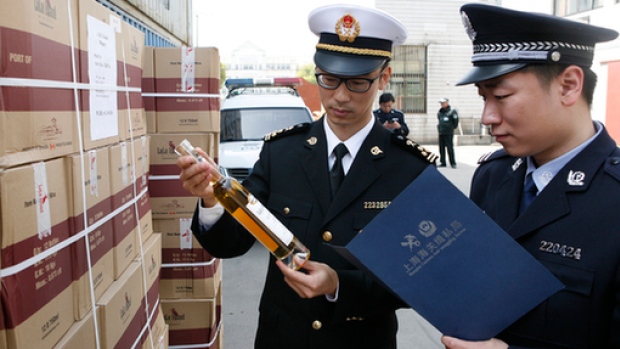
Don't Mess with China Customs - Harris Sliwoski LLP
How to Declare in China
- Obtain the Form: Get the <China Customs Baggage Declaration Form> (inward/outward versions) at customs counters, airports, or seaports (available in both Chinese and English).
- Fill Out Truthfully: Include item name, quantity, value, purpose (personal/commercial), and whether you plan to re-export the item.
- Choose the Correct Channel:
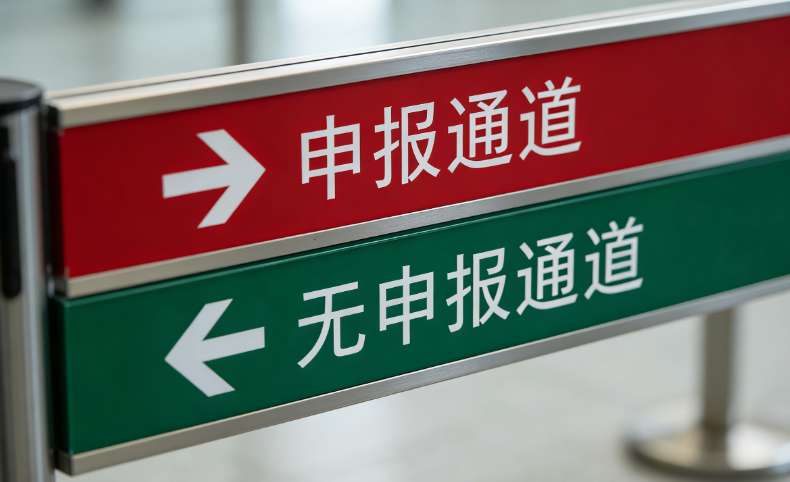
- Red Channel: For items requiring declaration (excess cash, prohibited/restricted items, duty-excess goods);
- Green Channel: For items with no declaration requirements (within duty-free limits, no prohibited items).
- Submit & Verify: Present the completed form, passport, and relevant supporting documents (permits, prescriptions, receipts) to customs officers for inspection.
- Retain the Form: Keep the customs-endorsed copy for re-entry or exit verification (critical for high-value items and foreign currency).
Required Documents for Declaration in China
- Valid passport or travel document;
- Completed Baggage Declaration Form;
- Supporting documents (prescriptions for medications, quarantine certificates for pets, permits for restricted items, receipts for high-value goods).
Common Mistakes to Avoid
- Hiding prohibited/restricted items (severe consequences include fines, confiscation, or criminal charges);
- Underreporting item value to evade duty payments;
- Forgetting to declare high-value items for re-entry (may result in being taxed as imported goods upon return);
- Ignoring quantity limits for tobacco, alcohol, or medications.
For the latest official rules, refer to: China Customs English Website
See all attractions
 888656 booked




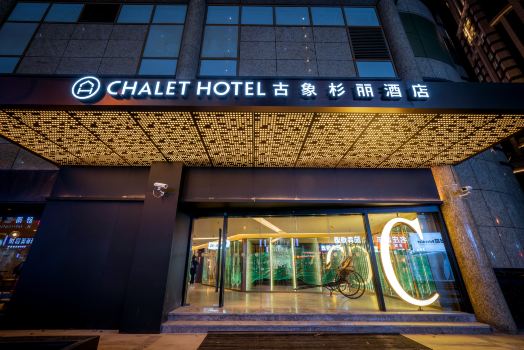
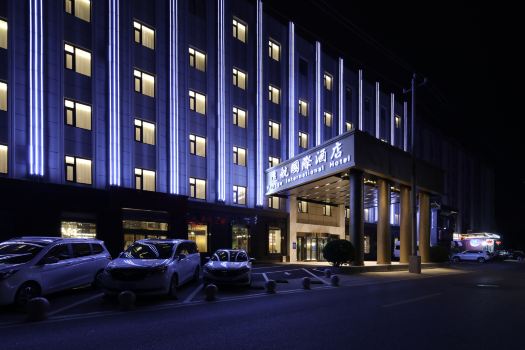
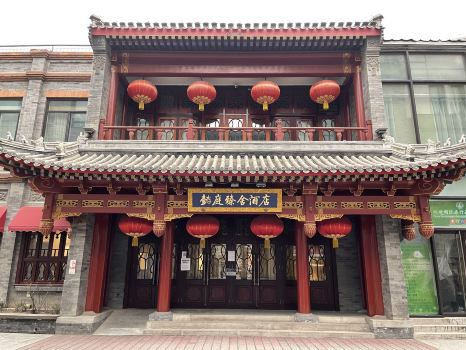
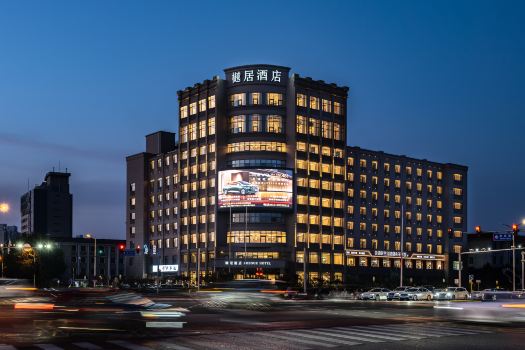
China Hotel Recommendations
Top Shanghai Hotels
Top Beijing Hotels
Top Guangzhou Hotels
See All Hotels

















What to Prepare for a Trip to China?
- Visa & Entry Tips China’s 240-hour visa-free transit policy now covers 54 countries, incl. the US, UK, Canada, and Brazil, allowing up to 10 days during layovers. Learn more about China Entry Tips to land in China easily.
- Getting Connected VPNs are vital for accessing Google, WhatsApp, Instagram, etc in China. Set one up before arriving. China eSIMs are the easiest option for data and bypassing restrictions. Pocket Wi-Fi devices work best for group but are pricier and require pickup/return.
- Money Exchange & Tax Refunds Exchange money in China banks (better rates than airports). ATMs accept foreign cards, but notify your bank first. For tax refunds, spend over ¥500 at stores with a "Tax-Free" sign. Keep receipts and get forms stamped at customs before departure.
Must-Have Apps in China
- China Payment Apps Forget cash. Chinese use Alipay (I like it better) or WeChat Pay to pay for everything in China. Scan a QR code at noodle stalls, metros, even temples. Link your foreign Visa/Mastercard before landing.
- China Map Apps Amap (Gaode Map) & Baidu Map (limited English) is what locals use, with real-time navigation, metro/bus routes, and traffic updates. Apple Maps does a good job too if you're already an IOS user.
- China Transport Apps Street taxis are cheap, but drivers rarely speak English. Use China Taxi App like DiDi (China’s Uber)—set your destination in English, pay by Alipay.
- China Travel Apps 15+ China trips taught me: Use Trip.com. It's the best English app for booking China trains/flights/hotels + finds Trip.com deals.
- China Dating Apps Locals use Tantan (China’s Tinder) and Momo. WeChat’s “People Nearby” works too, but expect language barriers unless your Mandarin’s decent.
- China Food App Use Meituan (also helps find nearby restaurants) or Ele.me for food delivery—both have English mode. No English menu in restaurants? Scan the QR with Alipay's translator.
FAQs about China Custom Restriction
-
What items are strictly prohibited from entering China?
-
Can I bring my laptop when leaving China? Do I need to declare it?
-
What’s the cash limit for entering/leaving China?
-
Can I bring prescription drugs to China?
-
Are pets allowed to enter China?
Disclaimer: This article has been provided by an individual contributor or third party platform. If there is any discrepancy regarding the copyright, please contact us directly and we will delete the content immediately.
Popular Searches
-
Air Travel Guide
-
Latest Flight Deals
-
Popular Flight & Hotel Packages
-
Getting Around
-
eSIM/SIM card
- Medellin Vacation Packages
- Hong Kong Vacation Packages
- Tokyo Flight and Hotel
- Koh Samui Flight and Hotel
- Hong Kong Flight and Hotel
- Ottawa Vacation Packages
- Gorontalo Vacation Packages
- Easter Island Vacation Packages
- Batumi Vacation Packages
- Cancun Vacation Packages
- Prague Vacation Packages
- Shanghai Flight and Hotel
- Berlin Vacation Packages
- Erbil Vacation Packages
- Luxembourg Vacation Packages
- ETC Card Japan
- Haruka Express
- Kansai Airport to Nara
- Haneda Airport to Tokyo
- JR Central
- Beijing Capital International Airport
- Shenzhen Bao'an International Airport
- Foshan Metro
- Macau to Zhuhai
- How to Use Shared Bikes in China
- Hong Kong Airport
- Chengdu Airport
- Shanghai Metro Map
- Japan Taxi App
- Narita Airport to Shinjuku
- Macau to Hong Kong
- Hangzhou Metro Map