France Plug: Types, Voltage, & Plug Adapters

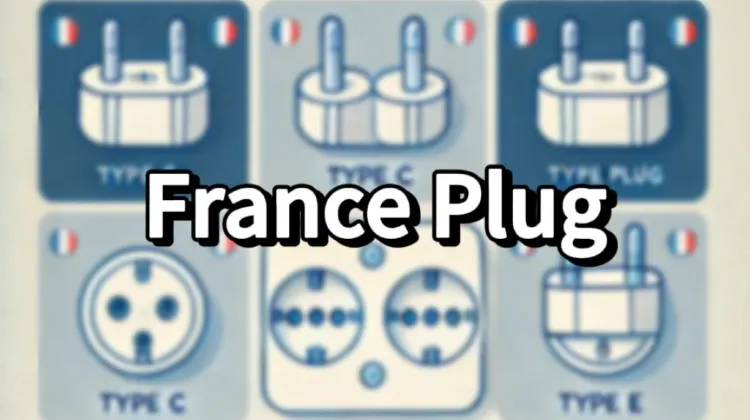
Learn about France’s plug types, voltage, and frequency, and find out if you need a France plug adapter or converter for your trip. Know info on using Type C and E plugs safely in France.👇👇
| France Plug Types | Voltage | Frequency |
| Type C, Type E | 230V | 50Hz |
France operates on a 230V and 50Hz electrical system using Type C and E plugs. Travelers require a plug adapter for non-compatible outlets.
2 Types of Plugs in France: What You Need to Know
Souce from electricalsafetyfirst
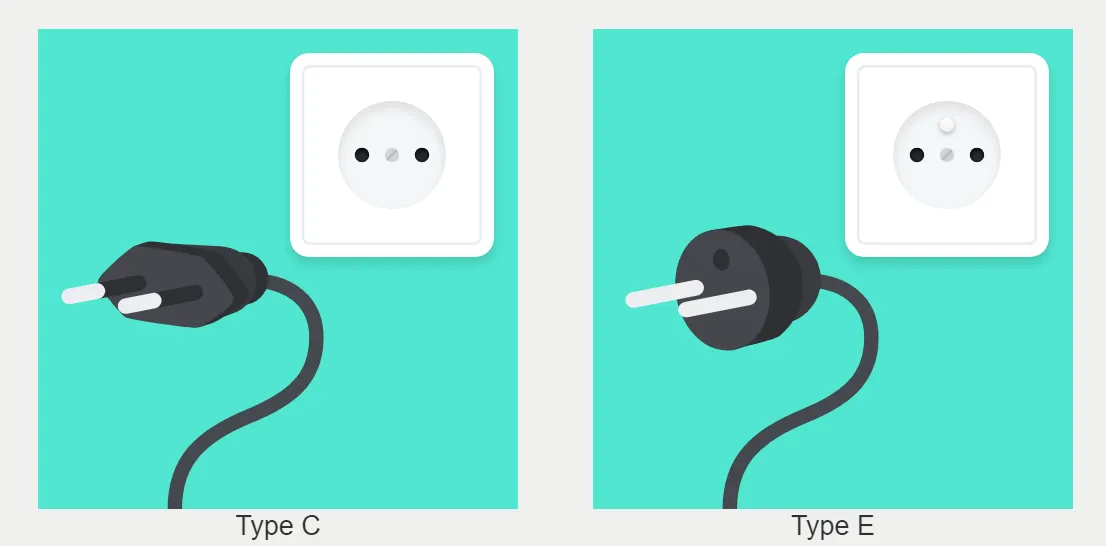
When you're heading to France, knowing the plug types is key to keeping your gadgets powered up without any fuss. France primarily uses Type C and Type E plugs, both with two round pins but a few unique differences in how they connect. With a standard voltage of 230V and a frequency of 50Hz, France's electrical system is similar to most European countries, so travelers from the UK, Germany, and Switzerland will find it familiar. If you're coming from regions like the United States or Canada where the voltage is lower (110V), you'll need to be a bit more prepared.
Type C Plug
The Type C plug has two round pins and is commonly found in older buildings across France. Type C plugs work well for low-power devices and fit into most Type E sockets found throughout Europe. Many European travelers, from Germany to Switzerland, bring Type C-compatible chargers, making it easy to plug in without extra adapters. However, since Type C lacks grounding, you might not want to use it for high-powered devices, as this could risk a short circuit.
Type E Plug
The Type E plug is the go-to for modern outlets in France. It also has two round pins but includes a grounding pin that ensures extra safety for higher-powered electronics. Type E sockets are compatible with Type C plugs and even some Type F devices, making it versatile if you're coming from places like Ireland, Australia, or Malaysia. The grounding mechanism in Type E is especially helpful for items like laptops or hair dryers, so you’ll want a Type E adapter if you're bringing any travel essentials.
Voltage & Frequency in France
When you’re traveling, understanding a country’s voltage and frequency is key to keeping your devices safe. Voltage refers to the power level, while frequency measures the rate of electricity flow—together, they determine whether a device will operate smoothly.
In France, the standard voltage is 230V and the frequency is 50Hz. If your devices aren’t compatible, you could risk damaging them, especially if they’re designed for lower-voltage systems.
Voltage in France
France’s electrical system runs at 230 volts, which is common across much of Europe. Travelers from countries like the United Kingdom or Ireland will find this familiar and won’t need a voltage converter.
However, if you’re visiting from the United States or Canada, where the voltage is typically 110V, you’ll need to check if your device is dual-voltage.
Many modern devices, like laptops and phone chargers, are compatible with both voltages (100-240V). If not, you’ll need a voltage converter to safely charge or use those devices.
Frequency in France
The frequency in France is 50Hz, which is the same across Europe but differs from countries like the United States or Japan where it’s 60Hz.
Fortunately, most modern electronics—especially those you might travel with, like cameras or tablets—are built to handle both 50Hz and 60Hz.
But if you’re using older or frequency-sensitive items, check their compatibility; otherwise, they may not function properly or could be damaged.
💖If you're curious about how to stay connected in South Africa, check Global eSIM, Wifi and SIM card!
Do I Need a Converter or Plug Adapter for France?
Source from skyscanner
If you’re planning a trip to France, you’ll likely need either a plug adapter or a voltage converter (or both) depending on your home country’s electrical standards. Here’s how to determine which one you’ll need to keep your devices charged and safe.
Do You Need a Plug Adapter for France?
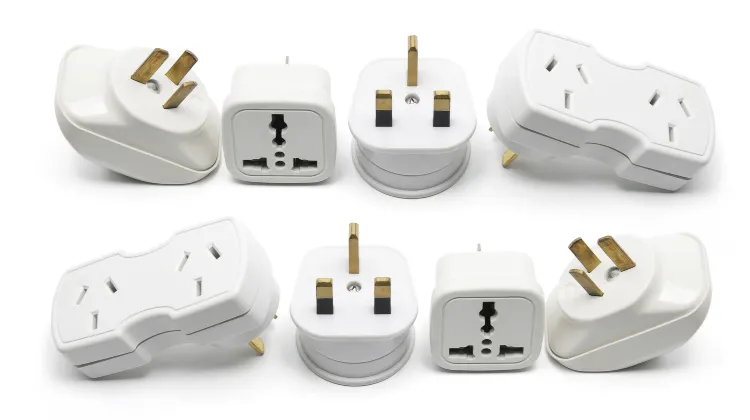
Yes, travelers from most English-speaking countries will need a plug adapter for France, as the country uses Type C and Type E plugs with two round pins.
If you're from the United Kingdom, United States, Ireland, Australia, Singapore, or Hong Kong, you’ll need an adapter because these countries use different plug shapes like Type G or Type A/B. For example, travelers from the UK and Ireland, which use Type G plugs, will need an adapter to fit French outlets.
A simple plug adapter adjusts the physical plug shape to fit French outlets but doesn’t change the voltage. You can easily find a Type C/E adapter online or in travel stores. Some hotels may even have adapters available, but bringing your own ensures you’ll be covered wherever you stay.
Do You Need a Voltage Converter for France?
Whether you need a voltage converter depends on the voltage requirements of your devices. France operates on 230V, which is similar to the electrical systems in the UK, Ireland, Australia, and Singapore. Travelers from these countries won’t need a voltage converter for most electronics.
However, if you’re from the United States or Canada, which use a lower 110V standard, you’ll need a converter for any single-voltage devices that are not dual-voltage (like some hair dryers or electric shavers).
Most modern devices like laptops, phones, and camera chargers are dual-voltage (100-240V), so you’ll only need a plug adapter. If you’re bringing a single-voltage device from the US, check the label to confirm its compatibility with 230V; otherwise, a voltage converter will be necessary to avoid damaging your device.
4 Safety Tips for Using Plugs in France
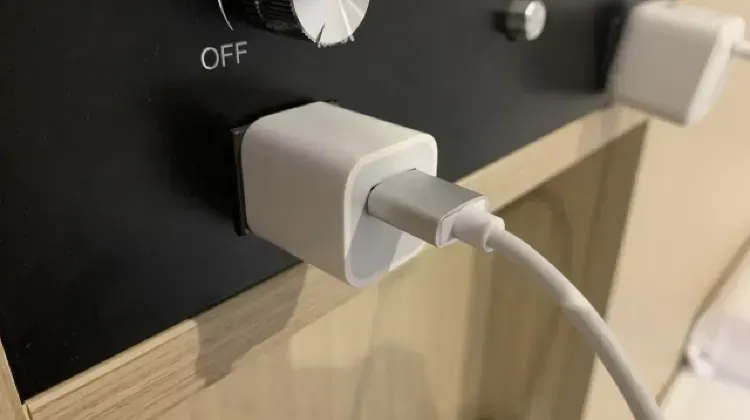
When traveling in France, keeping your devices charged and safe requires some attention to electrical safety. France’s 230V/50Hz electrical system can differ significantly from other regions, so understanding plug safety is essential, especially for travelers from the US, UK, and other countries with different standards. Here’s a rundown of essential safety tips and potential risks to avoid.
Safety Tips
- Inspect Outlets Before Use: Ensure the outlet isn’t damaged or cracked before plugging in your devices. If you’re staying in older accommodations, watch for loose fittings or worn covers that might indicate an outdated electrical system.
- Keep Hands Dry: Avoid handling outlets or plugs with wet hands, as this increases the risk of electric shock, especially with grounded Type E outlets in French hotels or homes.
- Check Adapters and Cables: Make sure your plug adapter is compatible with Type C or Type E outlets, and that it fits snugly without forcing. If any cables are frayed or show signs of overheating, avoid using them, as this could lead to fires or short circuits.
- Be Cautious with Heat-Producing Devices: Devices like hairdryers and curling irons often use more power and could cause issues with ungrounded adapters or outlets. Consider using hotel-supplied hairdryers or only travel with dual-voltage models rated for 230V.
Potential Risks of Incorrect Use
- Overheating and Fire Risks: Using a plug that’s incompatible with the voltage or forcing adapters into outlets can cause overheating, which may lead to fire risks, especially in older buildings.
- Device Damage: If a single-voltage device (like a hairdryer from a 110V region) is plugged in without a voltage converter, it may short out or be permanently damaged. Always verify your device’s voltage before using it in France.
- Electrical Shock: If an adapter or plug is forced or used incorrectly, you risk electrical shock. Watch for any signs of buzzing, sparks, or warmth from the outlet, and unplug immediately if you notice these symptoms.
For extra safety, consider using surge protectors and always travel with well-made, certified adapters.
Can I Use My Phone or Laptop Charger in France?

Phone Charger
Yes, most phone chargers will work in France, but there are a few things to keep in mind. France operates on 230V with a 50Hz frequency, which is similar to the UK, Germany, and Ireland, so travelers from these regions only need a plug adapter. If you’re coming from the US, Canada, or Japan where voltage is lower (110V), check if your phone charger is dual-voltage (100-240V) to avoid needing a voltage converter. Popular models from Apple and Samsung are typically dual-voltage, so you’ll just need a Type C or Type E adapter for French outlets.
Laptop Charger
Laptops, especially popular models from Apple, Dell, HP, and Lenovo—commonly used in the UK, US, and Canada—are often designed as dual-voltage (100-240V). This means you only need a plug adapter for the Type C/E outlets in France. Make sure to double-check your charger label for voltage compatibility before plugging in to avoid any issues.
Where to Charge Easily in France

If you’re exploring France, keeping your devices powered is easy, especially with a bit of planning. Here’s a rundown of the best spots to recharge, so you’re never left with a low battery.
1. Airports and Train Stations
Both Charles de Gaulle and Orly airports in Paris offer charging stations and USB ports near seating areas, restaurants, and boarding lounges. Nice Côte d'Azur Airport has charging points throughout its terminals, including mobile battery rental kiosks for convenience. Train stations like Gare du Nord and Gare de Lyon in Paris also provide charging areas in their waiting lounges and near cafes.
2. Cafés and Restaurants
Most cafés, like Starbucks or local French spots, provide charging options if you’re a paying customer. Many McDonald's locations in France also have USB charging ports or outlets, which can be handy for a quick top-up while you enjoy a coffee or snack.
3. Hotels and Co-Working Spaces
If you need a guaranteed spot to work and charge, hotels often provide USB ports and outlets in rooms or lobbies. Co-working spaces, like WeWork and Spaces in Paris, offer charging stations and reliable power if you need a steady workspace for the day.
Where Can I Buy a Plug Adapter for France?

Whether you’re planning ahead or already in France, finding a plug adapter is easy.
Before You Travel
The best way to prepare is to purchase a Type C/E plug adapter before your trip. Check online stores like Amazon or Best Buy if you’re in the United States, UK, or Canada. For travelers from Singapore, Hong Kong, or Australia, Lazada and Challenger offer reliable options. These stores often stock universal adapters, which are handy for future travels.
In France
If you need an adapter after arriving, look for one in major airports like Charles de Gaulle or Orly. You can also find adapters in supermarkets like Carrefour or electronics stores such as Fnac and Darty in most French cities.
How to Save Power While Traveling in France
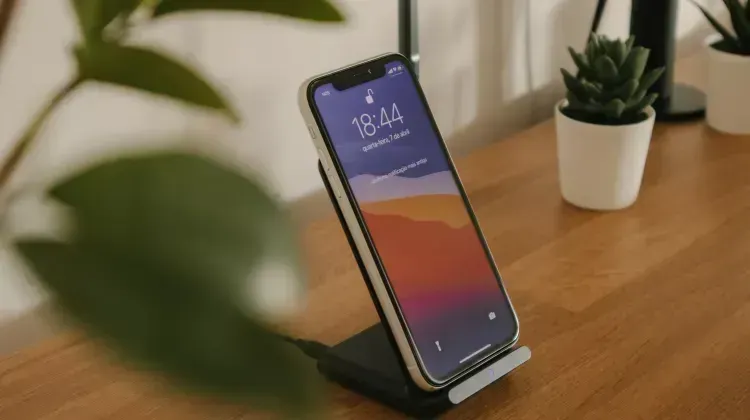
Keeping your devices charged without constantly hunting for outlets is a travel game-changer. Here are my favorite tips for saving power and staying connected while exploring France:
1. Use Airplane Mode & Low Power Mode
Switch your phone to airplane mode or low power mode when you’re not using data, especially while navigating cities like Paris or the countryside. Airplane mode conserves a surprising amount of battery while still letting you snap photos, and low power mode can make your phone last nearly twice as long.
2. Download Maps & Key Info Offline
Save maps, museum hours, and important info offline, so you don’t need data. Google Maps allows you to download entire city maps, which is incredibly useful if you’re exploring areas with spotty Wi-Fi. It saves battery and keeps you prepared if you’re in more remote spots or out of range.
3. Carry a Power Bank
A reliable power bank is a must. It’s invaluable when you’re in historic areas, on long train rides, or just out exploring Parisian streets for the day. Aim for one with at least 10,000mAh so you can charge multiple devices.
4. Limit Background App Refresh and Notifications
Turn off background app refresh and unnecessary notifications. Every little notification, especially from apps using location services, drains your battery. Limiting these can keep you powered up all day.
5. Lower Screen Brightness and Use Dark Mode
Reducing your screen brightness and switching to dark mode can save a lot of power, particularly on OLED screens. This little change helps extend your phone’s battery life while still giving you quick access to essentials.
Global Electrical Standards Overview
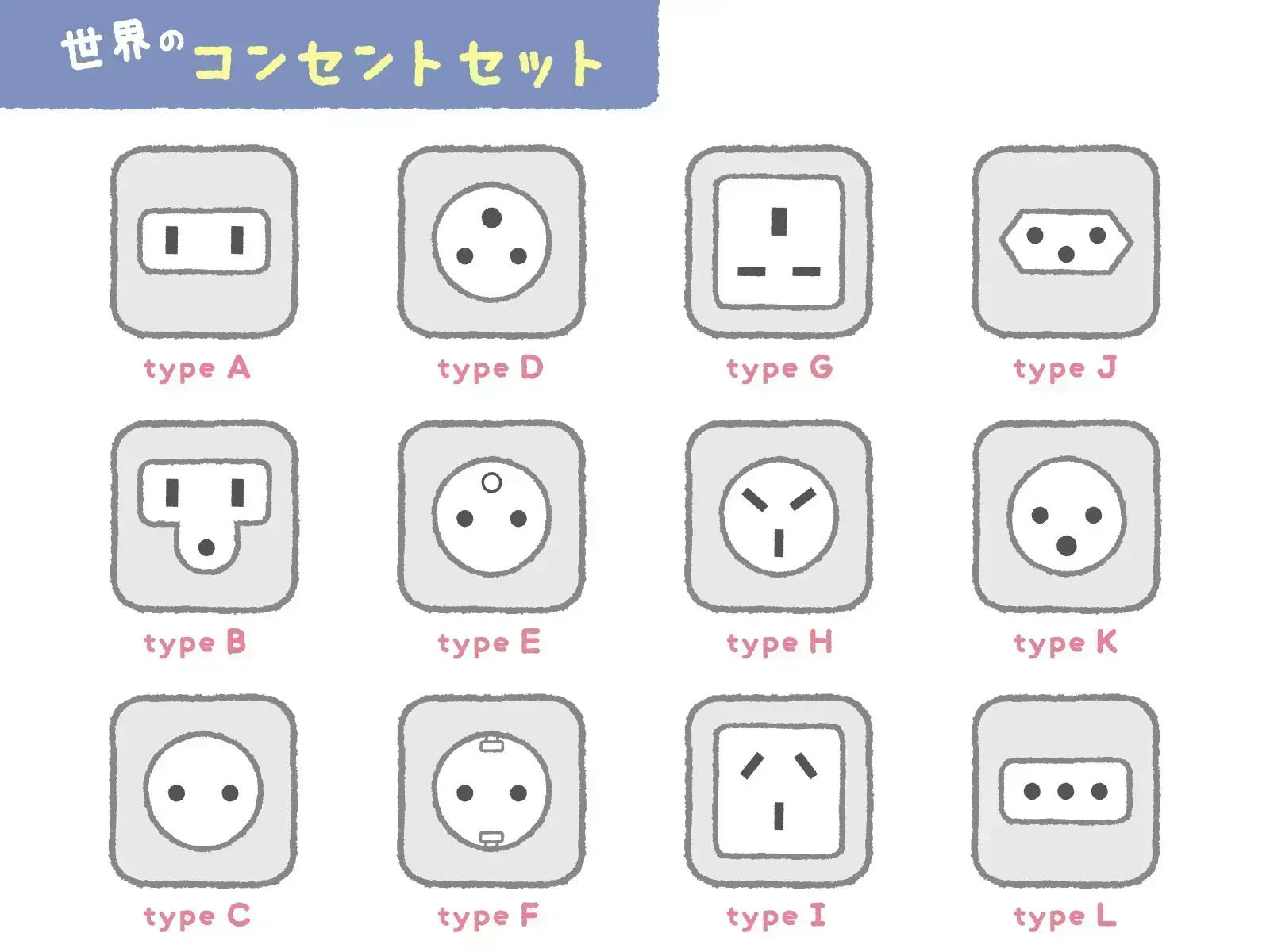
Globally, there are three main electrical standards for devices: 110-120V used primarily in North and Central America, 220-240V prevalent in Europe, Asia, and Oceania, and the dual-voltage system. These standards also differ in frequency, either 50 Hz or 60 Hz, and include a variety of plug types specific to each region. Understanding these differences is essential for safely using electronic devices while traveling internationally.
Asia & Oceania Electrical Standards
| Country | Frequency (Hz) | Voltage (Volts) | Plug Type |
| Australia | 50 | 230 | I |
| China | 50 | 220 | A, C, I |
| China (Hong Kong S.A.R.) | 50 | 220 | G |
| India | 50 | 230 | C, D, M |
| Indonesia | 50 | 230 | C, F |
| Japan | 50 Hz in Eastern Japan & 60 Hz in Western Japan | 100 | A, B |
| Malaysia | 50 | 240 | G |
| New Zealand | 50 | 230 | I |
| Philippines | 60 | 230 | A, B, C |
| Republic of Korea (South Korea) | 60 | 220 | C, F |
| Singapore | 50 | 230 | G |
| China (Taiwan) | 60 | 110 | A, B |
| Thailand | 50 | 220 | A, B, C |
| Vietnam | 50 | 220 | A, C |
North America & South America Electrical Standards
| Country | Frequency (Hz) | Voltage (Volts) | Plug Type |
| Argentina | 50 | 220 | C, I |
| Brazil | 60 | 127/220 | C, N |
| Canada | 60 | 120 | A, B |
| Chile | 50 | 220 | C, L |
| Colombia | 60 | 120 | A, B |
| Mexico | 60 | 127 | A, B |
| Peru | 60 | 220 | A, C |
| USA | 60 | 120 | A, B |
| Venezuela | 60 | 120 | A, B |
Europe Electrical Standards
| Country | Frequency (Hz) | Voltage (Volts) | Plug Type |
| France | 50 | 230 | C, E |
| Germany | 50 | 230 | C, F |
| Italy | 50 | 230 | C, F, L |
| Russia | 50 | 230 | C, F |
| Spain | 50 | 230 | C, F |
| United Kingdom | 50 | 230 | G |
Oceania Electrical Standards
| Country | Frequency (Hz) | Voltage (Volts) | Plug Type |
| Australia | 50 | 230 | I |
| Fiji | 50 | 240 | I |
| New Zealand | 50 | 230 | I |
FAQs about France Plug
-
Can I Use an EU Plug in France?
-
Are UK and France Plugs the Same?
-
Does Type C Work in Type F?
Trending Searches
-
Popular attractions
-
Trending Stays
-
Getting Around
-
eSIM/SIM card
- Hotels in Shanghai
- Hotels in Guangzhou
- Hotels in Beijing
- Hotels in Bangkok
- Hotels in Shenzhen
- Hotels in Hong Kong
- Hotels in Chongqing
- Hotels in Tokyo
- Hotels in Ho Chi Minh City
- Hotels in Chengdu
- Hotels in Kuala Lumpur
- Hotels in Seoul
- Hotels in Zhangjiajie
- Hotels in Hanoi
- Hotels in Hangzhou
- Hotels in Singapore
- Hotels in Xi'an
- Hotels in Istanbul
- Hotels in Bali
- Hotels in Osaka