
Japan Public Holidays 2026: Dates, When to Travel

Complete Japan 2026 holiday calendar, long weekends (Golden Week, Silver Week) & travel tips. Plan trips around Japan holidays with Trip.com.
to Tokyo
to Osaka
to Nagoya
See all flights


Japan Public Holiday Calendar 2026
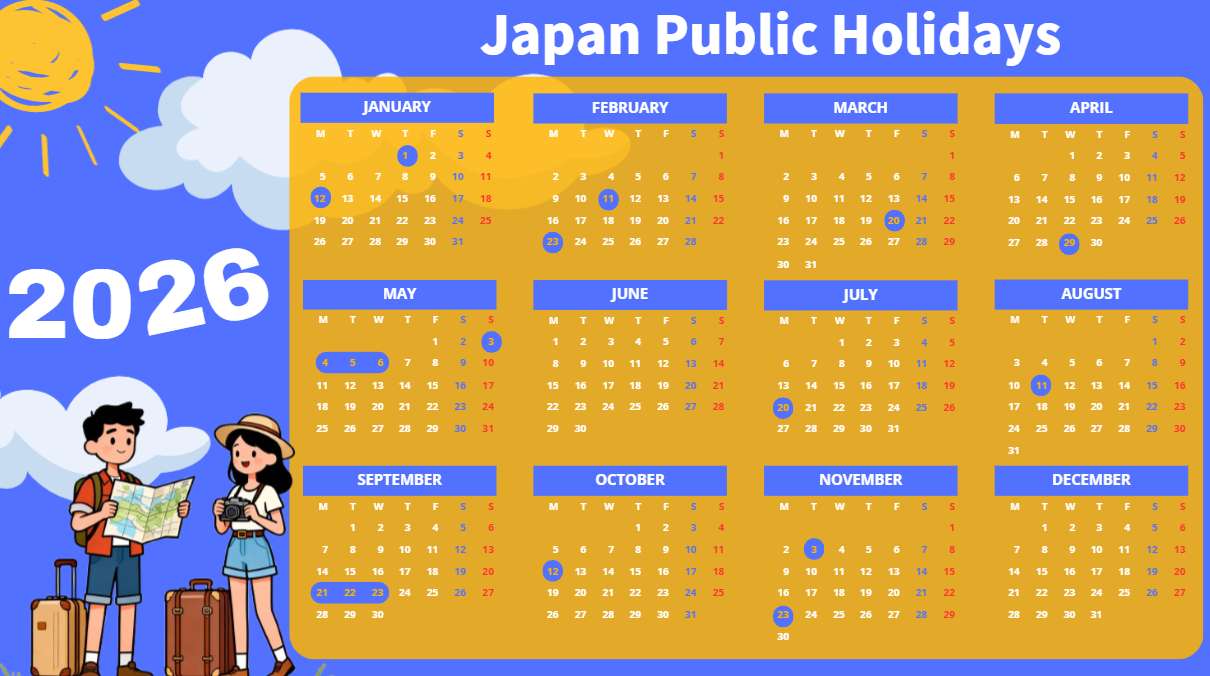
In 2026, the calendar lines up so it’s easy to enjoy a solid stretch of consecutive days off in the fall. It also reflects the timing of holidays that change each year, such as Vernal Equinox Day and Autumnal Equinox Day, so you can use it to plan your year.
List of Japan’s Public Holidays 2026
Japan Travel Guide - Matador
Here’s a list of Japan’s public holidays, organized by date. You can quickly check public holidays—fixed-date, movable, and those under the Happy Monday system.
List of Japanese public holidays (common across eras) ▼
Date | Holiday name | Pronunciation | Notes |
January 1 | New Year's Day | New Year's Day | A day to celebrate the start of the year |
The second Monday of January | Coming of Age Day | Coming of Age Day | Happy Monday System |
February 11 | National Foundation Day | National Foundation Day | A day to commemorate Japan’s founding |
February 23 | Emperor's Birthday | Emperor's Birthday | The Reigning Emperor's Birthday |
Around March 20 | Vernal Equinox Day | Vernal Equinox Day | Determined by astronomical calculations |
April 29 | Showa Day | Showa Day | A Day to Reflect on the Showa Era |
May 3 | Constitution Memorial Day | Constitution Memorial Day | In commemoration of the enforcement of the Constitution of Japan |
May 4 | Greenery Day | Greenery Day | A Day to Connect with Nature |
May 5 | Children's Day | Children's Day | A day to wish for children's happiness |
The third Monday in July | Marine Day | Marine Day | Giving thanks for the blessings of the sea (Happy Monday) |
August 11 | Mountain Day | Mountain Day | A day to connect with the mountains |
The third Monday of September | Respect for the Aged Day | Respect for the Aged Day | Happy Monday System |
September 22–23 | Autumnal Equinox Day | Autumnal Equinox Day | Astronomically determined |
The second Monday of October | Sports Day | Sports Day | Happy Monday System |
November 3 | Culture Day | Culture Day | A Day to Love Freedom and Peace |
November 23 | Labor Thanksgiving Day | Labor Thanksgiving Day | Honoring hard work and celebrating the harvest |
Now, let's explore the details of each holiday.
New Year’s Day (January 1)
The first holiday of the year. Designated as a national holiday to “celebrate the beginning of the year,” it was established by the Act on National Holidays, which was promulgated and enforced in 1948.
Apparently, from the Meiji era through the Taisho and early Showa periods, it was known as “Shihōsetsu,” named after Shihōhai, an Imperial Household ceremony.
The uniquely Japanese tradition of welcoming the New Year deity with kadomatsu on New Year’s Day and celebrating by eating ozoni and osechi ryori has continued since the Edo period.
January 1 (New Year’s Day) through January 3 are celebrated as the “Sanganichi,” during which government offices and many businesses are closed.
Coming of Age Day (Second Monday of January)
As a national holiday whose purpose is to “celebrate and encourage young people who recognize they have become adults and who strive to make their own way in life,”
It was established under the Act on National Holidays, which was promulgated and came into effect in 1948.
It used to be held on January 15 every year, but under the Happy Monday Law enacted in 2000, it now falls on the second Monday in January.
On this day, Coming-of-Age ceremonies for new adults are held in each city and town, and you’ll spot furisode-clad celebrants everywhere, as the streets are enveloped in a bright, festive atmosphere.
National Foundation Day (February 11)
Designated in 1966 as "a day to reflect on the nation’s founding and foster a love of country."
Originally, Japan celebrated the day in 660 BCE when Emperor Jimmu, regarded as the first emperor in the Kojiki and Nihon Shoki, ascended the throne as the nation’s founding day, "Kigensetsu," but...
Later, it was changed to "National Foundation Day."
Independent of any historically documented Founding Day, it is a day that commemorates the very fact of the nation’s founding,
It’s called “Kenkoku Kinen no Hi,” not “Kenkoku Kinenbi.”
On National Foundation Day, shrines and temples all across Japan host festivals such as the National Foundation Festival, and the atmosphere becomes lively.
Emperor's Birthday (February 23)
A national holiday dedicated to "celebrating the Emperor’s birthday."
From 2020 onward, the date became February 23, the birthday of Emperor Naruhito, Japan’s 126th emperor.
Until the end of World War II, it was also known as Tenchōsetsu.
Every year on this day, the Imperial Palace hosts celebratory events including the “Celebration Ceremony,” “Banquet Ceremony,” “Tea Ceremony,” and “Public Greeting.”
Beginning with Ise Grand Shrine, the Tenchosai is held at Shinto shrines across Japan.
Vernal Equinox Day (around March 20)
Established as a national holiday with the purpose of “honoring nature and cherishing all living things,” under the National Holidays Act, which was promulgated and put into force in 1948.
Every year, the date is decided by the Cabinet based on the “Calendar and Ephemeris” compiled by the National Astronomical Observatory of Japan, and it’s usually set as a single day around March 20 or 21.
Since Vernal Equinox Day is also the middle day of Ohigan, there is a tradition of honoring ancestors during this time of year.
Showa Day (April 29)
A national holiday inviting people to reflect on the Showa era—an age that weathered turbulent days and achieved reconstruction—and to contemplate the nation’s future.
Originally, it was a national holiday celebrating Emperor Showa’s birthday, but
Even after the Heisei Emperor ascended the throne, it was retained as “Greenery Day,” one of the public holidays that make up Golden Week.
After that, following a partial revision of the Act on National Holidays in 2007, it was designated as "Showa Day" (Greenery Day was moved to May 4).
Constitution Memorial Day (May 3)
Established as a national holiday by the Act on National Holidays, promulgated and enforced in 1948, with the purpose of “commemorating the enforcement of the Constitution of Japan and hoping for the nation’s growth.”
Drawing on the lessons of World War II and aiming to build a peaceful nation, the Constitution of Japan was promulgated on November 3, 1946, but,
Because this day coincided with Emperor Meiji’s birthday, the Japanese Constitution—based on popular sovereignty—went into effect on May 3, 1947, to separate it from the emperor.
The period from May 1 to 7, which includes Constitution Memorial Day, is designated as "Constitution Week."
Greenery Day (May 4)
A national holiday whose purpose is to “connect with nature, appreciate its blessings, and nurture a rich spirit.”
Originally, April 29—Emperor Showa’s birthday—was a national holiday called "Emperor’s Birthday," but ...
After Emperor Akihito’s accession in 1989, the same day was redesignated as “Greenery Day.”
Thanks to the 2005 revision of the Public Holiday Law, “Greenery Day” was moved to May 4, which had been a “Citizen’s Holiday”—a weekday sandwiched between national holidays.
Children’s Day (May 5)
Designated as a national holiday with the purpose of "respecting children's individuality, promoting their happiness, and giving thanks to mothers," it was established under the Act on National Holidays, promulgated and enforced in 1948.
It’s said that May 5 was chosen because, since ancient times, it was the day of "Tango no Sekku," a festival held to pray for the healthy growth of boys.
There’s a tradition of displaying carp streamers and May dolls, and soaking in soothing iris baths.
See all attractions
 9350 booked
![Tokyo Metro 24/48/72-hour travel pass [Physical ticket/e-ticket/Skyliner Tokyo Airport Express/Tokyo Limousine Bus discount package available]](https://ak-d.tripcdn.com/images/0354t12000pj5wys8B52D_C_568_320.png)
Marine Day (the third Monday of July)
Established in 1995 as a national holiday with the aim of “giving thanks for the blessings of the sea and wishing for the prosperity of Japan as a maritime nation.”
Under the “Happy Monday” system introduced by the 2003 revision of the Public Holiday Law, the date was moved to the third Monday in July.
It is said to date back to 1876, when Emperor Meiji boarded a ship for the first time to visit the Tohoku region and, upon safely returning to Yokohama Port, celebrated by designating the day as “Marine Memorial Day”.
In celebration of this holiday, July 1 to 31 is observed as "Marine Month."
Mountain Day (August 11)
Established in 2014 as a national holiday with the purpose of “providing opportunities to connect with the mountains and to appreciate their blessings.”
The date is August 11. It’s not tied to any special mountain-related event or a clear origin,
It is said that, prompted by “Marine Day” becoming a national holiday, it was established to coincide with the Obon season in August, which otherwise has no public holidays.
It’s a newly added national holiday—the first in 20 years since “Marine Day” was established in 1995.
Respect for the Aged Day (third Monday in September)
Established in 1966 as a national holiday with the purpose of honoring and cherishing older adults who have long contributed to society and celebrating longevity.
Since 2003, the date falls on the third Monday in September.
It is said to originate from “Old Folks Day,” proposed in 1947 in Nomadani Village, Taka District, Hyogo Prefecture (now Yachiyo Ward in Taka Town), inspired by the idea of “cherishing our elders and building a village that draws on their wisdom.”
Autumnal Equinox Day (September 22–23)
Established by the Act on National Holidays, promulgated and enforced in 1948, as a national holiday dedicated to “honoring ancestors and remembering those who have passed away.”
The date is decided by the Cabinet based on the “Calendar and Astronomical Phenomena Table” compiled by the National Astronomical Observatory, and it usually falls on either September 22 or 23.
Since Autumnal Equinox Day is also the middle day of Ohigan, there is a tradition of honoring ancestors during this season.
Sports Day (Second Monday in October)
A national holiday centered on the idea of “enjoying sports, fostering a spirit of respect for others, and wishing for the realization of a healthy, vibrant society.”
To commemorate the Tokyo Olympics held on October 10, 1964, that same day was designated as "Health and Sports Day",
After that, a 2000 revision of the National Holidays Act moved it to the second Monday in October. From 2020 onward, its name was changed to "Sports Day."
Culture Day (November 3)
Established under the Holiday Act promulgated and enforced in 1948, it is a national holiday dedicated to “cherishing freedom and peace and promoting culture.”
a national holiday established to commemorate the promulgation of the new constitution on November 3, 1946,
Originally, it was a holiday called “Tenchosetsu” celebrating Emperor Meiji’s birthday, and until the early Showa period it was known as “Meiji-setsu.”
Every year, the Imperial Palace hosts the Order of Culture award ceremony on this day.
Labor Thanksgiving Day (November 23)
Established by the Act on National Holidays, promulgated and enforced in 1948, as a national holiday with the purpose of “a day to honor labor, celebrate production, and for citizens to thank one another.”
Originally, it was an imperial court ceremony known as "Niinamesai" (にいなめさい), in which the Emperor offers the five grains to the deities,
It’s believed to have originated from a festival day giving thanks for the annual harvest of crops, and its name was changed during the postwar GHQ occupation.
What Are Japan’s Public Holidays? System, Culture, and History

Japan’s national holidays are based on seasonal observances and historical events,
It was created to honor the values this nation has long cherished.
Behind it all are both clear legal definitions and customs nurtured within the culture.
Here, we’ll give you a clear overview of how Japan’s public holidays are determined and what makes them unique.
Japan’s national holidays are determined by the Act on Holidays.
Japan’s public holidays are set by the "Act on National Holidays (Holiday Act)."
The Act on National Holidays clearly sets out each holiday’s name, date, and purpose (what the celebration is for),
It’s more than just time off—it also reveals what a nation chooses to commemorate and what it holds dear.
In addition, the Act on National Holidays is referenced when new holidays are established or when their names are changed.
In recent years, the establishment of "Mountain Day" (introduced in 2016),
Revisions are being made to reflect society’s values, such as renaming “Health and Sports Day” to “Sports Day” (2020).
Understanding Japan’s Unique Holiday Systems
Japan’s holidays have a few quirks that help travelers plan:
- Happy Monday System: Moves 4 holidays (Coming of Age Day, Marine Day, Respect for the Aged Day, Sports Day) to Mondays, creating 3-day weekends.
- Substitute Holidays: If a holiday falls on a Sunday, the next weekday is a day off (e.g., if Children’s Day is Sunday, May 6 becomes a holiday).
- Citizen’s Holiday: A weekday between two holidays becomes a day off—this is how Golden Week and Silver Week get extended.
See all flights
Travel Tips for Japan Holidays 2026
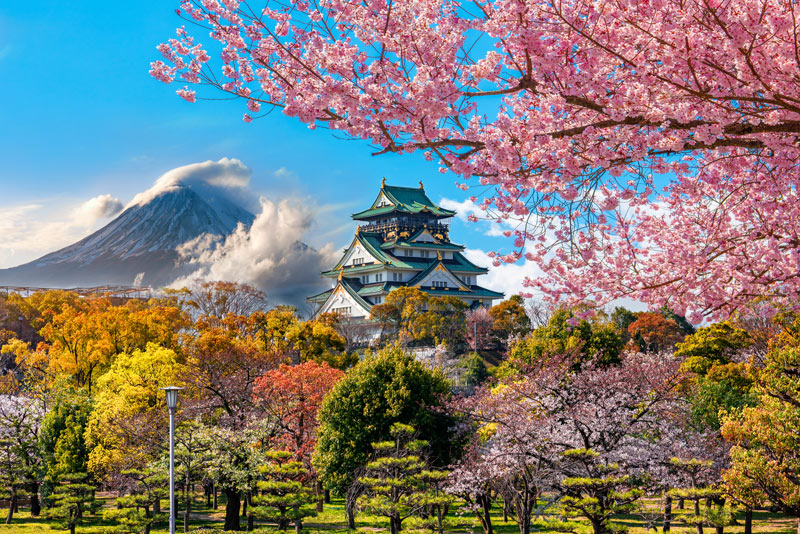
Planning a Japan Vacation? Try this 7-day Japan Itinerary ...
- Book Early: For Golden Week and Silver Week, reserve flights, hotels, and JR Passes 3–6 months in advance. Popular ryokans (traditional inns) sell out even earlier.
- Avoid Peak Crowds: If you don’t want to deal with crowds, visit during “shoulder periods” (e.g., late March before Golden Week, early October after Silver Week).
- Business Closures: Most government offices, banks, and small shops close on public holidays. Major attractions (museums, temples) are usually open, but some have reduced hours.
- Transport: Trains (JR, subways) run on holiday schedules—fewer frequencies, but no major disruptions. Buses may have limited routes.
- Budget for Higher Prices: Hotel and flight prices rise 30–100% during peak holidays. Expect to pay $100–$200 more per night for mid-range hotels in Tokyo/Kyoto.
Japan Holidays 2026 | Hotel Recommendations
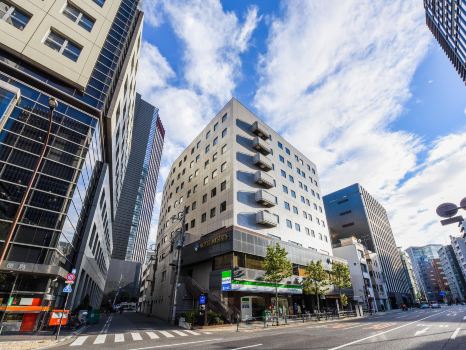
Tokyo Hotel Recommendations
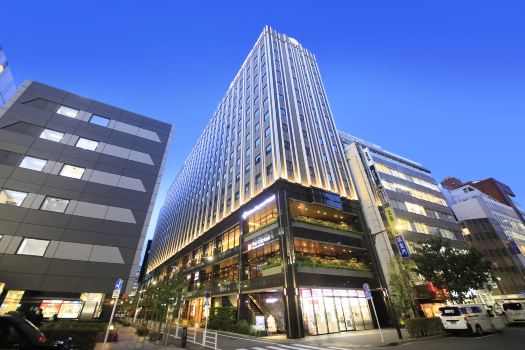
- Mid-Range: Shinjuku Granbell Hotel ($180–$350/night) – Near JR Shinjuku Station, ideal for Golden Week travel (easy access to trains).
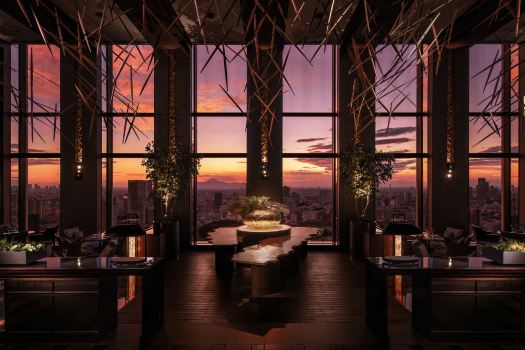
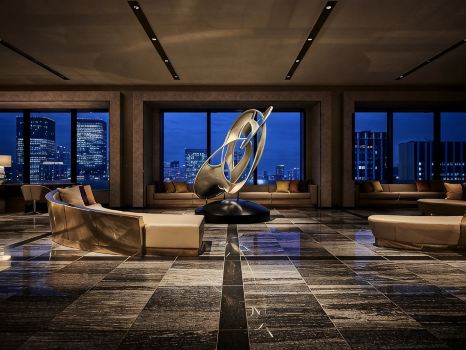
- Luxury: The Ritz-Carlton Tokyo ($500–$1,200/night) – Spacious rooms with skyline views; great for special occasions (Emperor’s Birthday).
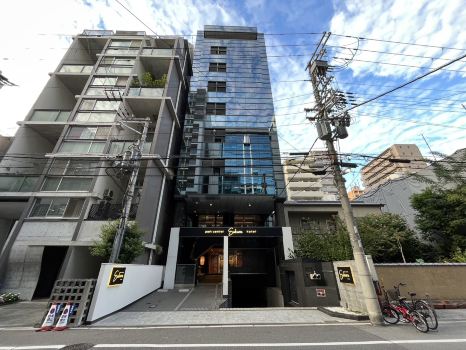
- Budget: Capsule Hotel Anshin Oyado Shinjuku ($50–$80/night) – Affordable option for solo travelers; close to nightlife.
Osaka Hotel Recommendations
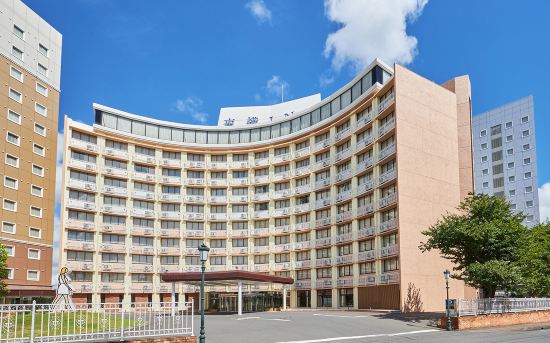
- USJ Access: Hotel Universal Port Vita ($200–$400/night) – Official USJ partner hotel; steps from the park (perfect for New Year’s Eve events).
- Shopping & Food: Dormy Inn Premium Namba Annex ($150–$250/night) – Near Namba and Shinsaibashi; includes free onsen (hot spring) access.
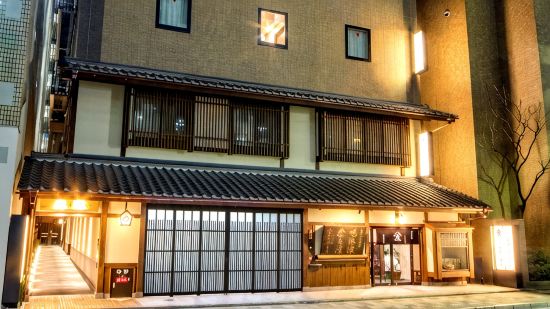
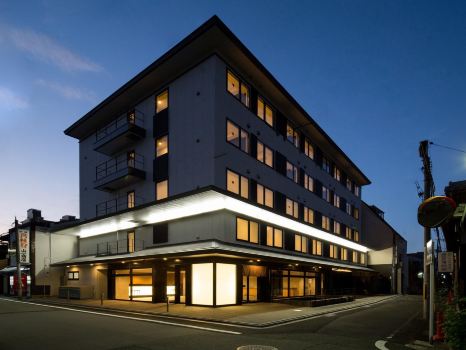
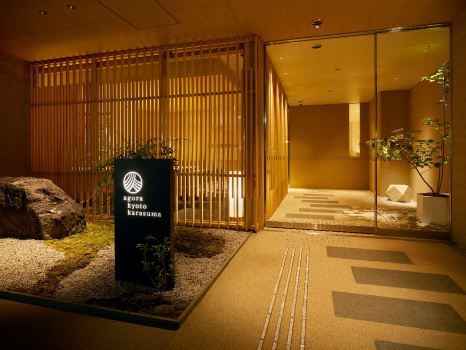
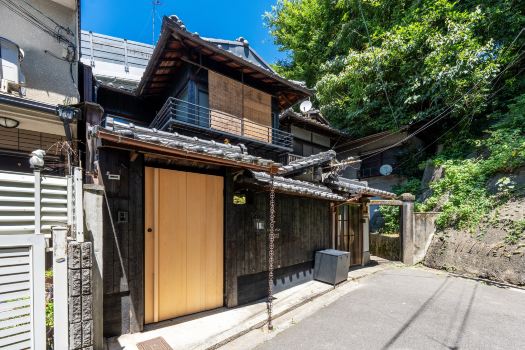
Kyoto Hotel Recommendations
- Convenience: Hotel Granvia Kyoto ($220–$400/night) – Connected to Kyoto Station; easy for day trips during Golden Week.
- Cultural Immersion: Gion Hatanaka ($300–$600/night) – Traditional ryokan in Gion; offers kimono rentals for Coming of Age Day or Vernal Equinox.
Tokyo Hotels
Osaka Hotels
Kyoto Hotels
See All Hotels










FAQs about Japan Holidays
-
When should I go to Japan in 2026?
-
What is the long holiday in Japan 2026?
-
What holiday is in Japan January 2026?
-
Are shops open on public holidays in Japan?
Disclaimer: This article has been provided by an individual contributor or third party platform. If there is any discrepancy regarding the copyright, please contact us directly and we will delete the content immediately.
Trending
-
Air Travel Guide
-
Latest Flight Deals
-
Popular Flight & Hotel Packages
-
Getting Around
-
eSIM/SIM card
- Medellin Vacation Packages
- Hong Kong Vacation Packages
- Tokyo Flight and Hotel
- Koh Samui Flight and Hotel
- Hong Kong Flight and Hotel
- Tokyo Vacation Packages
- General Santos Vacation Packages
- Langkawi Vacation Packages
- Chengdu Vacation Packages
- Easter Island Vacation Packages
- Langkawi Flight and Hotel
- Aqaba Vacation Packages
- Prague Vacation Packages
- Chichen Itza Vacation Packages
- Mauritius Vacation Packages
- Hong Kong Airport
- Wakayama Transportation
- Octopus Card Hong Kong
- JR pass airport transfer
- How to Get to Furong Ancient Town
- Hong Kong MTR Map
- Hong Kong Airport to Shenzhen
- narita express
- Nanjing Airport
- Changsha Airport
- Istanbul Airport Transfers
- Xiamen Metro
- New York Subway
- Chengdu Airport
- Narita Airport to Shinjuku
- Macau to Hong Kong
- Kansai Airport to Wakayama