China Travel Emergency Guide: Numbers & Safety Tips

by Seven
November 25, 2026
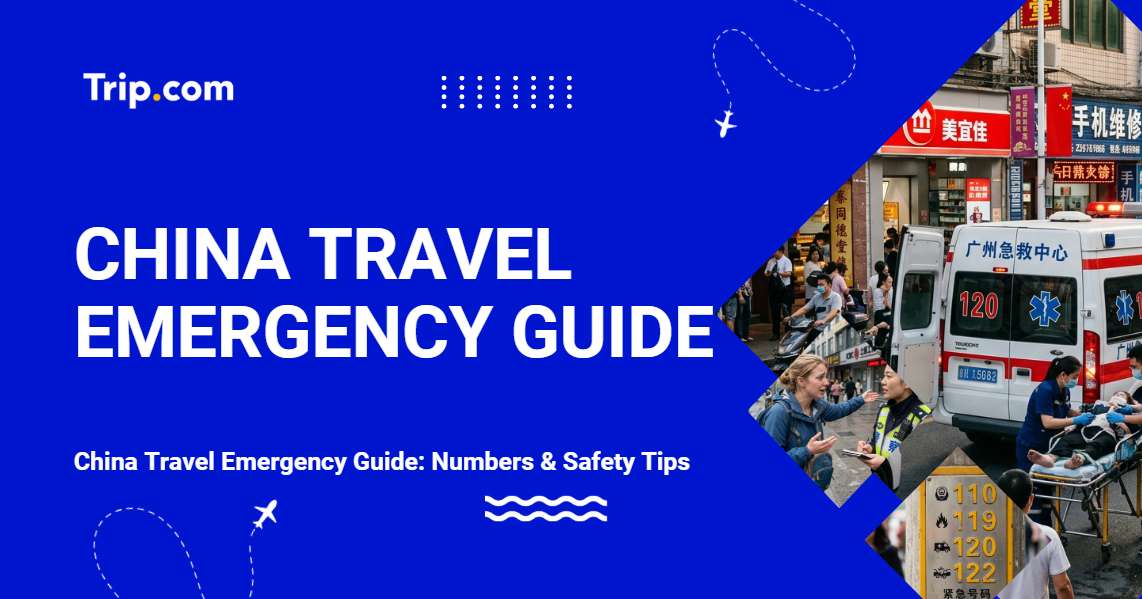
You're enjoying your trip in China when something suddenly goes wrong. Perhaps you've lost your passport, your phone has disappeared in a busy shopping street, or you need medical help but don't know where to turn. Being far from home can make these situations stressful, especially when there's a language barrier. Knowing who to call and what to do next can make all the difference. Here's what you need to know to handle unexpected situations with confidence.
to Shanghai
to Guangzhou
to Beijing
See all flights


The Four Emergency Numbers You Need in China
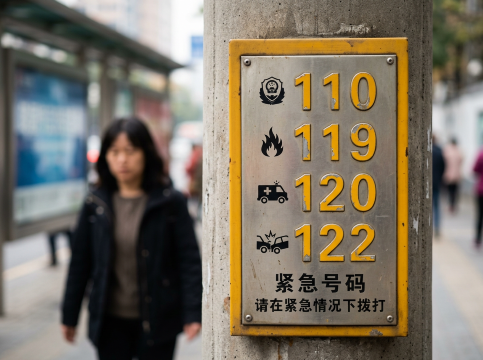
A medical emergency, stolen wallet or unexpected road accident can happen anywhere, and dealing with one in an unfamiliar country is even more stressful. If you're travelling around China, knowing how to reach the right emergency service is essential. China uses four main emergency numbers for police, medical assistance, fire and traffic accidents. Save them on your phone before your trip so you can get help quickly when it matters.
- 110 – Police: For theft, robbery, assault, personal threats or other situations requiring police assistance.
- 120 – Ambulance: For serious injuries, sudden illness or medical emergencies. The call is free, but ambulance transport and treatment are chargeable.
- 119 – Fire and Rescue: For fires, people trapped in buildings and rescue operations.
- 122 – Traffic Police: For road accidents and traffic-related emergencies. If anyone is injured, call 120 as well.
All four numbers operate 24 hours a day, and emergency calls are free. You can dial them directly from a phone connected to a Chinese mobile network without adding a city area code. However, ambulance transport and hospital treatment may incur charges.
How to Make an Emergency Call
When speaking to an operator, provide information in this order:
- Location: Give the city, district, street, building number and nearest landmark. Your hotel's Chinese name and address are particularly useful.
- What happened: Explain whether it is a medical emergency, theft, fire or traffic accident.
- People involved: State how many people need assistance and whether anyone is injured or unconscious.
- Contact details: Give your name and phone number so responders can call you back.
Stay on the line and follow the operator's instructions. If possible, ask someone to wait at the hotel entrance or nearest intersection to guide the ambulance or police to your location.
If you cannot speak Chinese, ask your hotel receptionist or travel companion to help. English support is available in some major cities, but is not guaranteed nationwide.
Which Number to Call in China
Not every travel problem requires an emergency response. Choosing the right number can help you get assistance without unnecessary delays.
Here's a quick guide for common situations:
- Crime or immediate danger – 110: Call the police if you're being threatened, assaulted, robbed or witnessing a crime.
- Serious illness or injury – 120: Request an ambulance for medical emergencies.
- Fire or rescue – 119: Call if there's a fire, someone is trapped or rescue assistance is needed.
- Road accidents – 122: Contact traffic police. If anyone is injured, call 120 as well.
- Water emergencies – 12395: For incidents involving boats, drowning or maritime rescue.
- Lost passport – Local police station: Report the loss and obtain a police report before contacting your embassy.
- Fraud or suspicious transfers – Bank + 110 + 96110: Contact your bank or payment provider immediately to request a payment freeze, then report the incident.
- Visa and immigration questions – 12367: Contact China's National Immigration Administration for visa, residence and entry-exit enquiries.
- Consumer or tourism complaints – 12315 / 12345: Use 12315 for consumer disputes and local 12345 government hotlines for public-service or tourism complaints.
Important: Hotline 12308 is intended for Chinese citizens overseas seeking consular assistance. Foreign visitors in China should contact their own embassy or consulate instead.
For immediate danger, don't waste time trying multiple hotlines. Contact the relevant emergency service first and ask hotel staff for language assistance if necessary.
See all attractions
 1056676 booked





Medical Emergencies in China: Ambulance, Hospitals and Payment

Getting medical help in an unfamiliar country can be stressful, especially when you don't speak the local language. If you or someone travelling with you becomes seriously ill or injured in China, call 120 for an ambulance. The emergency call is free, but ambulance transport and medical treatment are chargeable.
For less urgent problems, you can visit a hospital directly. Knowing which type of hospital to choose and how payment works can save time and avoid unexpected costs.
China has three main options for foreign visitors:
- Public hospitals: Usually more affordable, but busy outpatient departments can mean long queues and limited English support.
- Public hospitals with international departments: Offer more convenient services and better language support, although fees may be higher than standard departments.
- Private international hospitals: Often provide English-speaking staff and more familiar services for international patients, but treatment can be considerably more expensive.
For serious emergencies, go to the nearest suitable emergency department (急诊科), which is generally open 24 hours. For non-urgent problems, book an outpatient appointment in advance. Beijing, for example, offers English-language appointment services through its 114 healthcare platform.
How Do You Pay for Medical Treatment?
Don't assume your overseas bank card or travel insurance will be accepted everywhere. Some hospitals require an upfront deposit, while international card payments and insurance direct billing depend on the hospital.
In Beijing, participating international medical institutions list payment options including:
- RMB cash
- Visa, Mastercard, American Express and JCB
- UnionPay
- Alipay and WeChat Pay
If your insurer has a direct-billing agreement with the hospital, you may be able to receive treatment without paying the full bill upfront. You will generally need your passport and insurance card, and some hospitals may request a Guarantee of Payment (GOP).
Keep these documents for insurance claims:
- Medical diagnosis and treatment records
- Itemised bills and official hospital invoices (发票)
- Prescriptions and test results
- Proof of payment
- Passport and boarding-pass copies
Keep the original documents and take photos as backups. Contact your insurer as soon as possible, particularly if you need hospital admission or medical evacuation.
Tip: Save your insurer's 24-hour emergency number before departure. If you need urgent treatment, don't delay medical care while waiting for insurance approval.
Lost or Stolen Passport: What to Do Step by Step
You're checking out of your hotel or getting ready to board a train when you reach for your passport and realise it's gone. Losing your passport in a foreign country can quickly turn a holiday into a stressful situation, especially when you have a flight home to catch. Don't panic: you can apply for a replacement or emergency travel document in China. The important thing is to follow the right steps, starting with reporting the loss to the local police.
Follow These Four Steps
1. Report the Loss to the Local Police
Visit the nearest police station and report your lost or stolen passport. Explain where and when it happened and request a police report or loss confirmation (报案回执). Keep a copy for the next steps.
2. Obtain a Passport-Loss Certificate
Visit the local Public Security Bureau's Exit-Entry Administration (出入境管理局) to apply for a Passport Loss Certificate (护照报失证明). You may need your police report, passport photocopy, accommodation registration and passport photographs. Requirements vary by city.
3. Contact Your Embassy or Consulate
Take the loss certificate to your country's embassy or consulate in China and apply for a replacement passport or emergency travel document. Check the required documents, fees and processing time directly with your embassy.
4. Sort Out Your Immigration and Departure Documents
If you hold a Chinese visa, contact Exit-Entry Administration to arrange the necessary visa reissuance or transfer to your new passport.
If you entered China visa-free and have not overstayed, you may be allowed to leave using your emergency travel document. Border inspection authorities will verify your identity, entry record and supporting documents before approving departure.
What Documents Should You Prepare?
Keep these documents ready where available:
- Police report or passport-loss confirmation.
- Copy or photograph of your lost passport.
- Chinese visa or entry-record details.
- Accommodation registration.
- Passport photographs.
- New passport or emergency travel document.
- Embassy-issued supporting documents.
Important: Start the process as soon as possible and allow several working days if possible. Processing times vary, so contact your embassy and local immigration authority before changing your flight. Do not assume that an emergency travel document automatically allows you to board your original flight.
Theft, Scams and Police Reports in China
Losing your wallet or becoming a victim of a scam can disrupt your trip, especially when you need your bank cards, cash or travel documents. If something is stolen, act quickly to protect your finances and report the incident.
What Should You Do If Your Wallet or Bank Card Is Stolen?
Follow these steps:
- Block your bank cards: Contact your bank immediately to freeze stolen cards and report any suspicious transactions.
- Report the theft: Visit the nearest police station and explain when, where and what was stolen.
- Collect evidence: Keep bank statements, purchase receipts and a list of missing belongings.
- Request a police report: Ask for an official report or case receipt (报警回执), which may be needed for an insurance claim.
- Contact your insurer: Check whether your policy covers stolen cash, cards and personal belongings.
If your passport is among the stolen items, follow the separate passport-loss procedure and contact your embassy.
What If You Are Scammed in China?
If you have transferred money to a suspected scammer, contact your bank or payment provider immediately and request an urgent payment freeze. Then report the incident to the police by calling 110.
You can also call 96110, China's anti-fraud warning and consultation hotline, for assistance.
Be particularly cautious of strangers offering unexpected deals, unofficial currency exchanges and people demanding immediate payments. Keep transaction records and screenshots as evidence.
Your embassy may provide information about local lawyers or translators, but it cannot guarantee the recovery of stolen money.
Travel tip: Keep a backup bank card and some RMB cash separately from your wallet. This gives you access to essential funds while your stolen cards are being replaced.
What to Do If Your Phone Is Lost or Stolen in China
In China, losing your phone can mean losing access to more than just your contacts. Alipay, WeChat Pay, banking apps, hotel bookings and verification codes may all be linked to the same device. Protecting your accounts should therefore be your first priority.
How to Secure Your Phone and Accounts
If your phone goes missing, take these steps:
- Locate and lock your device: Use Apple's Find My or Google's Find My Device to locate and remotely lock your phone. If recovery is unlikely, consider remotely erasing your data.
- Secure payment accounts: Use another trusted device to restrict access to Alipay and WeChat Pay, and contact your bank if your mobile banking may be compromised.
- Suspend your SIM card: Contact your mobile operator to block the SIM and prevent unauthorised access to SMS verification codes.
- Change important passwords: Secure your Apple ID or Google account, email and other accounts linked to your phone. Sign out of other devices where possible.
- Report the theft: If the phone was stolen, report it to the local police. Provide the device model, IMEI number and proof of ownership if available.
How Can You Get Your Phone Service Back?
If you have lost a Chinese SIM card, visit your operator's official service centre with your passport and ask about replacing it.
The main Chinese mobile operators are:
- China Mobile: 10086
- China Unicom: 10010
- China Telecom: 10000
If you're using an overseas SIM or eSIM, contact your home mobile provider to arrange a replacement or restore service.
Meanwhile, use a backup bank card or cash for everyday payments. Contact your travel insurer to check whether phone theft is covered, and keep the police report and purchase receipt for your claim.
Travel tip: Before your trip, save your phone's IMEI number, activate remote-device tracking and keep important account recovery details somewhere separate from your phone.
Travel Insurance in China: Emergencies, Claims and Paperwork
A medical emergency, stolen belongings or cancelled flight can lead to unexpected expenses in China. Travel insurance can help cover eligible costs, but knowing how to make a claim is just as important.
What Should You Do in an Emergency?
Before travelling, save your insurer's 24-hour emergency number and policy details. If something happens:
- Contact your insurer and check which hospitals or services are covered.
- Ask whether direct billing or a Guarantee of Payment (GOP) is available for hospital treatment.
- Report theft or accidents to the police if required.
- Keep all receipts, medical records and booking confirmations.
- Submit your claim within the policy's deadline.
For urgent medical problems, seek treatment immediately rather than waiting for insurance approval.
What Documents Do You Need for a Claim?
Depending on the situation, prepare:
- Medical claims: Diagnosis, medical records, prescriptions and hospital invoices.
- Theft claims: Police report, purchase receipts and proof of ownership.
- Travel disruption: Booking confirmations, cancellation notices and additional expense receipts.
- General documents: Passport copy, insurance policy and proof of payment.
Keep original documents and save digital copies.
What Does Travel Insurance Cover?
Depending on your policy, coverage may include medical treatment, emergency evacuation, stolen belongings, trip cancellation and travel delays.
Check exclusions, coverage limits and excess payments before departure. Not all hospitals offer direct insurance billing, and not every expense is eligible for reimbursement.
Travel tip: Save your insurer's emergency contact before travelling and confirm the direct-billing arrangements for your destination.
Car Rentals
Car Rental Promo Code - 8% Off
New User Enjoy up to 8% Off
TRIPCAR8
Getting Help in English During a China Emergency

An emergency is difficult enough without having to explain what happened in a language you don't speak. While English support is available in some major Chinese cities, it is not guaranteed nationwide. Knowing where to get language assistance can make a big difference.
- Shanghai: The 110 police hotline supports English, Japanese, Korean, French, German, Spanish, Russian and Arabic. The 119 fire service and 120 ambulance service also offer English assistance.
- Beijing and other major cities: Some emergency services and international hospital departments offer English support, but availability varies.
- Smaller cities: English-speaking emergency operators and medical staff may be difficult to find.
If you cannot explain the emergency yourself, ask your hotel receptionist, guesthouse host or tour guide to call the relevant service for you. This is often the quickest way to overcome a language barrier.
Before travelling, save your hotel's Chinese name and address, download an offline translation pack and keep your passport details accessible. If you need help, write down your location, what happened, the number of people involved and any injuries so someone can translate it.
These Chinese phrases may also help:
- I need a doctor: 我需要医生。
- Please call an ambulance: 请叫救护车。
- My passport is lost: 我的护照丢了。
- I need to report a crime: 我要报警。
- Where is the nearest hospital? 最近的医院在哪里?
- I need English assistance: 我需要英语帮助。
For visa and immigration questions, call 12367, which offers English-language assistance. For consular emergencies, contact your own country's embassy or consulate in China.
Common Mistakes to Avoid in a China Travel Emergency
A few avoidable mistakes can make an already difficult situation more complicated:
- Calling 911: China does not use 911. Save 110, 120, 119 and 122 instead.
- Going to the embassy before reporting a lost passport: Start with the local police and Exit-Entry Administration passport-loss procedure.
- Assuming ambulance services are free: The emergency call is free, but ambulance transport and medical treatment may cost money.
- Leaving hospital without the paperwork: Request diagnosis records, itemised bills and official invoices before leaving.
- Failing to obtain a police report: Theft and accident claims may require official documentation.
- Assuming an emergency travel document guarantees departure: Check your visa or visa-free status and confirm the border procedures.
- Calling 12308 as a foreign tourist: Contact your own embassy or the Chinese 12367 immigration hotline, depending on the problem.
- Contacting a suspected scammer's customer service first: Freeze payments through your bank or official payment provider, then contact the police.
- Only blocking your bank card after losing your phone: Secure Alipay, WeChat Pay, your SIM and other linked accounts as well.
- Not saving your hotel's Chinese address: Keep it available offline so emergency responders and taxi drivers can find you.
[10% Off] China Hotel Recommendations
Top Shanghai Hotels
Top Beijing Hotels
Top Guangzhou Hotels
See All Hotels























What to Prepare for a Trip to China?
- Visa & Entry Tips China’s 240-hour visa-free transit policy now covers 54 countries, incl. the US, UK, Canada, and Brazil, allowing up to 10 days during layovers. Learn more about China Entry Tips to land in China easily.
- Getting Connected VPNs are vital for accessing Google, WhatsApp, Instagram, etc in China. Set one up before arriving. China eSIMs are the easiest option for data and bypassing restrictions. Pocket Wi-Fi devices work best for group but are pricier and require pickup/return.
- Money Exchange & Tax Refunds Exchange money in China banks (better rates than airports). ATMs accept foreign cards, but notify your bank first. For tax refunds, spend over ¥500 at stores with a "Tax-Free" sign. Keep receipts and get forms stamped at customs before departure.
Must-Have Apps in China
- China Payment Apps Forget cash. Chinese use Alipay (I like it better) or WeChat Pay to pay for everything in China. Scan a QR code at noodle stalls, metros, even temples. Link your foreign Visa/Mastercard before landing.
- China Map Apps Amap (Gaode Map) & Baidu Map (limited English) is what locals use, with real-time navigation, metro/bus routes, and traffic updates. Apple Maps does a good job too if you're already an IOS user.
- China Transport Apps Street taxis are cheap, but drivers rarely speak English. Use China Taxi App like DiDi (China’s Uber)—set your destination in English, pay by Alipay.
- China Travel Apps 15+ China trips taught me: Use Trip.com. It's the best English app for booking China trains/flights/hotels + finds Trip.com deals.
- China Dating Apps Locals use Tantan (China’s Tinder) and Momo. WeChat’s “People Nearby” works too, but expect language barriers unless your Mandarin’s decent.
- China Food App Use Meituan (also helps find nearby restaurants) or Ele.me for food delivery—both have English mode. No English menu in restaurants? Scan the QR with Alipay's translator.
FAQs About China Travel Emergencies
-
What Is the Main Emergency Number in China?
-
Can Foreign Tourists Call 110 in China?
-
Do Hospitals in China Accept Foreign Health Insurance?
-
What Should I Do If I Lose My Passport in China?
-
Can I Get English-Speaking Medical Help in China?
Disclaimer: This article has been provided by an individual contributor or third party platform. If there is any discrepancy regarding the copyright, please contact us directly and we will delete the content immediately.
Trending Searches
-
Air Travel Guide
-
Latest Flight Deals
-
Popular Flight & Hotel Packages
-
Getting Around
-
eSIM/SIM card
- Rovaniemi Vacation Packages
- San Rafael Vacation Packages
- Koh Samui Flight and Hotel
- Phuket Flight and Hotel
- Osaka Flight and Hotel
- El Nido Vacation Packages
- Bangkok Vacation Packages
- Sapporo Vacation Packages
- Erbil Vacation Packages
- Karachi Vacation Packages
- Tel Aviv Vacation Packages
- Pattaya Vacation Packages
- Genoa Vacation Packages
- Berlin Vacation Packages
- Taipei Flight and Hotel
- Tokyo Metro
- Harbin Airport
- Haneda Airport to Tokyo
- Chitose Airport to Sapporo
- LAX to Downtown
- Don Mueang Airport to Bangkok
- Qingdao Airport
- Macau Taxi
- Wenzhou Airport
- Kyoto Airport
- How to get to Great Wall of China
- China Metro
- Chongqing Metro
- Wuxi Airport
- Macau to Hong Kong
- Narita Airport to Shinjuku
- JR Hokkaido