【Shanghai Travel Guide 2026】
Transport, Things to Do, Food & More

First time in Shanghai? Get Shanghai travel guide for Pudong airport transfers, Shanghai foods, must-see attractions, and where to stay!
Entering Shanghai - Visa Free Transit Tips
POINT 1
Most foreign travelers transiting Shanghai by plane, ship or train can stay visa-free for up to 24 hours without leaving the transit area.
POINT 2
Better yet - citizens from 54 countries enjoy extended 240-hour (10-day) visa-free transit when passing through Shanghai to a third destination.
First step to enter Shanghai: get your Chinese visa. Most travelers apply for an L Visa (tourist) if you want to stay longer than 24/240 hours visa-free transit. Fill out the application online, then submit it with your passport and supporting docs (flight/hotel confirmations, invitation letter if applicable) at your nearest Chinese embassy/consulate. Processing time varies, so apply at least a month ahead.
Once you land in Shanghai, keep your passport and visa handy. You’ll get an arrival card on the plane—fill it out before lining up for immigration. They’ll scan your fingerprints (machines have English guides) and ask basic questions like your purpose and duration of stay. After clearing customs, grab your luggage and you’re good to go!
Shanghai Airport to Downtown

Shanghai has two airports, and chances are you’ll land at Pudong (PVG) if you’re flying internationally. (The other, Hongqiao (SHA), is mostly for domestic flights and way closer to the city—lucky you if that’s your stop!)
Pudong’s a bit of a trek (~40km from downtown), but don’t stress—here’s how to transfer:
| Option | Time | The Good | The Not-So-Good |
| Maglev Train | ~8 mins to Longyang Road 🚀 | Blazing fast (300km/h—fun fact: it floats!). | Drops you at Longyang Rd (then metro/bus needed). No big luggage. Last train: 9:42 PM. |
| Metro Line 2 | ~1 hour | Dirt cheap, hits major spots like People’s Square. | Packed, slow, and not luggage-friendly. Last train ~10:30 PM. |
| Airport Bus | 60–80 mins | Direct to some hotels. Has a night bus! (11 PM–5:30 AM). | Fewer stops, slower than a taxi. |
| Taxi/Didi | 30–40 mins | Door-to-door, no stress with bags. | Pricey, and traffic sucks during rush hour. |
If flying into Hongqiao, metro Line 2 or Line 10 reach downtown in 20–30 mins (RMB 5–7). Taxis cost ~60–100 RMB.
Getting Around Shanghai

See the Full Metro Map by clicking above (Source from Wikipedia)
Shanghai’s public transport is ridiculously efficient. I use metro the most, but I'll choose taxi if I'm travelling with friends.
| Transport | Best For | How to Pay | Tips |
| Metro | Fastest and clean, the best option! | Single-ride tickets (cash/Alipay) or Alipay Transport QR code (scan at gate) | Fully bilingual signs/maps. No extra apps to get around. |
| Bus | Cheaper travel, supplement metro-unconnected routes | Alipay bus QR code or exact change (¥2–¥5) | Use Amap/Apple Maps (not Google Maps) for real-time tracking. |
| Shared Bikes | Short distances | Scan bike’s QR code by Alipay (Hellobike, DiDi Bike) | Most blue/green bikes workwith Alipay, But Meituan Bike (yellow)—doesn’t support Alipay. |
| Taxi/Didi | Groups/late-night | Book on Alipay (“Taxi” section) or Didi app; pay by Alipay. | ¥14 (~$2) for first 3 km. Avoid rush hours (7:30–9:30 AM, 4:30–6:30 PM). |
Things to Do in Shanghai
Wander Yu Garden's Ming-era lanes, then snack at City God Temple. Stroll The Bund for skyline views. Ride TRON at Disneyland or safari at Wild Animal Park. Shop Nanjing Road, explore Tianzifang's alleys, and see the city from Oriental Pearl Tower.
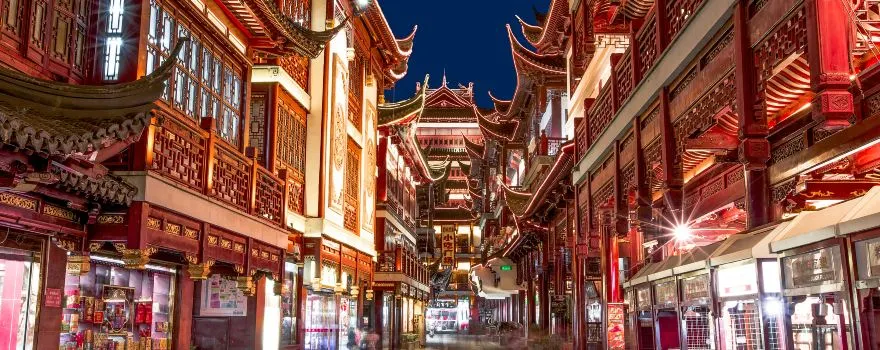
Yu Garden & City God Temple Area
Start your trip at Yu Garden, a 16th-century Ming Dynasty garden. Wander through pavilions, koi ponds, and zigzag bridges (designed to confuse evil spirits, apparently). Right next door, the City God Temple area has so much to eat & do — steaming soup dumplings, silk scarf hawkers, and neon-lit tea shops.
Getting there: Take Metro Line 10 to Yuyuan Station, Exit 3.

The Bund
This famous waterfront strip is like an open-air museum of international architecture—Gothic, Art Deco, and Neoclassical buildings from the 1920s stand shoulder-to-shoulder, facing the futuristic Pudong skyline across the river. Best at night when everything lights up. Walk the whole stretch from the Customs House down to the ferry pier, and if you're feeling fancy, grab a rooftop cocktail at one of the bars.
Getting there: Metro Line 2 or 10 to East Nanjing Road, then a 10-minute walk south.

Shanghai Disneyland
China’s version of Disney is bigger, newer, and often more crowded than the original. The TRON Lightcycle Power Run coaster alone (the fastest Disney ride in the world) will make you forget you’re in China. Weekends are packed with local tourists, so aim for a weekday. Pro tip: download the official app to track wait times and book FastPasses.
Getting there: Metro Line 11 all the way to Disney Resort Station (about 1 hour from central Shanghai).
Nanjing Road Shopping Street
The most famous shopping street in Shanghai. The east end near the Bund is all flashing neon and luxury stores. Walk west and it gradually changes to 1920s buildings housing local brands and tea shops. Some of the city's best street food are right in the side streets.
Getting there: Metro Line 2 to East Nanjing Road Station.
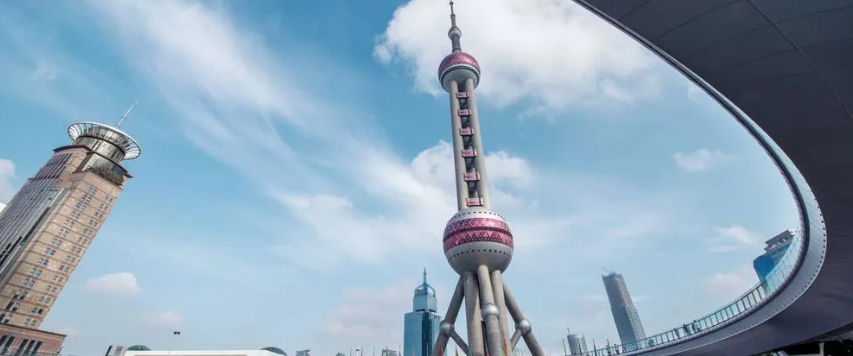
Oriental Pearl Tower
That weird pink tower is impossible to miss. The observation deck's glass floor 263 meters up will test your fear of heights, but the views are exciting. Skip the expensive restaurant - the history museum in the basement is actually way more interesting.
Getting there: Metro Line 2 to Lujiazui Station, Exit 1 puts you right underneath it.
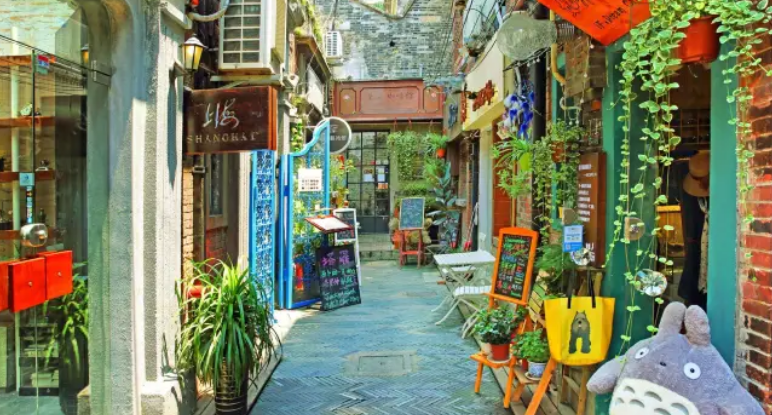
Tianzifang
This artsy labyrinth in the French Concession is the spot for quirky souvenirs and Instagram backdrops. You can visit narrow alleys stuffed with indie galleries, craft beer bars, and shops selling everything from vintage Mao posters to handmade leather goods. Go in the evening when the string lights come on and the crowds thin out.
Getting there: Metro Line 9 to Dapuqiao Station, Exit 1 leads you straight to the entrance.

Shanghai Wild Animal Park
The bus safari takes you through open areas where bears, tigers and lions roam (separated by moats, thankfully). The walkable areas let you get weirdly close to lemurs and pandas (extra ¥30 for feeding each). Speaking of food - pack your own! The on-site options are pricey and mediocre, though the leopard-themed restaurant is kinda cool - floor-to-ceiling windows let the big cats watch YOU eat (I stuck to my packed sandwiches though).
Getting there: Take Metro Line 16 to Shanghai Wild Animal Park Station, then a short taxi ride.
Where to Stay in Shanghai

People’s Square
You're literally on top of three major metro lines, can walk to the Bund in 10 minutes, and have every food option imaginable right outside your door. Yes, it's touristy, but there's a reason - when you're jetlagged at 3am craving soup dumplings or need to quickly hop a train to anywhere in the city, you'll be glad you're here. The area has hotels for every budget, from backpacker hostels to the historic Peace Hotel.
Jing’an
You're right in the middle of everything here. You've got the golden Jing'an Temple just steps away, West Nanjing Road's endless shopping and dining options, and metro lines that'll zip you anywhere in minutes. high-end malls sit next to hole-in-the-wall local food spots, and you're never more than a short walk from a great cocktail bar or local tea house. Stay here if you want to feel the city's pulse and have easy access to everywhere worth going.
Former French Concession
For a more laid-back but equally Shanghai experience, the French Concession's tree-lined streets are where the city starts to feel like home. This is where you'll find the charming cafes boutiques, and quiet side streets that make Shanghai special. Tianzifang's maze of artsy shops and bars is right there when you want it, but you can just as easily spend days wandering the historic lanes and popping into neighborhood noodle joints. The metro access isn't quite as central as Jing'an, but lines 1, 7, and 10 will still get you where you need to go.
What to Eat in Shanghai
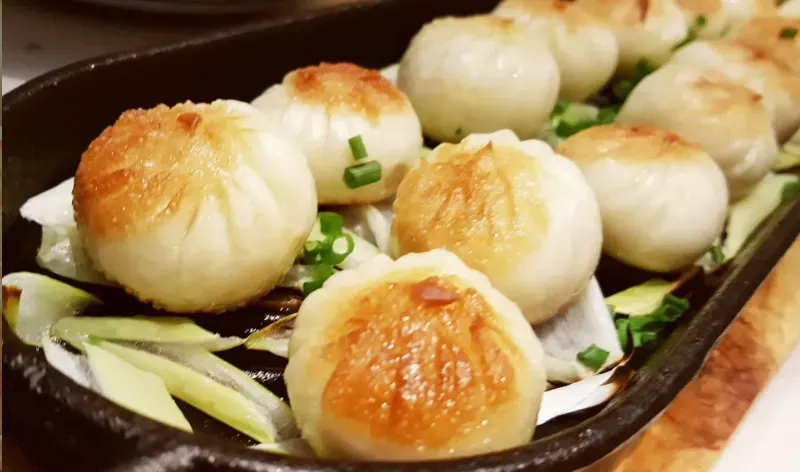
Shengjianbao (生煎包) - These pan-fried pork buns are all about that crispy-yet-chewy bottom and explosive soup filling. My pro tip: Nibble a tiny hole first to slurp the piping hot broth before taking a full bite—or risk a juice explosion! Best spots: Yang's Fry Dumplings (Nanjing West Rd) or Xiaoyang Shengjian (many belittle it, but I think it's actually tasty).
Butterfly Pastries (蝴蝶酥) - layer upon buttery layer caramelized to shattering crispness, with a sugar-dusted crunch that gives way to melt-in-your-mouth tenderness. The best ones walk that tightrope between toasty and burnt, with a hint of salt to balance the sweetness. International Hotel's version is the gold standard (listen for that sugar-crust crunch), while Harbin Bakery's butter-heavy discs taste like Shanghainese childhood. Pro move: Pair with bitter coffee to cut the richness.
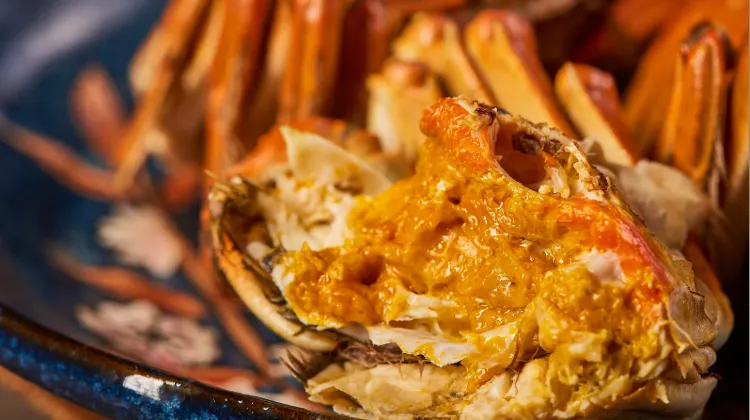
Fried Crab (Zha Xie) - Crab lovers will adore Shanghai’s fried crab, a delicacy best enjoyed in the colder months. The crabs are lightly battered and deep-fried to crispy perfection, creating a satisfying crunch when you bite into them. This dish is especially popular around the colder seasons, when crabs are in their prime. If you’re a fan of seafood, you won’t want to miss out on this tasty treat!
Xiaolongbao (小笼包, Soup Dumplings) - Paper-thin skins holding piping hot, savory broth that gushes with the first bite. The best ones strike that perfect balance: silky wrappers that don't tear, rich pork filling with a hint of ginger, and just enough crab roe (if you're going fancy) to add umami without overpowering. For killer xiaolongbao, hit up Lele Xiaolong for their crab roe dumplings and Nanxiang Steamed Bun or Wanshouzhai for the best pork dumplings.
Qingtuan (青团) - These chewy, bright green rice dumplings are a Shanghai spring staple—the best ones ooze salty-sweet egg yolk and pork floss filling that perfectly balances the herbal kick of the mugwort-infused skin. Hit up Shen Dacheng for the classic version with that perfect QQ bite, or try Hu Xi He if you like yours extra gooey and rich. Just eat them fresh—they turn into hockey pucks by day two.
Where to Shop in Shanghai

Xintiandi
If you want to feel fancy for a day, this is your spot. The brick alleys are straight out of a rom-com, and there’s this amazing Yunnan place called Huoshaoyun—get the potato stew with chicken, trust me. It’s also got Shake Shack if you’re craving something familiar, plus a bunch of little boutiques.
📍Line 10/13 to Xintiandi Station.
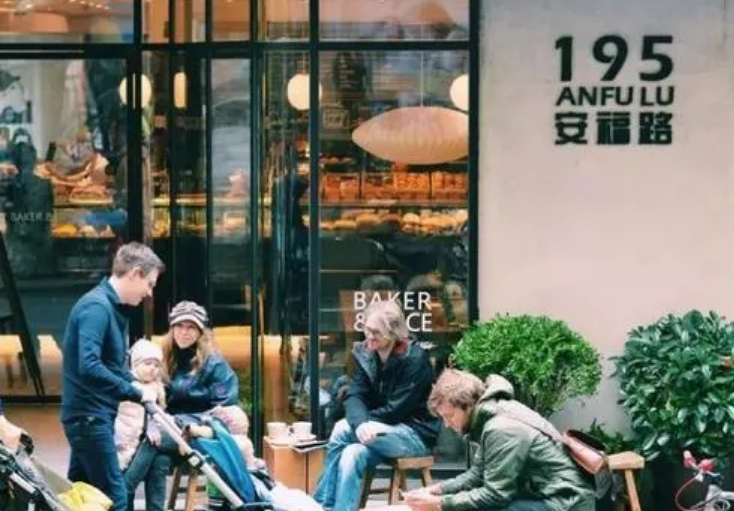
Anfu Road
Honestly, this street is where I love to hang out with besties. You’ll see girls dressed in head-to-toe Brandy Melville, people sipping matcha lattes outside tiny cafes, and boutiques selling stuff you’ve definitely seen all over Xiaohongshu. It’s got that perfect mix of trendy and low-key—great for people-watching or picking up a cute phone case from Tagi.
📍Take Line 7 to Changshu Road (Exit 7)
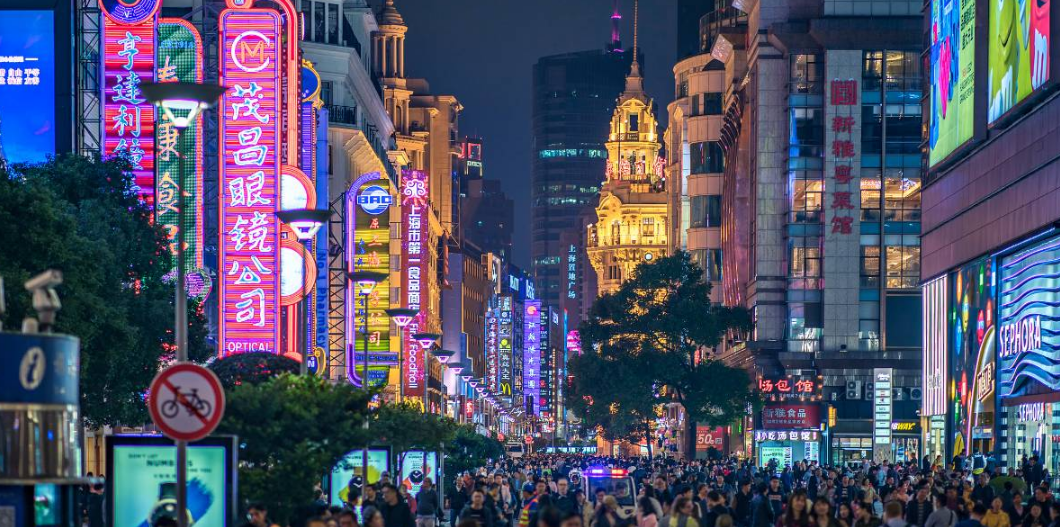
Nanjing West Road
This is where you go when you need something quick and easy—like Zara, Uniqlo, all the usual suspects. It’s packed, yeah, but sometimes you just wanna grab a basic tee without overthinking it. Pro tip: Swing by Yang’s Dumplings for some shengjianbao to keep your energy up.
📍Line 2 to Nanjing West Road Station.
Shanghai Weather Guide (Handy Tips)
Shanghai has a humid subtropical climate—hot summers (avg 28-35°C) and chilly winters (avg 1-8°C).
The big things to watch out for are rainy season (June-July: 15-20 rainy days/month) and typhoon season (July-September: 2-3 major storms/year), when sudden downpours happen almost weekly.
| Season | Months | Weather Overview | Outfit Suggestions |
| Spring | March – May | 20–25°C, Warm & Dry | Light long sleeves, thin jackets |
| Summer | June – August | 25–32°C, Hot & Humid | T-shirts, shorts, sunscreen, hats |
| Autumn | September – November | 22–28°C, Cool & Pleasant | Light layers, cardigans, thin jackets |
| Winter | December – February | 18–22°C, Mild with occasional cool winds | Long sleeves, sweaters, trench coats, pants |
Always carry a compact umbrella! Spring and fall are mild but very short, with big day-night temperature swings (±10°C), so layers are key.
Must-Have Apps in China
- China Payment Apps Forget cash. Chinese use Alipay (I like it better) or WeChat Pay to pay for everything in China. Scan a QR code at noodle stalls, metros, even temples. Link your foreign Visa/Mastercard before landing.
- China Map Apps Amap (Gaode Map) & Baidu Map (limited English) is what locals use, with real-time navigation, metro/bus routes, and traffic updates. Apple Maps does a good job too if you're already an IOS user.
- China Transport Apps Street taxis are cheap, but drivers rarely speak English. Use China Taxi App like DiDi (China’s Uber)—set your destination in English, pay by Alipay.
- China Travel Apps 15+ China trips taught me: Use Trip.com. It's the best English app for booking China trains/flights/hotels + finds Trip.com deals.
- China Dating Apps Locals use Tantan (China’s Tinder) and Momo. WeChat’s “People Nearby” works too, but expect language barriers unless your Mandarin’s decent.
- China Food App Use Meituan (also helps find nearby restaurants) or Ele.me for food delivery—both have English mode. No English menu in restaurants? Scan the QR with Alipay's translator.
China Payment App

Alipay
支付宝Your go-to payment app in China. You can link your international credit cards (Visa, Mastercard, etc.) directly without all the hassle of verification processes. Nearly every shop, restaurant, and street vendor has an Alipay QR code for payments. Pro tip: Set this up before you leave home - you'll thank yourself later!
China Travel Booking App

Trip.com
Trip.com is a lifesaver for booking everything from flights and hotels to train tickets and attractions. Unlike its Chinese counterpart (Ctrip), Trip.com is specifically designed for international travelers. All the hotels listed are guaranteed to accept foreign guests, plus you'll earn Trip Coins for future discounts.
Download AppChina Map App

AutoNavi/Gaode Maps
高德地图Hands-down the best navigation app in China. Forget Google Maps - Gaode is more accurate and updates faster. Whether you're walking or cycling, the GPS tracking is spot-on, and it even gives you great restaurant recommendations nearby. The 2D/3D navigation options make it super easy to find your way around.
China Taxi App

DiDi
滴滴出行DiDi is basically China's Uber, and it's super handy for getting around. If you have a Chinese phone number, just download the app and you're good to go. No Chinese number? No problem! You can still use DiDi through the Alipay mini-program - it works just as well and charges directly to your linked card.
China Food App

Meituan & Ele.me
美团 & 饿了么These are your food delivery saviors. Whether you're tired after a long day of sightseeing or just want to try local food from your hotel room, these apps have you covered. Ele.me is accessible through Alipay if you don't have a Chinese phone number, though you'll have fewer options than with Meituan.
China Translation App

WAYGO
An app that translates Chinese, Japanese, and Korean text into English accurately and instantly. It uses a smart mix of technology to recognize characters and turn them into words and sentences you can understand. You don't even need the internet to use it. It's super handy for understanding menus, signs, and any printed words when you're out and about.
What to Prepare for a Trip to China?
- Visa & Entry Tips China’s 240-hour visa-free transit policy now covers 54 countries, incl. the US, UK, Canada, and Brazil, allowing up to 10 days during layovers. Learn more about China Entry Tips to land in China easily.
- Getting Connected VPNs are vital for accessing Google, WhatsApp, Instagram, etc in China. Set one up before arriving. China eSIMs are the easiest option for data and bypassing restrictions. Pocket Wi-Fi devices work best for group but are pricier and require pickup/return.
- Money Exchange & Tax Refunds Exchange money in China banks (better rates than airports). ATMs accept foreign cards, but notify your bank first. For tax refunds, spend over ¥500 at stores with a "Tax-Free" sign. Keep receipts and get forms stamped at customs before departure.

Trending Searches
-
Popular Airlines
-
Trending Stays
-
Popular Flight & Hotel Packages
-
Getting Around
-
Popular Attractions
-
eSIM/SIM card
-
Popular activities
- Direct flights from Hong Kong to Shanghai
- Direct flights from Bangkok to Shanghai
- Direct flights from Kuala Lumpur to Shanghai
- Cheap flights from Ta Khmau to Shanghai
- Direct flights from Chongqing to Shanghai
- Return flights from Beijing to Shanghai
- Direct flights from Casablanca to Shanghai
- Direct flights from Guangzhou to Shanghai
- Return flights from Shenzhen to Shanghai
- Cheap flights from Zhangjiajie to Shanghai
- Return flights from Guilin to Shanghai
- Direct flights from Tokyo to Shanghai
- Cheap flights from Seoul to Shanghai
- Cheap flights from Chengdu to Shanghai
- Direct flights from Ulaanbaatar to Shanghai
- Meta Tree Hotel, People's Square, City Center In Shanghai
- Aqua Suhe NO.1 Hotel(Shanghai Jingan)
- WaiTing Hotel Jing'an Temple Huaihai Middle Road Shanghai
- Shanghai People's Square Nanjing East Road Pedestrian Street Treasury Hotel
- Hi Cozy International Hostel East Nanjing Road & The Bund & 24h English Services
- Wow Executive Hotel
- Crowne Plaza SHANGHAI NANJING ROAD by IHG
- Holiday Inn Express SHANGHAI PUDONG AIRPORT by IHG
- Haiyue Mingting Hotel Jing'an Temple Huaihai Middle Road Shanghai
- Country Inn & Suites by Radisson, Shanghai Railway Station Jing'an
- Holiday Inn SHANGHAI PUDONG AIRPORT by IHG
- Waiting Century Hotel (Shanghai Jing'an Railway Station South Square)
- Weiting Hotel (Shanghai People's Square Subway Station Changzheng Hospital Branch)
- JI Hotel (Shanghai The Bund Jinling East Road)
- Yumian³ Hotel (Shanghai Jing'an Temple West Nanjing Road Subway Station)
- Yitel Premium (Shanghai people's Square Nanjing Road Pedestrian Street)
- Homeinn Selected Hotel (Shanghai Nanjing Road Pedestrian Street The Bund Center)
- Tianhua Hotel Shanghai People's Square Nanjing Road Walkway
- Campanile Hotel (Shanghai Jing'an Temple)
- Rezen Meta Tree Hotel (City Center & The Bund, Shanghai)
- Medellin Vacation Packages
- Hong Kong Vacation Packages
- Tokyo Flight and Hotel
- Koh Samui Flight and Hotel
- Hong Kong Flight and Hotel
- Okinawa Vacation Packages
- Oslo Vacation Packages
- Toulouse Vacation Packages
- Bucaramanga Vacation Packages
- Chisinau Vacation Packages
- Astana Vacation Packages
- Lahore Vacation Packages
- Apia Vacation Packages
- Marrakech Vacation Packages
- Coron Vacation Packages
- Wuhan Airport
- Haruka Express
- JR Shikoku
- Narita Airport Limousine Bus
- New York Subway
- Nara Transportation
- Hong Kong Airport to Shenzhen
- Chongqing Airport
- Wenzhou Airport
- Fuzhou Airport
- Shanghai Metro Map
- Macau Taxi
- Renting a Car in China as a Foreigner
- Macau to Zhuhai
- Narita Airport to Shinjuku
- Macau to Hong Kong
- Hong Kong Airport to Guangzhou
- Forbidden City Tickets
- Zhangjiajie National Forest Park
- Shanghai Tower Tickets
- Shanghai Wild Animal Park
- Shanghai Disneyland Tickets
- Tianmen Mountain
- Canton Tower Tickets
- shanghai to wangxian valley
- Huangshan
- Shanghai Disneyland Fast Pass
- Book China Attraction Tickets with Passport
- Universal Studios Beijing Tickets
- Great Wall of China Tickets
- Yu Garden Tickets
- Summer Palace Tickets
- Shanghai Museum
- Nanjing Road Pedestrian Street
- Shanghai Disneyland Tickets
- shanghai disneyland
- Oriental Pearl Tower
- Shanghai Travel Essentials
- Water Activities in Shanghai
- Shanghai Yacht Charter
- Shanghai Airport Services
- Shanghai Shopping Discounts
- Shanghai Costume Experience
- Shanghai Activities
- Shanghai Driving Experience
- Wellness & Spa in Shanghai
- Shanghai Spa & Massage
- Mainland China 5G eSIM | Supports Google Maps / ChatGPT | Daily/Total Data Plans | 24-Hour Billing | 1–365 Days | QR Code
- Mainland China 5G eSIM | ChatGPT Available | Day Pass/Total Data | 24-Hour Billing | 1-365 Days | QR Code
- Shanghai Circus World Tickets: ERA2 - Spirit of Shanghai Extravaganza E-ticket
- Discover Old Shanghai on an Electric Moped
- Shanghai Yu Garden Hanfu photo shoot experience