What Is a Hidden City Ticket? Skiplagging Explained

by Bonnie
May 11, 2026
Anyone who travels regularly knows how unpredictable flight pricing can be. Last-minute trips, popular hub routes, and peak travel seasons almost always come with ridiculously inflated airfares. If you’re tired of overpaying for flights, you’ve probably stumbled across the terms hidden city ticketing or skiplagging.
This is hands down one of the most effective and yet misunderstood hacks to cut flight costs. After years of testing flight-saving tricks and researching airline pricing rules, I’ll walk you through everything you need to know: how skiplagging works, why airlines allow this pricing loophole, it's legal status, the real risks travelers face, and the best times to use (or avoid) this method.
What Is a Hidden City Ticket? How Skiplagging Works
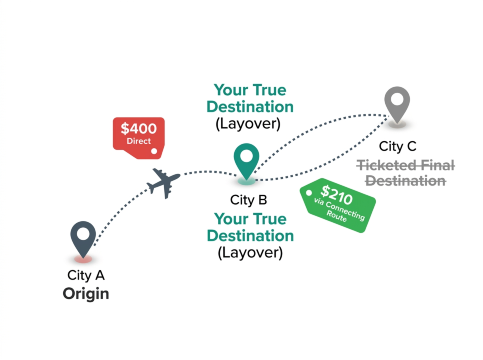
To put it plainly: A hidden city ticket is a clever booking trick where you buy a multi-stop connecting flight, but only travel to the layover city — your actual destination. You simply skip the final leg of the flight listed on your ticket.
This hack works because of a counterintuitive airline pricing quirk: connecting flights are often cheaper than direct flights to the exact same layover city.
I’ll use a common real world example to make this easy to understand:
- Regular priced direct flight: Last-minute direct transatlantic flights from New York to London are notoriously pricey, typically costing around $680 for a one-way ticket, which fit's the usual inflated rate for spontaneous cross-ocean travel.
- Cheaper connecting flight option: A connecting flight traveling from New York to Paris with a London layover often drops to just $430, far lower than the direct transatlantic route even with the extra stop.
- Simple skiplagging operation: You book the New York → London → Paris route, get off the plane in London (your real destination), and skip the final flight to Paris.
- Core advantage & naming origin: Same destination, saves a significant amount of money. This skipped final segment is exactly why it’s called “hidden city ticketing” or skiplagging.
This pricing oddity all comes down to how airlines operate. Most use a hub-and-spoke system, and fares are set based on market demand and competition — not how far the plane flies. This creates consistent price gaps between direct and connecting routes that savvy travelers can leverage.
to Bangkok
to Manila
to Shanghai
to Tokyo
to Seoul
See all flights


Hidden City Ticketing vs. Throwaway Ticketing: Key Differences
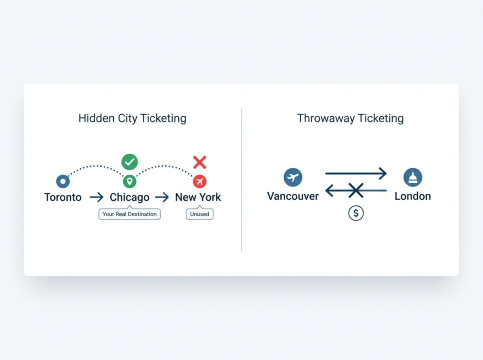
Most travelers often mix up hidden city ticketing and throwaway ticketing. Both help you save on flights and break airline service rules, but they apply to totally different scenarios. The key differences are shown in the simple comparison table below:
Comparison Item | Hidden City Ticketing (Skiplagging) | Throwaway Ticketing |
|---|---|---|
Applicable Itinerary | One-way connecting flights | Round-trip flights |
Core Operation | Book a connecting flight, exit at the layover, skip the final segment | Book a round-trip flight, only use the outbound segment |
Money-Saving Logic | Connecting fares are cheaper than direct hub flights | Round-trip fares undercut standalone one-way fares |
Core Risks | Layovers may change; airlines only rebook to the final ticketed destination | Unused returns may trigger account scrutiny and travel disruptions |
Why Hidden City Flights Are Cheaper?
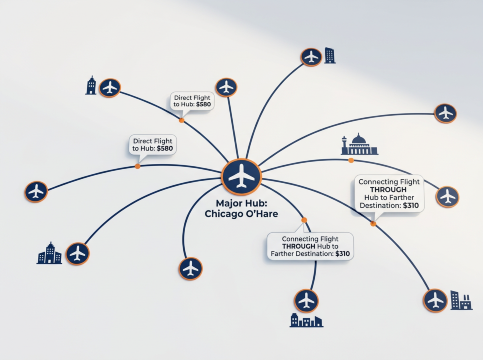
Here’s the biggest secret about airline pricing: distance does not matter. Short direct flights often cost more than longer connecting trips, all thanks to supply, demand, and market competition. The airline hub system creates consistent, exploitable pricing gaps for two key reasons:
- Heavy competition on long-haul connecting routes: Airlines slash prices on multi-segment long haul flights to fill empty seats and stay competitive globally. These full connecting itineraries are heavily discounted, even if individual flight segments would cost far more on their own.
- Premium pricing for direct hub flights: Direct flights to major hub cities are always in high demand. With steady traffic and less competitive pressure for these short-to-medium direct routes, airlines keep fares intentionally high.
Let’s look at another relatable example to prove this pricing quirk:
A last-minute direct flight to Chicago typically costs around $420. Yet a connecting flight passing through Chicago en route to Milwaukee often drops to just $290. By booking the cheaper connecting route and deplaning in Chicago, you save $130 instantly.
This hack works best for last-minute bookings. Direct flight fares spike drastically 7–14 days before departure, while discounted connecting route prices stay stable — making the savings gap even bigger.
Stay Connected With Trip.com!
See all attractions
 652593 booked












Is Hidden City Ticketing Legal?
This is easily the most common question I get asked about skiplagging, and the answer is very clear: Skiplagging is 100% legal in the U.S. and nearly every country worldwide. It is not a criminal offense, and you won’t face fines or legal charges for doing it.
That said, it does violate airline Conditions of Carriage — the terms you agree to when booking a ticket. Technically, it counts as a civil contract breach, but this is not punishable by law.
Authoritative Ethical Endorsement
The New York Times’ ethics column has even backed this practice, calling it a fair response to airlines’ inconsistent, confusing pricing schemes. Think of it like this: if you buy a movie ticket and leave early, no one charges you a fee. You’ve paid for your flight in full, so you’re not required to complete every travel segment.
Key Risks & Downsides of Skiplagging

While skiplagging is legal and can net you great savings, its not completely risk-free. I always advise travelers to understand these potential downsides before trying it:
- Route schedule changes: Airlines frequently adjust layover city and flight schedules. If your planned layover is removed or changed, your skiplagging strategy becomes invalid, and you could end up stranded at an unexpected airport.
- Strict rebooking rules: If your flight is canceled or delayed, airlines will only rebook you to your final ticketed destination — not your intended layover city. You’ll either have to complete the full itinerary or pay extra fees to adjust your plans.
- Loyalty account penalties: Airlines track unusual booking patterns. Occasional one-time use is fine, but repeated skiplagging can lead to frozen miles, revoked elite status, or full account suspension.
- International travel issues: On some international routes, gate agents verify final destination documents and onward travel proof. Skipping a connecting segment can cause boarding delays and procedural complications.
- Minor ethical controversy: Skipping the final flight leaves an empty seat that another traveler could have booked. The impact is negligible for casual users, but it’s a small ethical consideration for anyone using the trick frequently.
Hidden City Ticketing vs. Other Flight-Saving Strategies
Skiplagging is fantastic for certain niche scenarios, but its far from a one-size-fits-all solution. These mainstream flight-saving tactics are more reliable, risk-free, and accessible for the average traveler:
Advance booking: Booking flights 2-3 months early delivers steady, predictable savings with zero restrictions or risks.
Flight deal alert services: These tools track price drops and exclusive discounts on standard itineraries, letting you save money with no loopholes required.
Off-peak travel: Flying on weekdays, outside holidays, and during low-tourism seasons lowers fares across all routes universally.
Error fare hunting: Occasional airline system pricing errors offer substantial legitimate discounts with no policy violations.
Flexible date search tools: Shifting your travel dates by just a few days can unlock major savings on standard flights.
It's important to note that skiplagging only works under strict conditions. You’ll need a hub connecting route, a one-way ticket, and carry-on-only baggage — checked luggage will always be sent to your final ticketed destination. These limitations make it an inconsistent option for most trips.
If you want safe, low-risk, legitimate flight savings, Trip.com is a far better option. It features transparent pricing, a huge global flight inventory, and simple itinerary comparisons, so you can save money consistently without any skiplagging risks or penalties.
Final Takeaway
Skiplagging, or hidden city ticketing, is a legal, smart travel hack that takes advantage of airline pricing loopholes for cheaper flights. It delivers impressive savings in the right scenarios, yet it carries small but real travel and loyalty program risks. Casual, occasional use is totally safe for most leisure travelers, though it’s never 100% risk-free.
For steady, stress-free and fully compliant flight savings, traditional booking tactics and reputable travel platforms are always the most reliable options for any trip.
Earn Trip Coins & Membership Cashback

Before swiping your card, do grab these instant savings with Trip.com’s Membership Program. Earn Trip Coins by booking travel, writing reviews, or sharing trip moments. These coins act like cashback:
- 100 Trip Coins ≈ USD $1 on hotels, flights, attractions, and more.
- No minimum redemption—use them even for small discounts!
- Stack Trip Coins with promo codes during campaigns for double the savings.
Pro Tip: Leave a review after your trip—it’s an easy way to earn extra Trip Coins for future bookings.
Credit Card vs Other Payment methods
Trip.com supports global and local payment methods such as:
- Credit/Debit Cards: Visa, Mastercard, Amex, UnionPay, and more.
- Digital Wallets: PayPal, Apple Pay (iOS), Google Pay (Android/Web).
- Trip Coins & Gift Cards: Offset costs instantly with earned coins or prepaid gift cards.
Payment Method | Pros | Cons |
|---|---|---|
Credit Cards | Earn rewards, travel insurance, $0 fraud liability | Time needed to input card details |
PayPal | No card details shared | No rewards unless linked to a rewards card |
Digital Wallets (Apple/Google Pay) | Fast checkout | Rewards depend on linked card’s terms |
Trip Coins | Instant discounts on bookings | Limited to Trip.com ecosystem |
Digital Wallets (Apple/Google Pay) | Fast checkout | Rewards depend on linked card’s terms |
Download the App for App-Only Discounts
Download the Trip.com app now and unlock exclusive app-only discounts! These app-only deals can stack with flash sales to deliver substantial savings on fares worldwide. Use the QR code to get instant savings on flights and hotels, available for both Android and Apple users.
[10% OFF] Global Hotel Recommendations
Find Best Global Hotels
See All Hotels







FAQs About Hidden City Ticket
-
Is hidden city ticketing illegal?
-
Can I check bags on a hidden city ticket?
-
What happens to my return flight if I skip a leg on a hidden city ticket?
-
Can I earn frequent flyer miles on a hidden city ticket?
Disclaimer: This article has been provided by an individual contributor or third party platform. If there is any discrepancy regarding the copyright, please contact us directly and we will delete the content immediately.
Popular Searches
-
Air Travel Guide
-
Latest Flight Deals
-
Popular Flight & Hotel Packages
-
Getting Around
-
eSIM/SIM card
- Cancun Vacation Packages
- Medellin Vacation Packages
- Hong Kong Vacation Packages
- Tokyo Flight and Hotel
- Koh Samui Flight and Hotel
- Kathmandu Vacation Packages
- Iloilo City Vacation Packages
- BALI Flight and Hotel
- Key West Vacation Packages
- Liverpool Vacation Packages
- Cape Town Vacation Packages
- Santo Domingo Vacation Packages
- Berlin Vacation Packages
- Obihiro Vacation Packages
- Sharm El Sheikh Flight and Hotel
- Zhangjiajie Airport to City
- Qingdao Metro Travel Guide
- Car Rental Insurance
- Shinkansen Tokyo to Kyoto and Osaka
- Tokyo Transportation
- Beijing Metro Map
- JR pass airport transfer
- Shenzhen Metro Map
- Chengdu to Chongqing
- Yiwu Airport
- Wuhan Airport
- Don Mueang Airport to Bangkok
- Octopus Card Hong Kong
- Zhangjiajie Transport
- Macau to Hong Kong
- Narita Airport to Shinjuku
- Hong Kong Airport to Macau